Skip to content

Biennale  /  Country hubs  /  Senegal

Country hubs · Free to read · Updated October 8, 2026

Country hub · West Africa

Art in Senegal

Senegal made culture the state’s business before it could pay for it; in 2026 the state still owns the walls, and others fill them.

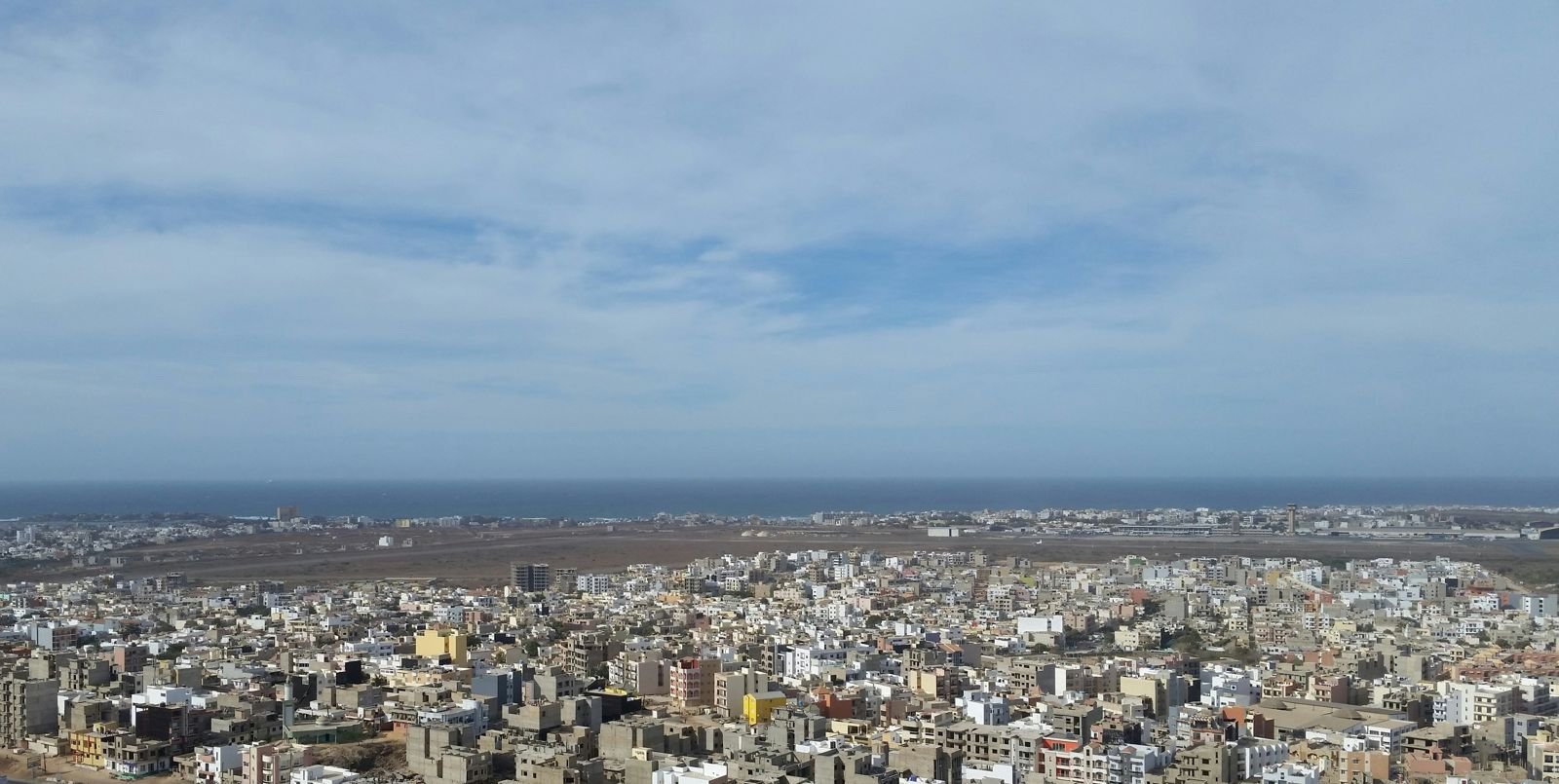
Dakar from the African Renaissance Monument
Dakar from the African Renaissance Monument. Photo: Karen Nash.

Autumn 2026

The State Owns the Walls

Senegal decided that culture was the state’s business in 1960, before it had the money to pay for it. Léopold Sédar Senghor, a poet in the presidency, founded an art school, a tapestry manufacture, and a museum, and in April 1966 brought the first World Festival of Negro Arts to Dakar. Sixty years on, the 16th Dakar Biennale (Dak’Art) opens on November 19, 2026, in a former courthouse that the state owns, run by an office inside a ministry, the week after the Youth Olympic Games close in the same city. The government paying for both is asking its creditors for a debt treatment.

In Senegal the state still owns the walls and sets the calendar, and nearly everything inside the walls now comes from somewhere else. The biennale’s independent program, the OFF, is several times larger than the official exhibition, and its promoters pay for it themselves. The galleries, residencies, and study programs that give Dakar its working art life were founded privately, most of them after 2008. The buyers are largely abroad. And the national museum built to receive works returned by France has, so far, received one sabre.

None of that is a reason to stay away. Senegal has a public with a median age of 19, a month-long biennale with a citywide fringe, and an older capital, Saint-Louis, that holds a photography museum in seven houses. The edition itself is covered in the Dakar Biennale 2026 Special Report, and its history on the Dak’Art page. This page is about the country around it: who pays, who decides, who buys, and where to go beyond the peninsula.

The market

A Market That Sells Elsewhere

Nobody has published a measure of Senegal’s art market. The Art Basel and UBS Global Art Market Report 2026 puts world sales in 2025 at $59.6 billion, with the United States at 44%, Britain at 18%, China at 14%, and France at 8%; its published summary names no African market at all. No ministry, trade body, or bank in Senegal was found with a sales figure. No published figure for the size of Senegal’s art market

What exists is testimony, and it is consistent. At a public conference on the market held on July 25, 2025, at the Centre culturel régional Blaise Senghor in Dakar, during the 12th Salon national des arts visuels, the painter Kalidou Kassé said: “Le marché a toujours existé même s’il reste à consolider” (in English: the market has always existed, even if it still has to be consolidated), Le Soleil reported. He listed the missing links as specialized lawyers, critics and art historians, committed collectors, and professional galleries. On the same panel the cultural journalist Alassane Cissé argued that patronage cannot develop in Senegal without the direct involvement of the state, by the second part of the paper’s report.

Who buys

The clearest account of the buyers comes from an undated SenePlus report on Dakar’s galleries. Delphine Lopez, who directs Galerie Cécile Fakhoury in Dakar and is now one of the 16th biennale’s four curators, told it that the gallery’s clients are based abroad first of all, though the share of Senegalese collectors had risen steadily over three years; she described them as aged about 30 to 55. The gallerist Mohamed Lamine Cissé said that company heads will buy a painting at 6 or 7 million (the report names no currency; in CFA francs that would be roughly €9,000 to €10,700), and that for a buyer in his thirties he had split a price of 800,000 into four payments. The critic Massamba Mbaye gave the report its driest line, saying “qu’avant d’acheter une toile, il faut acheter un beau salon, une télévision, etc.” (in English: that before buying a canvas, one has to buy a fine living room set, a television, and so on).

Senegal has had serious private collectors since the 1970s, among them the businessman Bassam Chaitou and Amadou Diaw, the founder of the country’s first business school, whose holdings are described in the Special Report’s account of collecting. But the saleroom is foreign. The auction records for Senegalese artists were set in New York and Paris: $168,825 with premium for Papa Ibra Tall’s Vin Noir at Bonhams in 2019, and €528,695 with fees for figures by Ousmane Sow in Paris in 2014, as Le Figaro reported. No auction house holding regular art sales in Senegal was found for this page.

The fairs, without Dakar

The trade’s autumn season makes the point. 1-54, the fair for contemporary African art, holds its London edition at Somerset House from October 15 to 18, 2026. The organizer’s press release lists 35 exhibitors, 13 of them with a base on the African continent, in Nigeria, Egypt, South Africa, Zimbabwe, Morocco, Côte d’Ivoire, and Ghana. None lists a base in Senegal. A solo presentation in tribute to the Senegalese sculptor Seyni Awa Camara is brought by a London gallery, The Gallery of Everything. A week later in Paris, AKAA holds its 11th edition at the Carreau du Temple from October 23 to 25, with more than 30 galleries and, as its centerpiece, an installation by the Senegalese photographer Gabriel Dia, according to Time Out Paris.

So Senegalese art travels and Senegalese dealers, this season, mostly do not. At home the gallery map is short and it shifts. Selebe Yoon, on the Plateau, opens two exhibitions on November 6 that run to March 27, 2027, by its own listing. Galerie Cécile Fakhoury’s contact page showed its Dakar space as closed when the Special Report checked it on October 6. During the biennale, a sale in the OFF is a private contract between the buyer and the artist or promoter.

What the state makes, and what it owes

The state is a producer as well as a patron. The Manufactures sénégalaises des arts décoratifs in Thiès have produced tapestries since December 4, 1966; a 24-square-meter piece by Papa Ibra Tall, Magal de Touba, hangs at United Nations headquarters, and Le Soleil reported in April that the Metropolitan Museum of Art in New York integrated 18 historic tapestries from the workshop in 2025; the paper is the only source found for this, and it does not say whether they were bought, given, or lent. The director general, Bassirou Thiam, wants to add a research center for African weaving techniques, because the workshop’s methods have until now been drawn essentially from techniques imported from France, the same paper reported.

Two laws would give artists a domestic market if they were applied. A law of January 4, 1968, obliges public building projects to spend 1% of the cost of the works on art; the Director of Arts, Hugues Diaz, called it in October 2025 a law nobody talks about any more, and asked for it to be updated, Le Quotidien reported. And the law on the status of the artist, promulgated in 2021, still waited for its application texts when APS last reported on them. Both are set out in the Special Report’s policy section, and the rules for buyers on invoices, certificates, and export in its account of collecting.

0galleries with a base in Senegal among the 35 listed for 1-54 London, October 2026 (1-54 press release)
$168,825for Papa Ibra Tall’s Vin Noir, New York, 2019 (Bonhams)
€528,695Ousmane Sow’s auction record, Paris, 2014 (Le Figaro)
1%of public building costs owed to art under a 1968 law (Le Quotidien)
Biennale

“C’est un patrimoine national. À ce titre, elle doit être entretenue par l’État du Sénégal”

— Étienne Guirane Guèye, conservator of Senghor’s childhood house in Joal, in APS via SenePlus, June 8, 2026. (In English: it is national heritage; as such, it must be maintained by the State of Senegal.)

Politics and money

Three Ministers and a Debt

Senegalese cultural policy has a founding legend: that Senghor gave a quarter of the national budget to culture. The archive says otherwise. The historian Joshua I. Cohen, reading the budgets for a 2021 article in African Arts, found that education and culture together usually took 18% to 22%, and that culture alone came to between 0.26% and 0.78% of the annual budget from 1966 to 1970. The attention was large and the check was small, as the Special Report’s history puts it.

The proportion has barely moved. The Ministry of Culture, Crafts and Tourism has 28.9 billion CFA francs in commitment authority for 2026, about 1.8% less than in 2025, Le Soleil reported when the budget went to parliament. Against a state budget of 7,433.9 billion CFA francs, that is about 0.39%, for three sectors (Biennale’s arithmetic, not a published ratio). At the fixed rate of 655.957 CFA francs to the euro, the ministry’s whole allocation is about €44 million.

The debt

The reason there will not be more is the debt. In February 2025 the Cour des comptes, the state audit court, found that public debt at the end of 2023 stood at 99.7% of GDP, not the 74.41% previously reported, by the Reuters timeline. By the end of 2024 it was about 132%, with hidden borrowing put at more than $11 billion, according to Daba Finance. On September 1, 2026, the IMF announced a staff-level agreement on a 36-month Extended Credit Facility of SDR 1,537.1 million, about $2.2 billion. It is not yet money: the agreement needs the approval of the Fund’s management and board, corrective actions over past misreporting, and financing assurances from Senegal’s partners, and the authorities have said they will seek a debt treatment. The program aims to raise domestic revenue and streamline expenditure while increasing social spending.

The revised 2026 budget of September 19 widens the deficit to 7.6% of GDP and cuts domestically financed capital spending by 315.7 billion CFA francs, by the Special Report’s reading; its ministry-by-ministry breakdown could not be read, so what it takes from culture is not known. Effect of the revised 2026 budget on culture not found

Faye, Sonko, Lô

President Bassirou Diomaye Faye was elected on March 24, 2024, and governed with Ousmane Sonko as his prime minister. That pairing ended in May 2026. Faye dismissed Sonko on May 22 and named Ahmadou Al Aminou Lô prime minister on May 25; on May 26, four days after his dismissal, Sonko was elected president of the National Assembly, where his party, Pastef, holds 130 of 165 seats, AFP reported. The opposition called the sequence a constitutional coup; the two men had differed over the CFA franc and the handling of the debt, by the same report. Some published sources give May 23 or May 25 for the dismissal, as the Special Report notes.

Culture has changed hands at each turn. Khady Diène Gaye held it inside a ministry of youth, sports, and culture in 2024. Amadou Bâ took over a new Ministry of Culture, Crafts and Tourism in September 2025, Le Quotidien reported. Alpha Thiam was named on June 1, 2026, in the Lô government: a jurist from Tambacounda who joined the telecom company Sonatel in 2004 and had run the state agency for small and medium-sized enterprises since September 2025, by Le Soleil’s profile. The paper says he wants every cultural event to become a tourism opportunity. Beside him, Mame Coumba Diop is the minister in charge of culture, creative industries, and historic heritage.

“On ne sent pas la biennale au sein du ministère”

— Mame Coumba Diop, minister in charge of culture, creative industries, and historic heritage, quoted by APS via allAfrica, July 23, 2026. (In English: the biennale is not felt inside the ministry.)

What a state biennale costs

Dak’Art has no legal personality of its own. A Secrétariat général under the ministry runs it, and a steering committee named by the minister sets its outline. The arrangement has a price, which the country paid in 2024: three weeks before the 15th edition was due to open on May 16, a month-old government moved it to November. The state then put up 1.8 billion CFA francs, and the private sector about 291 million, the minister of the day told RTS. For the 16th edition no budget has been published. 2026 biennale budget not published The Secretary General, Marième Ba, said in July that if the works did not reach Dakar there could be no biennale; Diop’s remark at the same meeting is printed above. At the launch on September 24 Thiam reaffirmed state support, APS reported.

Whether the biennale should leave the ministry is its oldest argument, and both sides have a case. Critics say the state underfunds the event while guarding control of it, and it has had three ministers in about two years. Defenders answer that the state also supplies the offices, the staff, and the building, and that if it let go the biennale would die. The Special Report’s page on governance and money has the figures and the 2024 postponement in full.

A museum waiting for its collection

The Musée des Civilisations noires opened in Dakar on December 6, 2018, built with a Chinese grant of some 20 billion CFA francs, as the culture minister of the day told AFP. It opened with a brief to receive returned works. One has come: the sabre attributed to El Hadj Omar Tall, handed over on November 17, 2019, and still the only object France had restituted to Senegal when a four-day colloquium on sovereignty and restitution opened in February 2026, RFI reported. A doctoral student in archaeology at Cheikh Anta Diop University, Mor Diouf, told RFI there: “On nous a montré un site et à travers lui, on peut localiser tous les biens sénégalais qui sont exilés à l’extérieur.” (In English: we were shown a site, and through it all the Senegalese objects exiled abroad can be located.)

The legal door opened wider this year. France’s framework law of May 9, 2026 allows returns of objects taken between 1815 and 1972 without a separate act of parliament for each (the French side is on Art in France). Among the claims already pending, The Art Newspaper listed a joint request by Mali and Senegal for the hoard of Ségou, gold and jewels from the Toucouleur kingdom that French troops unearthed in 1890. No formal Senegalese request under the new law was found. No Senegalese request under the 2026 French law found

The museum, meanwhile, has lost its director. Mouhamed Abdallah Ly, in post since September 2024, announced on Facebook in late May: “J’annonce ma démission de la Direction générale du Musée des Civilisations noires.” (In English: I am announcing my resignation from the general directorate of the Musée des Civilisations noires.) Sud Quotidien, which reported it, described Ly as a Pastef figure, noted that the resignation followed Sonko’s dismissal, and credited him with a 148% rise in the museum’s own revenue in 2025, to 353.9 million CFA francs. He gave no reason, and no successor was found. Successor to Mouhamed Abdallah Ly not found

Society

The Affair of a Privileged Few

Senegal counted 18,126,390 people in its 2023 census, with a median age of 19, according to the statistics agency’s final report. That is the public a cultural policy has to reach, and the state’s own minister says it does not. Visiting the Galerie nationale d’art in July 2026, Mame Coumba Diop said of the gallery: “Elle est l’affaire de quelques privilégiés, il faut que l’ensemble des Sénégalais puisse s’approprier cette galerie” (in English: it is the affair of a privileged few; all Senegalese must be able to make this gallery theirs), APS reported. The gallery’s director, Anne Marie Faye, told her that the exhibition hall cannot be used in the rainy season because the building is not watertight.

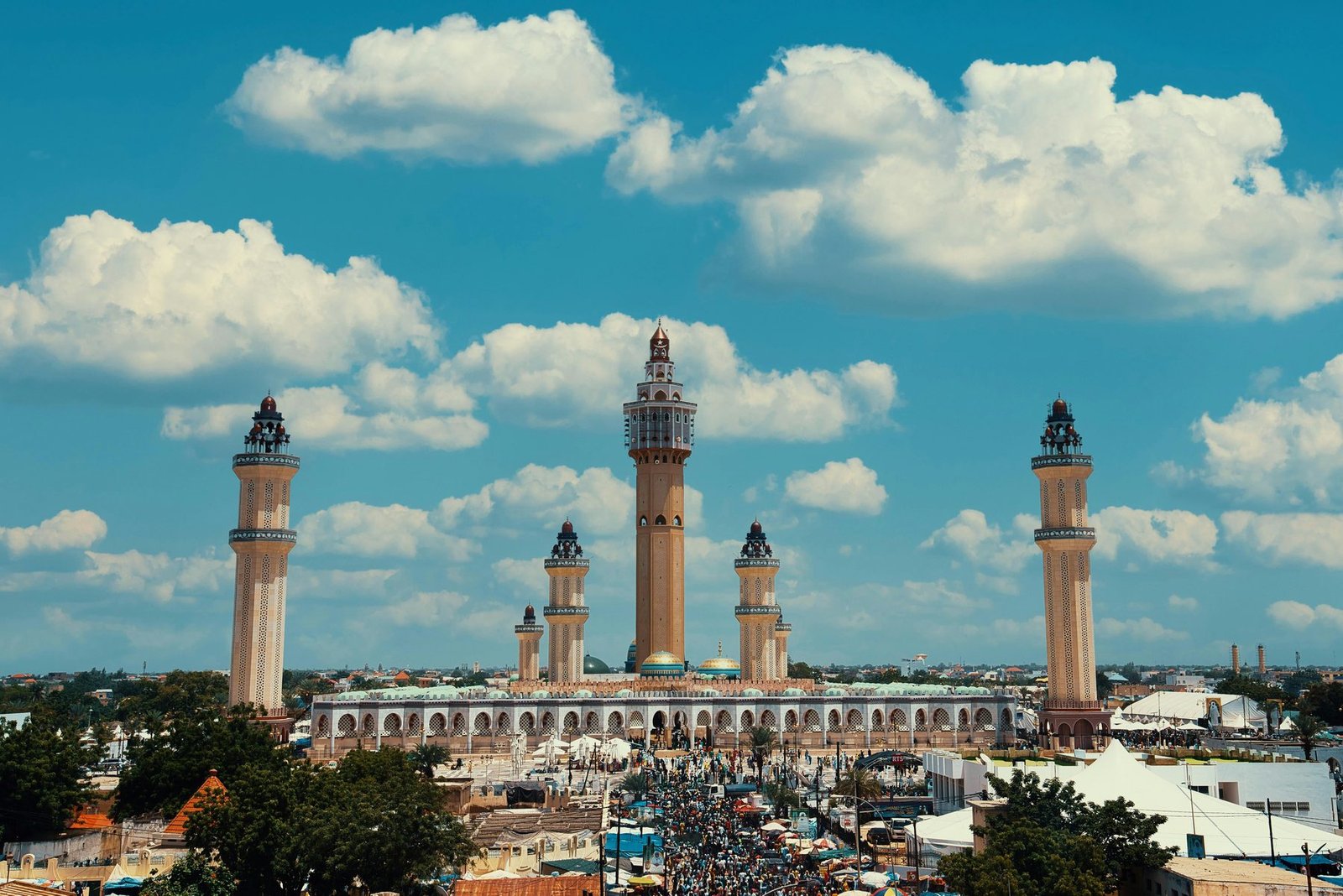
A mosque with a tall central minaret and four corner minarets rises above a crowded town under blue sky with white clouds
The Great Mosque of Touba. Photo: Eyelit Studio.

Counting the public

The firmest attendance figure in the country belongs to the Musée des Civilisations noires: 49,308 paid entries in 2025, of which 19,408 were schoolchildren, with a peak of 978 visitors on May 24, by the museum’s activity report as Sud Quotidien summarized it. In April 2026 the museum opened Ousmane Sow, Intemporel !, an exhibition of the sculptor’s Nuba, Masai, Zulu, and Peul series planned to stay for three years, with school visits and workshops built around it, SenePlus reported.

The biennale’s figure is softer. The minister said at the September launch that the 2024 edition drew more than 780,000 visitors; the organizer’s own page still gives nearly 250,000 for 2018, and no method has been published for either. The Special Report weighs the claim. The OFF, the larger half of the event, counted 403 registered events in 2022, by the organizer’s page; more than 400 are expected this year, according to APS. Under the 2026 conditions each promoter finds a venue and meets every cost. The Biennale leaves the content to them.

Private rooms

Between the state’s buildings and the street sits a layer of private institutions. RAW Material Company, a center for art, knowledge, and society, was founded by Koyo Kouoh in 2008. Kouoh died on May 10, 2025; the exhibition she conceived for the 2026 Venice Biennale, In Minor Keys, includes RAW among several art schools treated as artistic practices in their own right, Art Basel reported, and a fellowship in her name now sends one African art professional a year to Basel. Who directs RAW in autumn 2026 was not found. Current director of RAW Material Company not found The Village des Arts, 52 or 53 studios in housing the culture ministry granted to artists in 1998, is the state’s one lasting concession to working space. The galleries Selebe Yoon and OH Gallery, both on the Plateau, date from 2020 and 2018. Two companies fill some of the gaps: the builder Eiffage has backed Partcours, the yearly gallery circuit, since its first edition, and the Fondation Sonatel paid for the renovation of the Village’s gallery in 2019. The Special Report profiles each of these spaces.

The best-known foreign name is Black Rock Senegal, the residency the American painter Kehinde Wiley founded in Dakar in 2019. In 2024 several men publicly accused Wiley of sexual assault. He called the accusations “categorically false and defamatory,” and three American museums postponed or cancelled exhibitions of his work; the National Coalition Against Censorship wrote to all three that their response did a disservice to audiences, The Art Newspaper reported. What followed for the residency in Dakar is not on record: its home page, read on October 8, 2026, carried no news later than the 2019 launch, and the Special Report found no address and no public program for it. Current status of the Black Rock Senegal residency not confirmed

What can be shown

Two measures of the climate for expression moved in 2026. On March 30 Senegal amended its penal code to raise prison sentences for same-sex relations to between five and ten years and to criminalize the promotion, support, or funding of homosexuality; the law is enforced and has led to arrests, by the British government’s travel advice. No source read for this page or for the Special Report discusses its application to exhibitions. And Senegal fell four places to 78th of 180 in the Reporters Without Borders index, APS reported. Visitors should read the Special Report’s section on safety and rights and their own government’s advisory.

The pavilion in Venice

Senegal has its second national pavilion at the Venice Biennale this year, open until November 22. Caroline Guèye shows Wurus (Wolof for gold) at the Palazzo Navagero, curated by Massamba Mbaye, under the aegis of the culture ministry, by Le Soleil’s account. The paper gives no budget and names no commissioner.

The cities

Six Places to Start

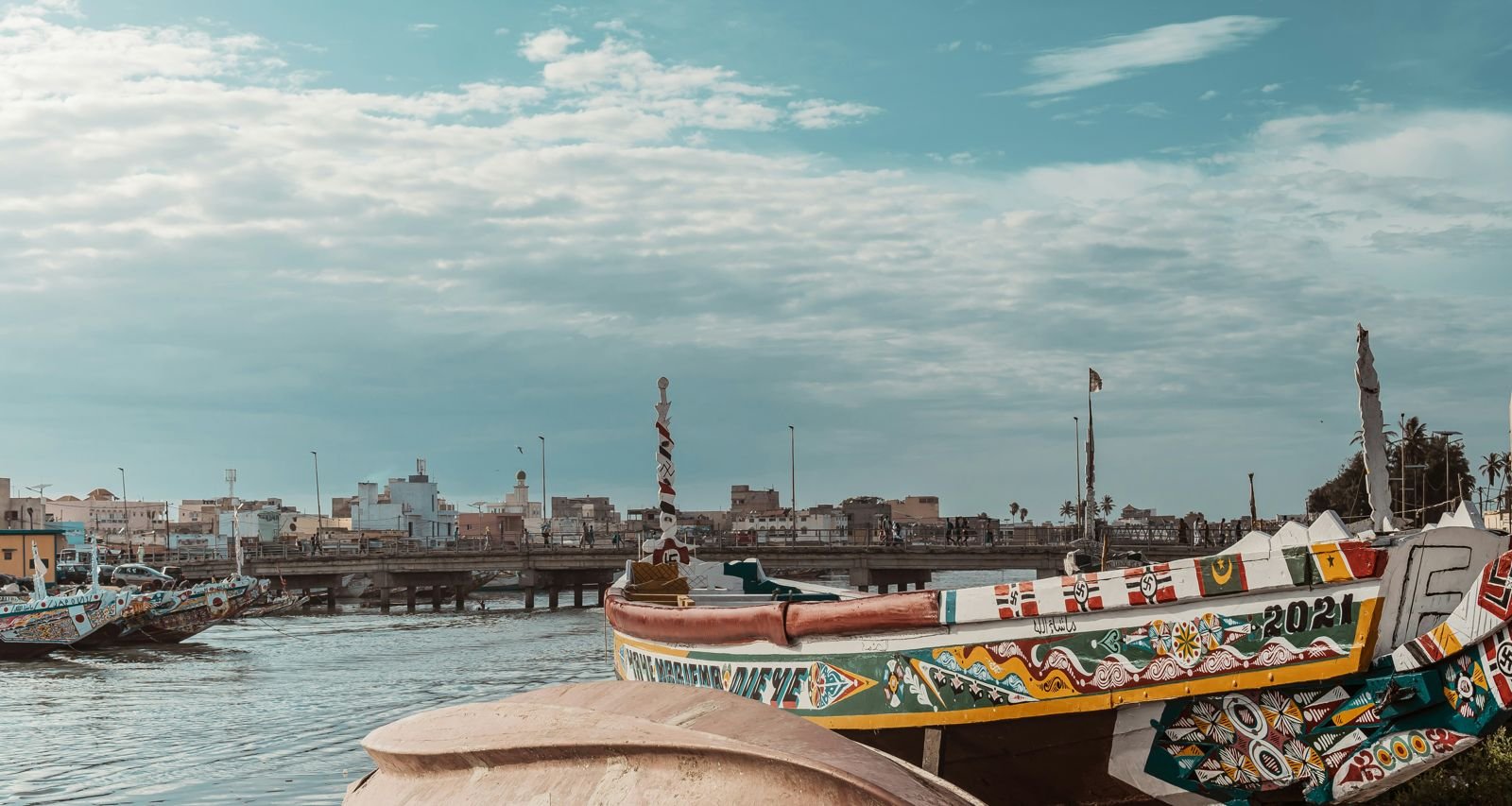
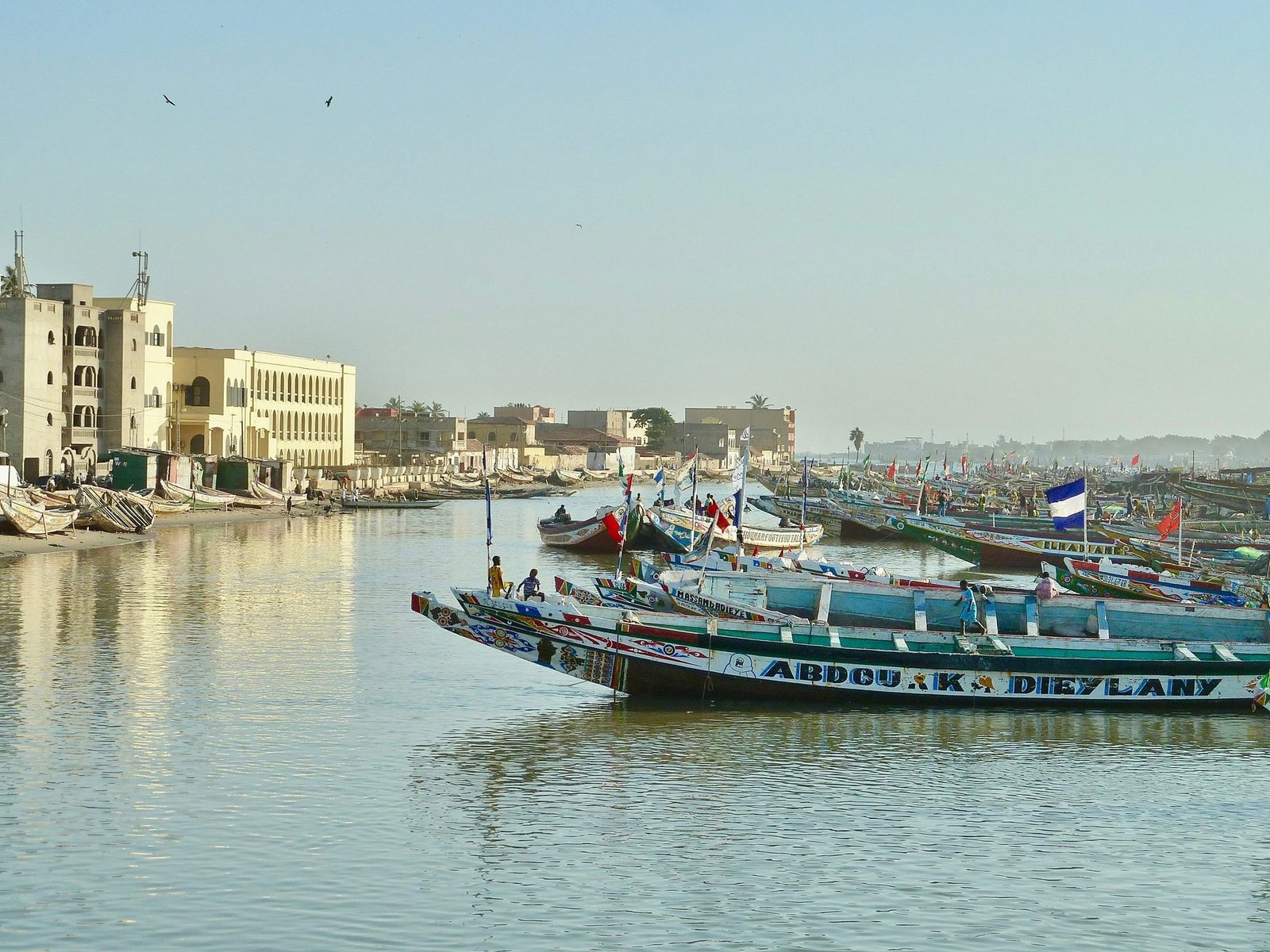
Painted pirogues at Guet Ndar, Saint-Louis
Painted pirogues at Guet Ndar, Saint-Louis, the old capital that is losing ground to the Atlantic. Photo: Eyelit Studio.

Almost every institution named so far is on one peninsula. Beyond it the pattern repeats: something the state founded or inherited, and someone else keeping it going.

Saint-Louis is the sharpest case. The island city, capital of Senegal from 1872 to 1957, has been on the UNESCO World Heritage List since 2000. A breach cut in the Langue de Barbarie sand spit in October 2003 to relieve a river flood was 4 meters wide when it was opened and now exceeds 7 kilometers, Les Afriques reported; the same report says UNESCO raised the possibility of an endangered listing in 2022. On May 9, 2026, the government inaugurated 305 homes, a health post, and a market at Diougop, inland, for families from the spit: 7,000 people rehoused so far out of 15,000 planned, at a cost of 16.5 billion CFA francs, according to Ndarinfo. Human Rights Watch found in 2025 that about 1,000 people displaced by floods in 2015 and 2016 had been left out of the relocation and remained at a site without electricity. In the middle of this, a private collector opened a museum.

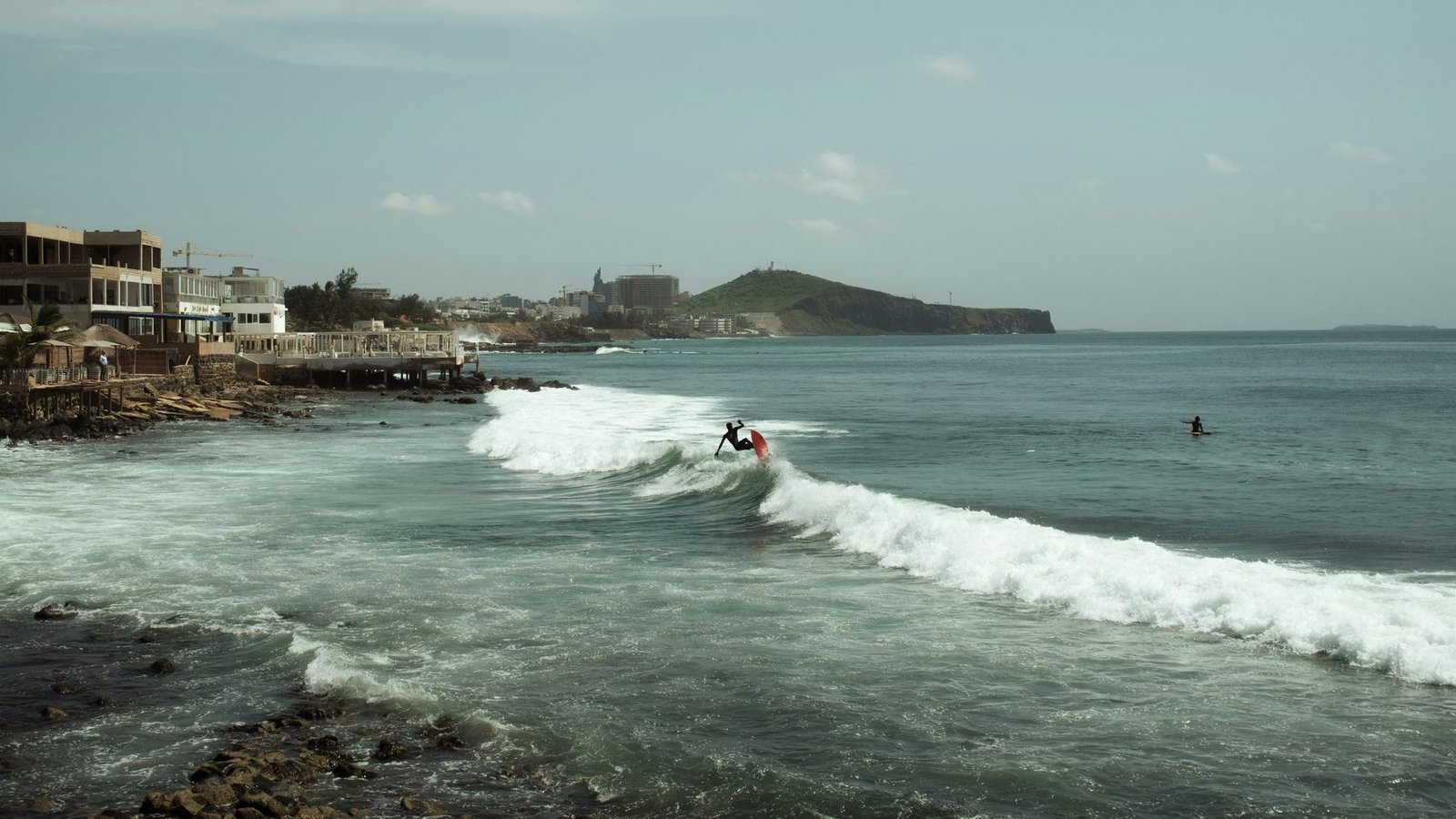
A surfer rides a breaking wave beside a rocky shore with houses and a headland beyond

The capital

Dakar

The courthouse at Cap Manuel, the Musée des Civilisations noires, and the Galerie nationale for the official biennale; the Plateau and the Médina for galleries; the whole peninsula for the OFF.

A surfer on a wave off the coast, Dakar. Photo: Thomas de Luze.

City pageSpecial ReportWhat to see

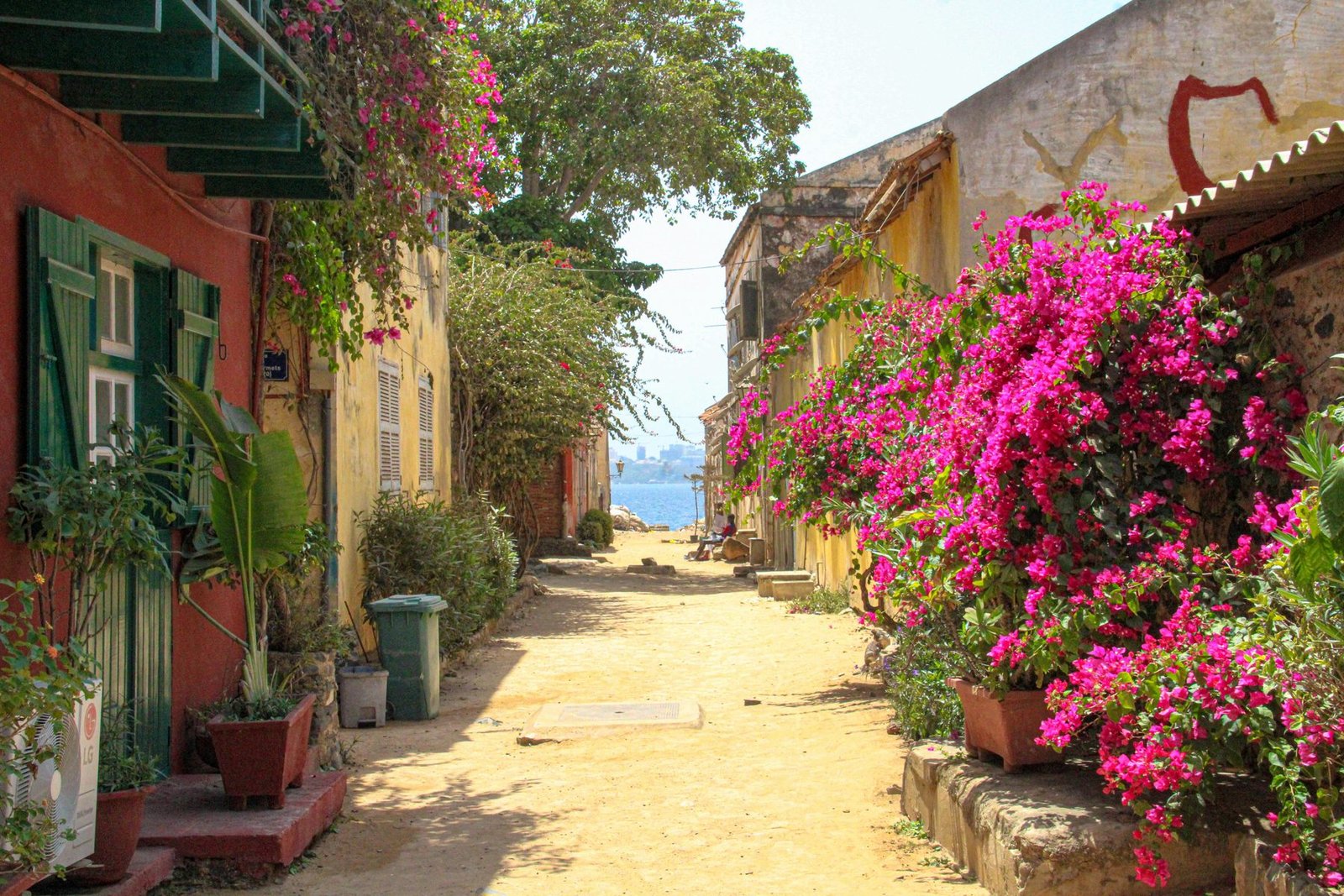
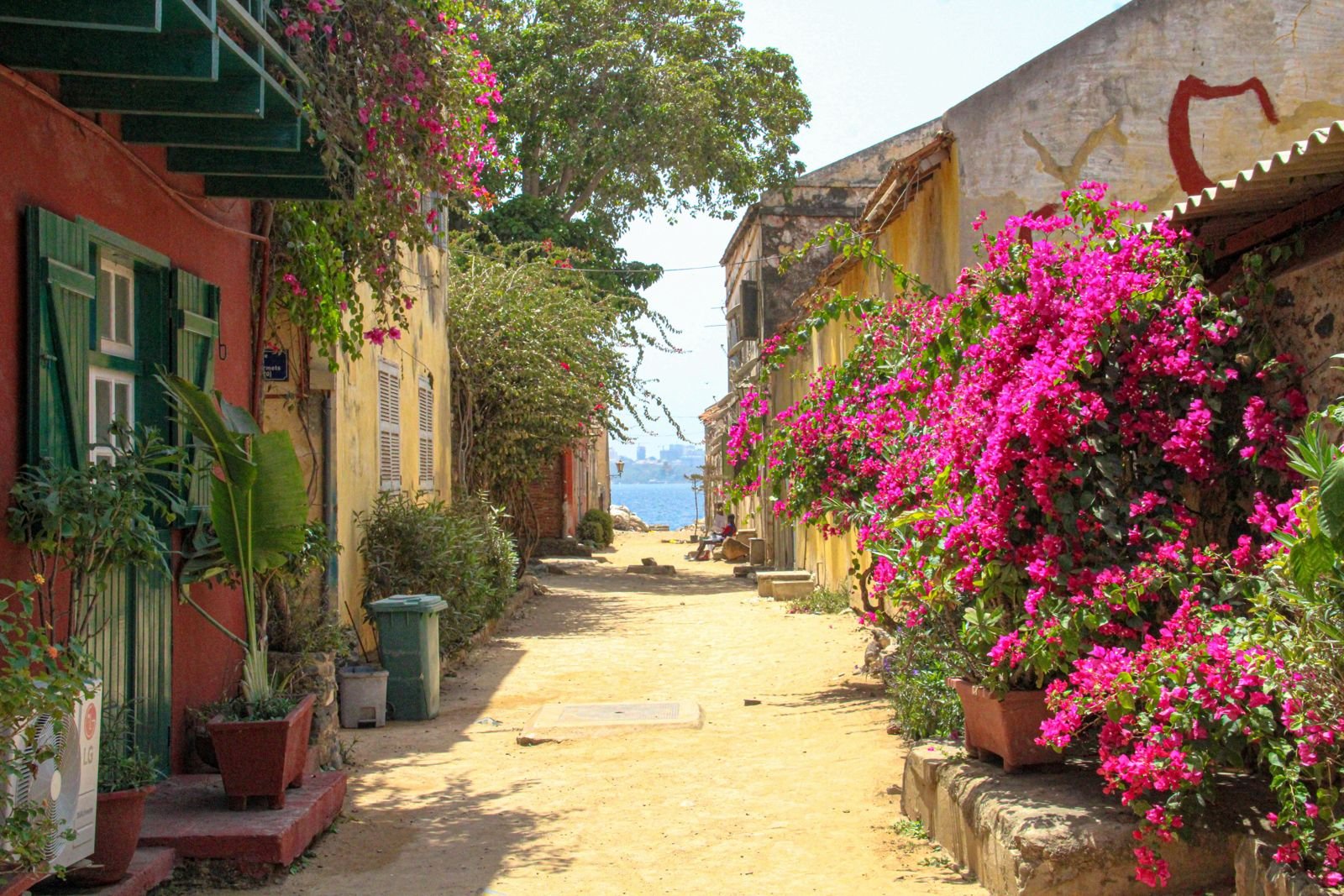
Pink bougainvillea spills over walls along a sandy lane of red and yellow houses with the sea at the end

20 minutes by ferry

Gorée

A car-free island on the World Heritage List since 1978, with the Maison des Esclaves, a history museum, and several OFF exhibitions at each edition. Historians dispute the scale of its role in the slave trade, as the Special Report sets out.

Bougainvillea in a lane running down to the sea, Île de Gorée. Photo: Sweder Breet.

Gorée in the Special ReportMaison des Esclaves

Long painted wooden fishing boats line a calm river below pale multi-story buildings

Jazz, May 4 to 8, 2027

Saint-Louis

The Musée de la Photographie (MuPho), founded in 2017 by the collector Amadou Diaw, spreads across seven restored houses and plans a 10th anniversary in 2027, by DakArtNews. The jazz festival’s 35th edition is listed by Au-Senegal.

Fishing pirogues moored along the river, Saint-Louis. Photo: E. Diop.

60 years on December 4, 2026

Thiès

Home of the Manufactures sénégalaises des arts décoratifs, where Senghor’s École de Dakar became wool. The anniversary falls inside the biennale; arrange a visit in advance.

Out of town

The Petite Côte

Toubab Dialaw and Joal

At Toubab Dialaw, about 60 km south of Dakar, Germaine Acogny’s École des Sables hosted the Biennale de la danse en Afrique from April 29 to May 3, 2026, with 25 companies, RFI reported. At Joal-Fadiouth, Senghor’s childhood house, Mbind Diogoye, stands emptied and in need of urgent restoration, its conservator told APS in June.

The Casamance

Ziguinchor

The Alliance française here lost about 80% of its facilities to violence in 2023 and reopened in temporary premises on April 9, 2026, Le Soleil reported. The Festival sur le fleuve Casamance was held from April 2 to 4, by Au-Senegal’s list. The United States keeps the region at Level 2.

A street on the Île de Gorée, with Dakar across the water
A street on the Île de Gorée, with Dakar across the water. Photo: Sweder Breet.

Biennales and fairs

The Senegalese Calendar

Recurring exhibitions, festivals, and fairs in Senegal, and the fairs abroad where its artists are sold, from the Biennale directory, organizer announcements, and the press named in each row. Dates not yet announced are marked.
EventCityMost recent or nextWhat it isDirectory
Dakar Biennale (Dak’Art)DakarNovember 19 to December 19, 2026, per the organizerBiennale of contemporary African art, 16th edition; 54 entries in the international exhibition and 21 in DesignSeries · Edition
The OFFDakar and beyondOpens within the biennale’s dates; more than 400 events expected, per APS. 2026 OFF program not publishedThe independent program, paid for by its promotersSpecial Report
PartcoursDakarNovember 23 to December 13, 2026, per the organizerAnnual circuit of galleries and art spaces, 15th editionNot yet listed
Manufactures de Thiès, 60th anniversaryThièsDecember 4, 2026, per Le SoleilThe national tapestry workshop, founded in 1966Not yet listed
Dakar CourtDakarDecember 8–12, 2026, per Au-SenegalShort film festivalNot yet listed
Senegal Pavilion, Venice BiennaleVeniceThrough November 22, 2026Caroline Guèye, Wurus, at the Palazzo NavageroGuide
1-54 LondonLondonOctober 15–18, 2026Fair for contemporary African art; no gallery with a base in Senegal on the 2026 listFair
AKAAParisOctober 23–25, 2026Fair for art and design from Africa, 11th editionFair
Festival international de jazz de Saint-LouisSaint-LouisMay 4–8, 2027, per Au-Senegal; the 34th edition ran May 13–17, 2026, per Le SoleilJazz festival, 35th editionNot yet listed
StLouis’DocsSaint-LouisApril 28 to May 2, 2026, per Au-SenegalDocumentary film festival, 17th editionNot yet listed
Biennale de la danse en AfriqueToubab DialawApril 29 to May 3, 2026, per RFIItinerant dance biennale, hosted by Senegal for the first timeNot yet listed
Salon national des arts visuelsDakar12th edition under way in July 2025, per Le SoleilThe state’s national salonNot yet listed
Youth Olympic GamesDakar, Diamniadio, SalyOctober 31 to November 13, 2026, per APANot an art event, but it sets hotel and road conditions before the biennale: about 2,700 athletes in 25 sportsSpecial Report
All African biennales

Museums and players

Who to Know

Institutions

  • Musée des Civilisations noires, Dakar. Opened in 2018; its director general resigned in May 2026.
  • Galerie nationale d’art, Dakar. The state gallery, host of the biennale’s tribute to the painter Ngoor.
  • Ancien Palais de Justice, Cap Manuel. A courthouse closed in 1992 and the biennale’s main site since 2016. An architect’s site lists a hotel and housing scheme for it; no government statement on that scheme was found.
  • Musée Théodore Monod d’art africain, Dakar. The older collection, on Place Soweto.
  • RAW Material Company, Dakar. Koyo Kouoh’s center, with its Académie.
  • Village des Arts, Dakar. Artists’ studios on state land since 1998.
  • Selebe Yoon and OH Gallery, on the Plateau. Private galleries.
  • Maison Ousmane Sow, Yoff Virage, Dakar. The sculptor’s house, which he named Le Sphinx, open to the public since December 2018; Tuesday to Sunday, by Lepetitjournal.com. Confirm hours before going.
  • Manufactures sénégalaises des arts décoratifs, Thiès. Tapestry since 1966.
  • Musée de la Photographie (MuPho), Saint-Louis. Seven houses, privately founded.
  • École des Sables, Toubab Dialaw. Germaine Acogny’s school of dance.

People

  • Bassirou Diomaye Faye, president since 2024.
  • Ahmadou Al Aminou Lô, prime minister since May 2026.
  • Ousmane Sonko, former prime minister, president of the National Assembly since May 26, 2026.
  • Alpha Thiam, minister of culture, crafts, and tourism since June 2026.
  • Mame Coumba Diop, minister in charge of culture, creative industries, and historic heritage.
  • Marième Ba, Secretary General of the Dakar Biennale since 2016.
  • Morad Montazami, artistic director of the 16th edition.
  • Abdoulaye Diop, president of the biennale’s steering committee, a former minister.
  • Amadou Diaw, collector and founder of MuPho.
  • Germaine Acogny, choreographer, founder of the École des Sables.
  • Bassirou Thiam, director general of the Thiès tapestry workshop.
  • Caroline Guèye and Massamba Mbaye, artist and curator of the pavilion in Venice.

The biennale’s own cast, its curators, committee, and past directors, is on the Special Report’s People page; the 54 artists and 21 designers are on its list.

Going there

How to Use the Country

Plan around what is published, and accept that much is not. The biennale’s dates are firm; its hours, prices, and day-by-day program had not appeared on October 6. Start with the Special Report’s front page, then the exhibitions, what to see, and the evenings. For news as the organizer releases it, the Live page lists the Senegalese outlets worth following: Le Soleil, Le Quotidien, APS, and Seneweb.

The weeks matter. The biennale opens six days after the Youth Olympic Games close, in a city that has just hosted about 2,700 athletes. An OFF exhibition may run past December 19. The season is dry and warm. Entry rules, the yellow fever question, the new airport train, taxis, and money are on the Special Report’s practical page.

Give the country at least two days outside Dakar, and read your government’s advisory before fixing a route, above all for the Casamance.

The page on African biennales sets Dak’Art beside the continent’s other events, and the Bamako Encounters page covers the photography biennale in neighboring Mali.

Around the country

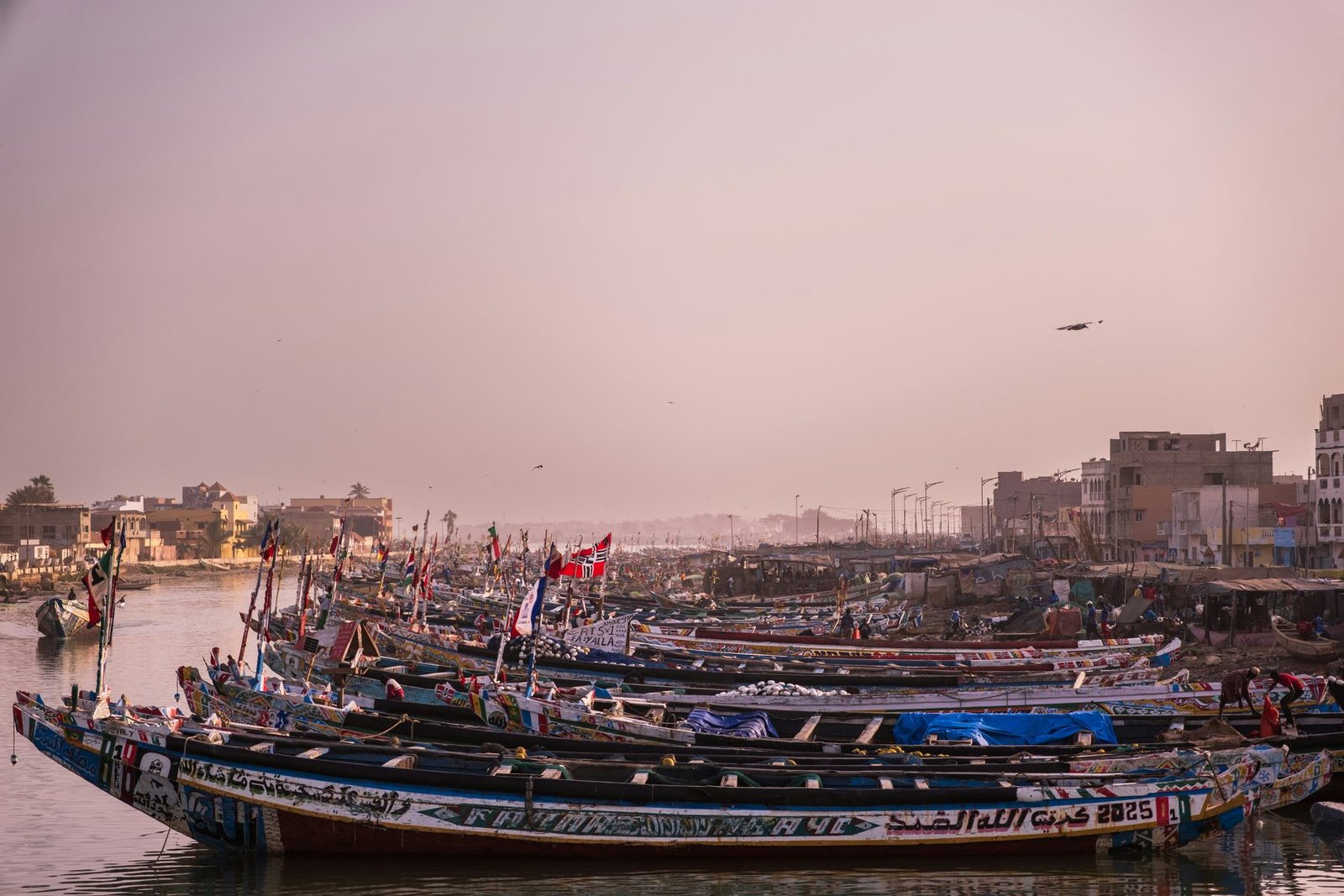
Rows of long wooden fishing boats are packed along a riverbank under a pink hazy sky
Pirogues in the fishing harbor at dusk, Saint-Louis. Photo: Baptiste Riethmann.
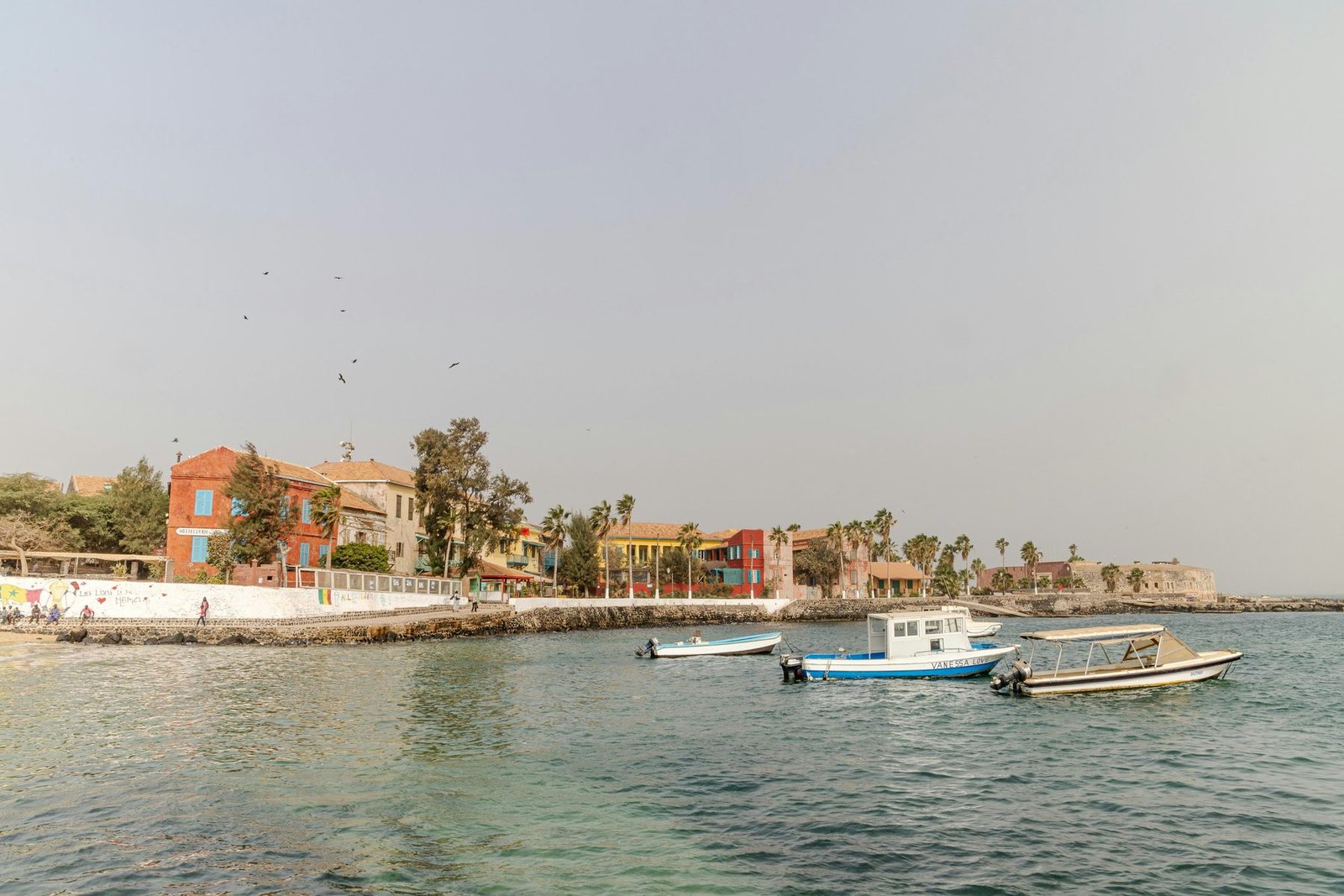
Ocher and red colonial houses and palms line a small harbor with white boats at anchor
The waterfront of Île de Gorée. Photo: Dodji ABAH-DAKOU.
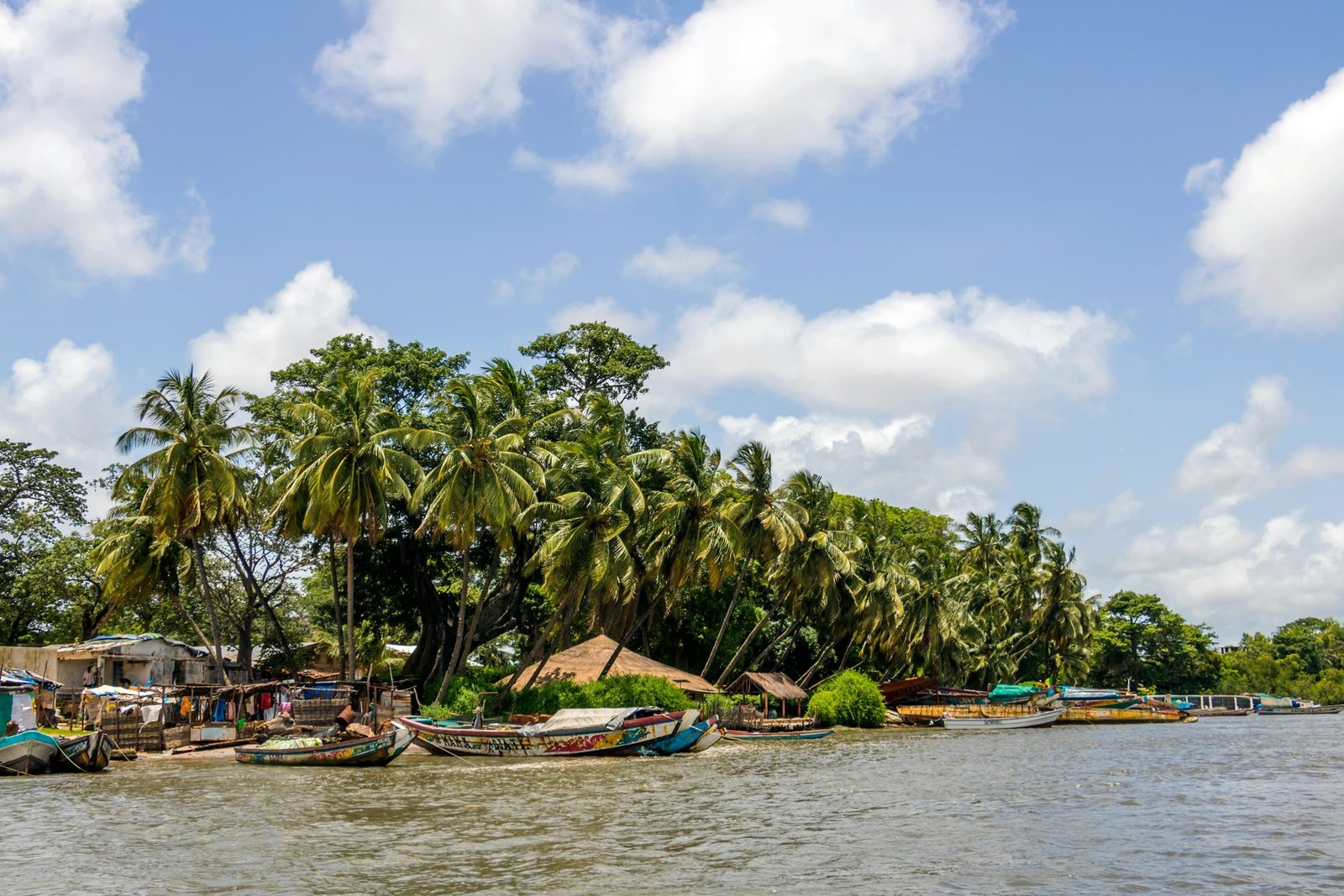
Painted boats are drawn up on a river shore beneath a dense line of coconut palms under a blue sky with white clouds
Pirogues under the palms, Elinkine, Casamance. Photo: Demba JooB.
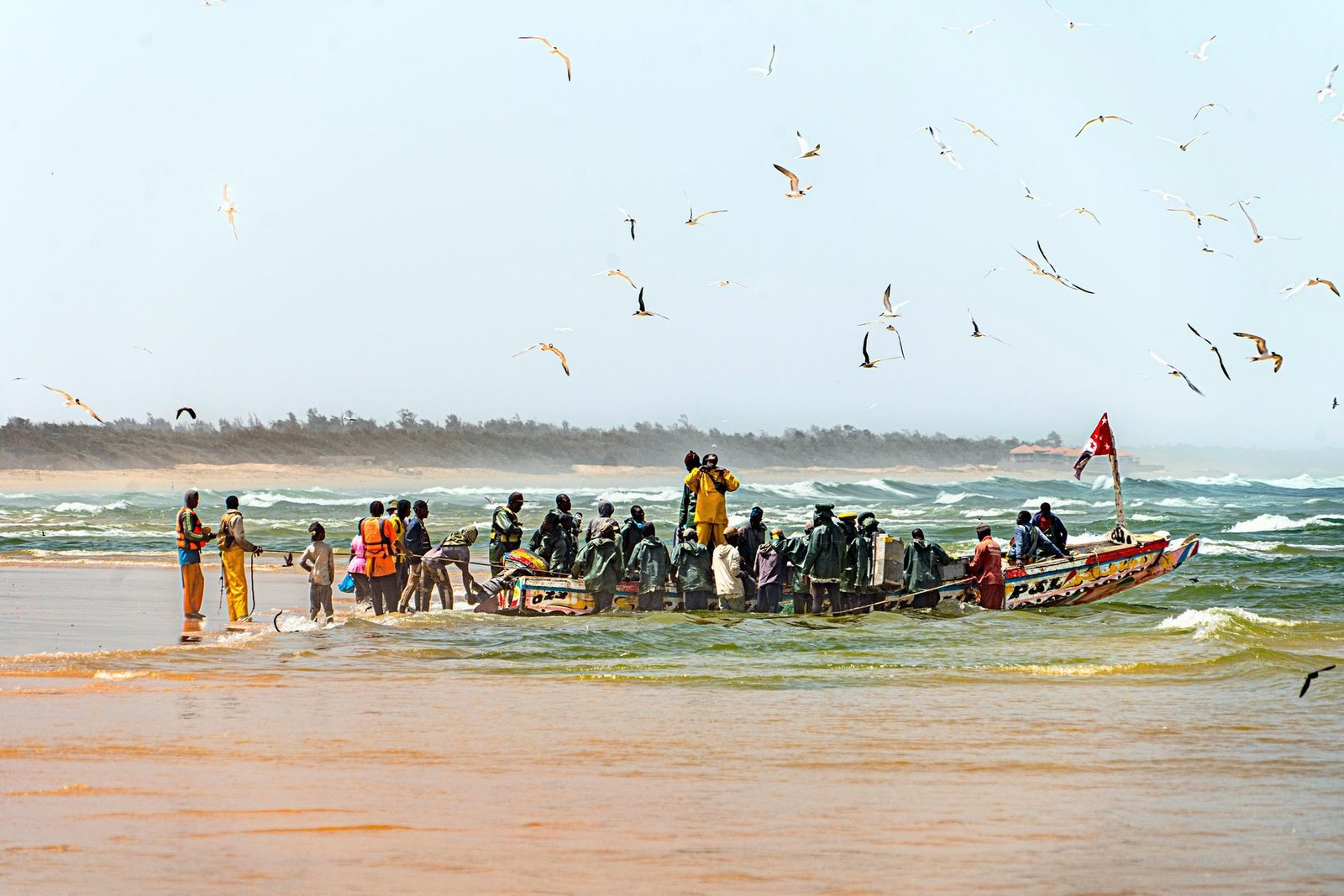
A crowd of fishermen stand in shallow surf around a long painted boat while gulls circle overhead
Fishermen landing a pirogue in the surf, Kayar. Photo: Simonetta Pugnaghi.

What to watch

Six Things for 2027

  1. The IMF board. Whether the facility is approved, on what debt treatment, and what the 2027 budget leaves for culture.
  2. The biennale’s accounts. Whether the 16th edition opens on time, and whether its budget is ever published.
  3. The first request to Paris. Whether Senegal, alone or with Mali, files a claim under the French law of May 2026, and for what.
  4. The museum’s director. Who succeeds Mouhamed Abdallah Ly, and for how long.
  5. The courthouse. Whether Cap Manuel stays an exhibition site or becomes the hotel and housing scheme on an architect’s website.
  6. Saint-Louis. The photography museum’s 10th anniversary, and how many of the remaining 8,000 people on the sand spit are rehoused.

Sources. Facts were checked on October 8, 2026. For the edition and the city, this page relies on the Dakar Biennale 2026 Special Report, checked on October 6, and reuses sources cited there: the Biennale de Dakar’s communiqué, OFF page, OFF conditions, and 2024 postponement notice; RTS; Joshua I. Cohen in African Arts; the 2023 census report; Agence Ecofin; Reuters via CNBC Africa; the revised 2026 budget; Le Quotidien on the ministry and on the 1% law; APS on the artist-status law, the selection, state support, and press freedom; AFP via Modern Ghana; the French restitution law; Bonhams; Le Figaro; Jeune Afrique; Wilmotte & Associés; e-flux; Guichet Jeunesse; Partcours; Selebe Yoon; Galerie Cécile Fakhoury; UNESCO on Gorée; and the travel advice of the United Kingdom and the United States. Read for this page: the IMF; Daba Finance; AFP via Le360 Afrique; Le Soleil on the 2026 culture budget, Alpha Thiam, the art market, the Thiès tapestries and their research center, the Saint-Louis jazz festival, the Venice pavilion, and, via allAfrica, the art market, part two and the Alliance française in Ziguinchor; APS via allAfrica on the biennale and the Galerie nationale, and via SenePlus on Joal; Sud Quotidien via allAfrica on the museum’s director and its 2025 report; SenePlus on Ousmane Sow at the museum and on gallery buyers; RFI via allAfrica on restitution and the dance biennale; The Art Newspaper on the French law and on Kehinde Wiley; Black Rock Senegal; Art Basel and UBS; Art Basel on Koyo Kouoh; 1-54; Time Out Paris; UNESCO on Saint-Louis; Les Afriques; Ndarinfo; Human Rights Watch; DakArtNews; Lepetitjournal.com; APA; Au-Senegal’s festival list and jazz listing; and the Biennale directory for event pages. English renderings of French quotations are by Biennale. Figures are as published by those sources; event dates should be confirmed with organizers. Corrections: contact@biennale.nyc.