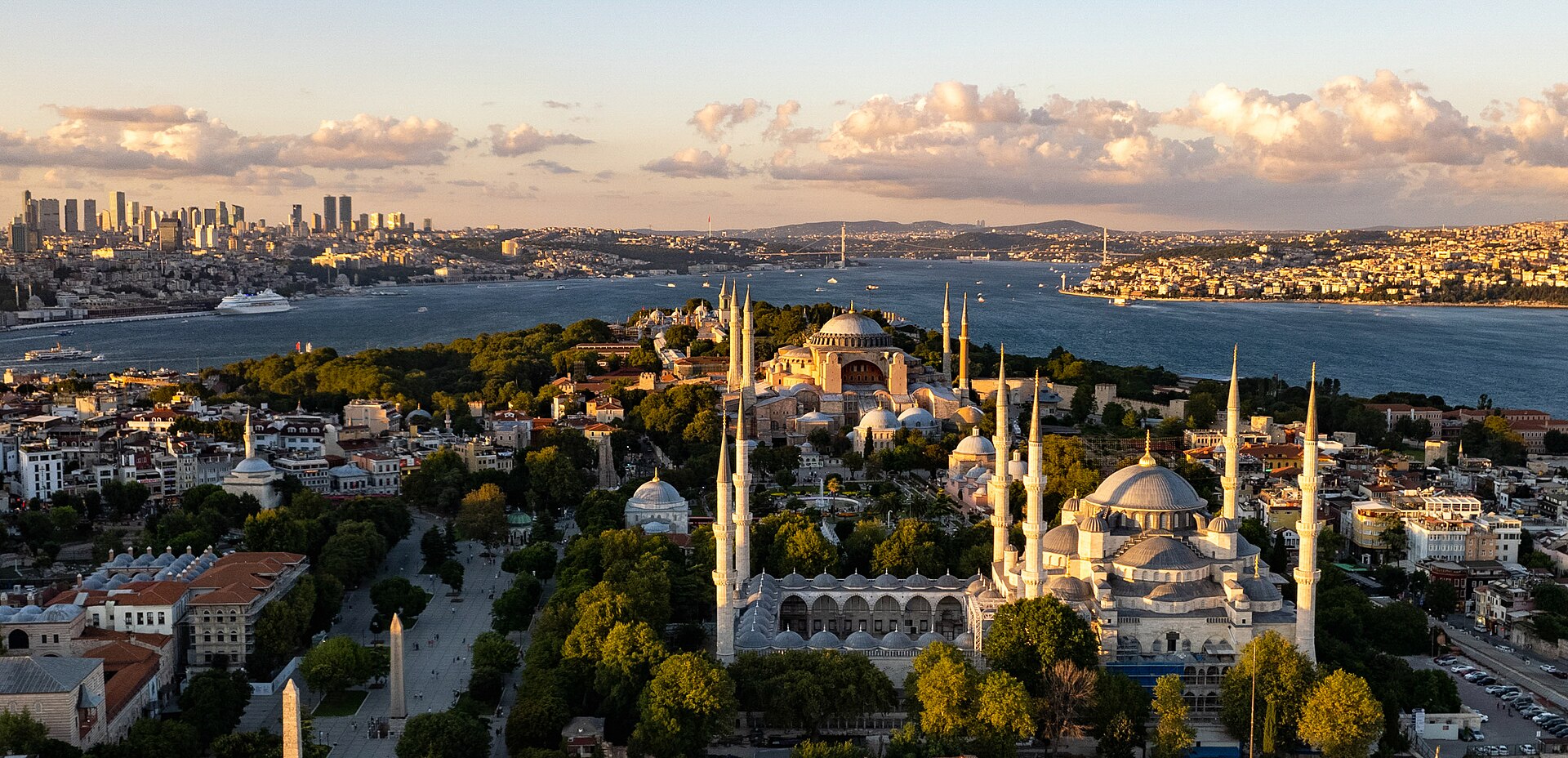
Three powers shape culture in Turkey. The Ministry of Culture and Tourism, under Mehmet Nuri Ersoy, runs the state museums and an archaeology program of about 800 active excavations, and reported nearly 1,200 objects repatriated in a single year. The Istanbul Foundation for Culture and Arts, known as İKSV and founded in 1973, organizes the biennial, the design biennial, the film, music, jazz, and theater festivals, and Türkiye’s pavilion in Venice. The third power, until last year, was the Istanbul Metropolitan Municipality.
The municipality and the law
Under İmamoğlu, whose party is in opposition nationally, the city restored a string of historic buildings and opened them as public venues. He was detained on March 19, 2025, on corruption and terrorism charges that he denies, setting off the largest protests in more than a decade. Nearly 50 others were jailed with him, among them Mahir Polat, the art historian who had led the city’s heritage department since 2019 and who was later moved to house arrest, as The Art Newspaper’s Ayla Jean Yackley reported. At least seven photographers were arrested covering the demonstrations.
In December 2025 parliament changed the law on vakıfs, the charitable foundations that hold much historic property. The central government can now reclaim a historic building from a local authority if it was once endowed to a foundation, and pass it to a state-run one. The properties at stake, according to the newspaper’s February report, include the Basilica Cistern, the Art Nouveau Casa Botter, the gallery ArtIstanbul Feshane, and Tersane, the 15th-century shipyard on the Golden Horn. The report did not record any transfer as completed.
The bill’s sponsor, the ruling-party lawmaker Adem Çalkın, described its purpose as safeguarding a legacy entrusted by the nation while allowing cities to develop. Opposition deputies read it as a seizure. A deputy chair of the main opposition party in Istanbul predicted the state would close the venues or rent them out.
Heritage as statecraft
Heritage for the Future, the program President Recep Tayyip Erdoğan fronts himself, was launched in 2023; the number of active excavations has grown by more than a third in a decade, and state museums take in an average of 25,000 objects a year, by The Art Newspaper’s account. Critics cited in that report worry about tourism pressure on fragile sites and about political influence over research priorities.
Restitution belongs to the same policy. Canada returned 11 Ottoman-era manuscript pages and calligraphic works on March 30, 2026, which Ersoy called the first official repatriation from that country, the newspaper reported.
The biennial’s three curators
İKSV is private, and its difficulties have been of its own making. In 2023 an advisory board chose Defne Ayas to curate the next biennial; the foundation set the choice aside, a decision widely attributed to her 2015 Venice pavilion, which addressed the Armenian genocide, a term Turkey contests, and appointed Iwona Blazwick, who had sat on that board. Advisers resigned, an artist boycott followed, Blazwick stepped down, and the 2024 edition was postponed, as ArtReview and ArtAsiaPacific have recounted. Christine Tohmé of Beirut was brought in to steady things with The Three-Legged Cat, planned in three legs to 2027.
The first leg ran from September 20 to November 23, 2025, in eight venues, free of charge, with more than 600,000 visitors. The money had grown with the plan: the budget for the 18th edition rose to €6.5 million from €2 million, with Koç Holding as primary funder, and six of its 47 artists were Turkish, The Art Newspaper reported as it opened. On December 29 the foundation announced that Tohmé had stepped down “due to personal circumstances” and that the edition would end there. No further explanation has been given by either side. The advisory board named Liu Ding and Carol Yinghua Lu on April 24, 2026.