Emirate of Sharjah
Sharjah
The foundation at Al Mureijah Square, the biennial and the March Meeting.
City pageSharjah Art Foundation
Photo: Firoze Edassery, Wikimedia Commons, CC BY-SA 3.0.
Biennale / Country hubs / UAE
Country hubs · Free to read · Updated October 5, 2026
Country hub · Middle East
The year planned as a coronation, with Frieze and the Guggenheim arriving on Saadiyat, became a stress test instead, and the building went on.
Autumn 2026
The Emirates had 2026 scripted. Art Dubai would turn 20 in April. Frieze would take over Abu Dhabi’s fair in November. The Guggenheim Abu Dhabi, announced in 2006, would open at last in December. Then, on February 28, Iranian missiles and drones struck the UAE in retaliation for American and Israeli attacks on Iran. Three people were killed in the first days, and galleries and museums in Dubai, Abu Dhabi and Sharjah shut their doors, The Art Newspaper reported.
What happened next is the argument of this page. Almost nothing was canceled. Most institutions reopened within weeks. Art Dubai moved to May at less than half its size and swapped its stand fees for a share of sales. Frieze Abu Dhabi kept its dates and announced 84 exhibitors in August. The Guggenheim still opens on December 11. An art system built and paid for by governments turns out to be unusually hard to stop, because the people who decide whether it continues are the people who built it.
That is the strength of the Emirati model and also its limit. The three emirates that matter for art each run a different version. Sharjah has a foundation, a biennial founded in 1993 and a taste for the unsalable. Dubai has the galleries, the dealers and a fair now 20 editions old. Abu Dhabi has the oil wealth, the museums with borrowed names and now a franchise fair. The market itself remains thin, public speech is policed, and the labor that built Saadiyat Island has never been fully accounted for. All of that sits beside real achievement, and an honest visitor holds both.
The market
No reliable figure for the size of the UAE art market was found in the sources consulted for this page, and the absence is informative. What exists is a scatter of data points. Art Basel’s own trends survey in January granted Dubai an “established reputation as an art market hub” and called the buying power of its Gulf neighbors “less tried and tested.” The trade here is dealers, two fairs and the outposts of the auction houses.
Art Dubai was due at Madinat Jumeirah in mid-April. On March 19 it postponed to May 14–17 and changed its terms. Stands normally cost US$739 a square meter, or US$15,000 to US$60,000. For the special edition the fair took a share of sales instead, capped at the equivalent fee. About 75 exhibitors still withdrew. Some 50 galleries showed, against roughly 120 expected, and entry was free for the first time, Artnet News reported.
The buyers who came were local: Emirati, Saudi and Lebanese collectors, with a few from France and North America. Zawyeh Gallery nearly sold out paintings by the Palestinian artist Nabil Anani at US$12,000 to US$360,000. Taymour Grahne Projects sold out a stand of work by the Emirati artist Roudhah Al Mazrouei at US$2,500 to US$14,000. The fair’s own release claims record attendance, without a figure that could be checked. The 2027 edition is set for April 7–11.
“It’s like the old days!”
— Charles Pocock, co-founder, Meem Gallery, at Art Dubai’s special edition, to Artnet News, May 2026
Abu Dhabi Art, the state-run fair on Saadiyat Island, held its final edition in November 2025 with 140 exhibitors. Its successor is Frieze Abu Dhabi, a partnership between Frieze and the Department of Culture and Tourism, at the same venue, Manarat Al Saadiyat, under the same director, Dyala Nusseibeh. Frieze belongs to Ari Emanuel’s holding company Mari, whose backers include IMI, an Abu Dhabi media group, and the Qatar Investment Authority, The Art Newspaper reported. Financial terms were not disclosed.
The first edition runs November 19–22 with 84 galleries, fewer than Abu Dhabi Art’s last outings. Gagosian, Pace, Perrotin, Thaddaeus Ropac and Victoria Miro are in. About 25 exhibitors come from Europe and the Americas, and the majority from West Asia, North Africa and South Asia, including Dubai’s Carbon 12, Lawrie Shabibi, Gallery Isabelle and Green Art Gallery. General admission is Dh36.75, about US$10.
Sotheby’s keeps a gallery in the Dubai International Financial Centre for exhibitions and selling shows. Its larger bet is on the capital. ADQ, an Abu Dhabi sovereign fund, invested US$1 billion in the house in 2024, and its first Abu Dhabi Collectors’ Week, in December 2025, made US$133.4 million. The top lots were a set of Patek Philippe watches, a pink diamond and Jane Birkin’s handbag. Fine art was exhibited more than it was auctioned. That is a luxury market with art attached, for now.
The fiscal case is simple. The UAE levies no personal income tax and charges VAT at 5%. Specific free-zone arrangements for art storage and dealing could not be verified for this page and are left out.
Public money reaches the trade directly as well. Dubai Culture’s International Art Fairs Grant, managed by Art Dubai, covers up to 50% of stand costs at fairs abroad for Dubai galleries showing Emirati artists or artists based in the city for three years or more, The Art Newspaper reported in April 2025. The federal golden visa offers 10-year renewable residence to people working in culture and the arts, on a Ministry of Culture recommendation.
More is planned. The Al Futtaim Group is funding the Dubai Museum of Art, a five-story building by Tadao Ando on a jetty in Dubai Creek, with space for art fairs. No opening date was given when The Art Newspaper reported the plan in October 2025. Design Miami is to launch a Dubai fair at Alserkal Avenue in early 2027. Nomad returns to the former Terminal 1 of Abu Dhabi’s airport on November 18–22, the week of Frieze.
The direct damage to the trade was logistical: closed airspace, the Strait of Hormuz shut and shipping rates up, as Artnet News reported in March. The indirect damage was to confidence among foreign galleries, and it showed in Art Dubai’s exhibitor list. Local dealers reopened and said so. Globally the market shrugged. The three big houses had their strongest first quarter since 2016 while the strikes were under way, The Art Newspaper noted in April. A ceasefire took effect on April 8, after nearly 40 days. The Art Newspaper reported on September 4 that the parties had continued to exchange fire and that negotiations had stalled. Asked in August whether the fair might be postponed or reduced, a Frieze spokesperson told the same paper that Frieze and the Department of Culture and Tourism were working toward opening as planned.
“The war may continue to disrupt the region, but it will not determine the capital’s cultural trajectory.”
— William Mullally, writing in The National, an Abu Dhabi-owned newspaper, July 29, 2026Politics and money
Culture in the UAE is funded and governed largely by the state: each emirate’s government, and the agencies and foundations close to it. The interesting differences are between emirates.
The Sharjah Art Foundation is led by its president, Sheikha Hoor Al Qasimi, who also directed this year’s Biennale of Sydney. Its biennial has run since 1993, and the foundation is, in the words of the Biennale directory, one of the most respected biennial-producing institutions in the world. Sharjah Biennial 17, titled What remains, sits restive, opens January 21, 2027, with 109 participants chosen by two curators, Angela Harutyunyan and Paula Nascimento, across Sharjah City, Al Dhaid, Khorfakkan and Kalba.
The patronage has limits, and a record of testing them. In 2011 the biennial’s director, Jack Persekian, was dismissed after a work in the show was judged un-Islamic and anti-government. The Art Newspaper’s 2025 profile of Sheikh Sultan, Sharjah’s ruler since 1972 and the biennial’s founder, also credits Al Qasimi with widening what can be said there, including about migrant labor.
The capital works through the Department of Culture and Tourism, chaired by Mohamed Khalifa Al Mubarak, and concentrates its spending on Saadiyat Island. The Louvre Abu Dhabi, open since 2017, rests on a 2007 agreement between the two governments, with loans and expertise supplied through Agence France-Muséums. The Zayed National Museum and the Natural History Museum Abu Dhabi opened late in 2025. The Guggenheim Abu Dhabi, by Frank Gehry, opens December 11, 2026, with 30 galleries and a collection built since 2009 of art from the 1960s onward. Al Mubarak told The National the collection was meant to favor artists who had not had their due. The fair that precedes it by three weeks is a state partnership too.
Both flagship museums have a change at the top in opening year. Valerie Hillings, who was responsible for the Abu Dhabi collection strategy from 2009 to 2018, is the Guggenheim Abu Dhabi’s first director, The Art Newspaper reported on August 5. Manuel Rabaté, who had led the Louvre Abu Dhabi since 2016, stepped down on March 7 to run the Kiran Nadar Museum of Art in New Delhi. No successor had been named when the move was reported in February, and none could be confirmed for this page.
Dubai’s model is the most commercial. The emirate’s culture authority, Dubai Culture, supports festivals such as Sikka, and the weight of the scene sits with private actors: Art Dubai, the galleries of Alserkal Avenue and Art Jameel’s museum. That makes Dubai the most exposed to a loss of nerve among foreign visitors, as May showed, and the quickest to improvise.
Speech. During the strikes the authorities arrested people for filming and posting images of the attacks. Hyperallergic put the number above 100 across the UAE by late March. The Art Newspaper cited more than 20 arrested by Dubai’s authorities. The figures differ and neither has been independently confirmed. Human Rights Watch’s World Report 2026, published February 4, says the UAE uses its penal code and cybercrime law to silence dissent, and records that a court in March 2025 upheld the convictions of 53 defenders and dissidents, 43 of them with life sentences. No government response to that report was found for this page. Al Mubarak’s account is of another kind: he has described the Guggenheim to The National as a civic space that brings people together. Institutions projected calm, and few in the art world spoke on the record. One who did, the Dubai dealer Maliha Tabari, told Hyperallergic: “It depends on how much Trump wants to escalate this. He dragged us all into this war.” Criticism of Washington is sayable. Criticism of the host is another matter.
Labor. Saadiyat’s museums were built by migrant workers, and the record is contested. Human Rights Watch’s 2015 progress report documented unpaid wages, confiscated passports and recruitment fees paid by every one of 113 workers interviewed, and said neither the developer nor the Guggenheim, the Louvre and New York University had done enough. The developer had by then hired PricewaterhouseCoopers as a monitor, and that firm’s own audit found that 88% of workers had paid recruitment fees despite a policy against them. In 2016 the Guggenheim’s director at the time, Richard Armstrong, declined a meeting sought by Human Rights Watch and the International Trade Union Confederation, saying the museum shared their commitment and would work through the developer, Hyperallergic reported. Human Rights Watch’s 2026 report says employers still hold disproportionate control over migrant workers under the kafala (sponsorship) system. That finding is general and does not address the museum sites. No independent assessment of conditions on the Guggenheim site during its final construction phase was found for this page. The gap matters more in an opening year.
Dependence. A scene financed by the state survives a war better than one financed by ticket sales. It is also only as open as its patrons allow. Supporters answer that the patronage has produced museums, collections and careers for artists from the region who had no comparable platform, and that is true. Both points will be on display in December.
Society
The audience for art in the Emirates is largely foreign-born. The directory’s Dubai entry, citing Wikipedia, puts expatriates at 92% of the city’s population. The private sector serves that audience as much as the state does. Alserkal Avenue, an arts district in Al Quoz, describes itself as an arts and culture enterprise with three arms: the avenue, a foundation and an advisory business. When the strikes began, the roll call of closures read like its tenant list: Green Art Gallery, Lawrie Shabibi, Aisha Alabbar, Taymour Grahne Projects, 1x1, Firetti Contemporary, by ArtAsiaPacific’s count. Most had reopened by late March, Hyperallergic reported.
The Jameel Arts Centre, opened in November 2018 on the Jaddaf Waterfront by the private foundation Art Jameel, is the nearest thing Dubai has to a contemporary art museum. It has galleries, a research library on Gulf artists and a commissioning program. Its director, Antonia Carver, told The Art Newspaper in March that the center had closed under an internal crisis-response group and tiered protocols.
The May edition of Art Dubai was an accidental experiment. With the international crowd absent and admission free, the fair became a local event, and dealers reported brisk first-day sales to Gulf and Levantine buyers at modest prices. The sold-out stand of an Emirati artist priced under US$15,000 suggests a domestic collecting base that exists apart from museum acquisition budgets. One fair is thin evidence. It is still the first evidence of its kind.
Frieze Abu Dhabi’s program pairs the established artist Mohammed Kazem with the emerging artist Alia Zaal, and the Guggenheim says its hang will place Pollock, Rothko, Warhol and Basquiat beside artists from the Arab world, Africa and Asia. Whether artists based in the Emirates gain from the arrival of the franchises or are crowded out by them is an open question. The answer will be in the acquisitions.
South Asia is part of the same question. Indian galleries stayed away from the postponed Art Dubai, yet Experimenter, Jhaveri Contemporary, Nature Morte, and Project 88 are on Frieze Abu Dhabi’s list. Frieze sells the fair under a regional label, WANASA: West Asia, North Africa, and South Asia.
The cities
Sharjah, Dubai and Abu Dhabi share one stretch of Gulf coast. The art traveler treats them as one long city with three centers and plans by district.
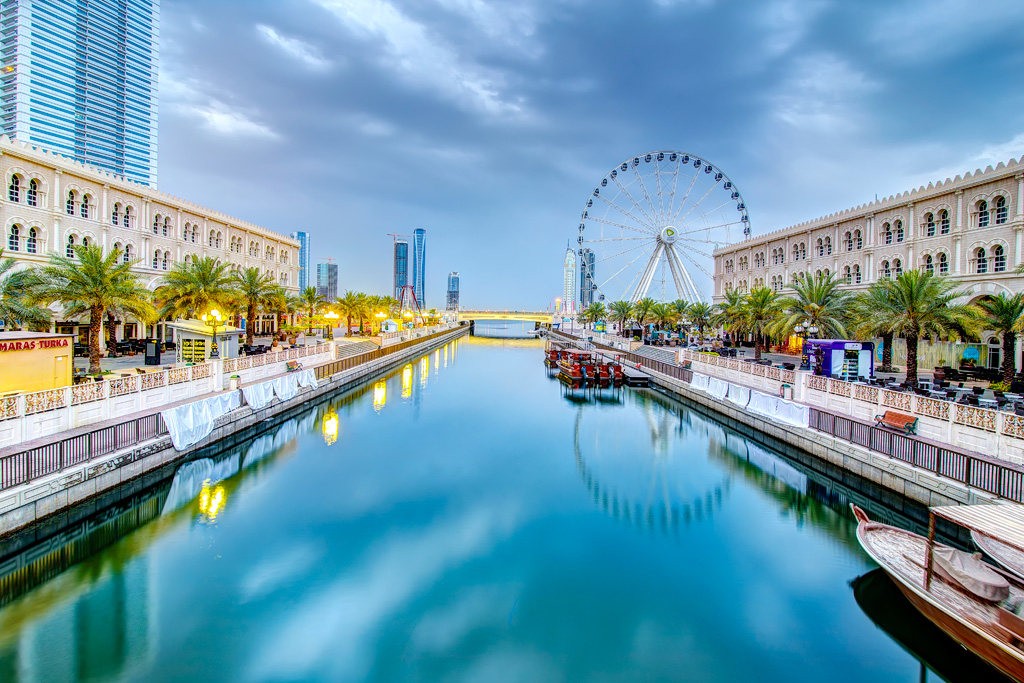
Emirate of Sharjah
The foundation at Al Mureijah Square, the biennial and the March Meeting.
City pageSharjah Art Foundation
Photo: Firoze Edassery, Wikimedia Commons, CC BY-SA 3.0.
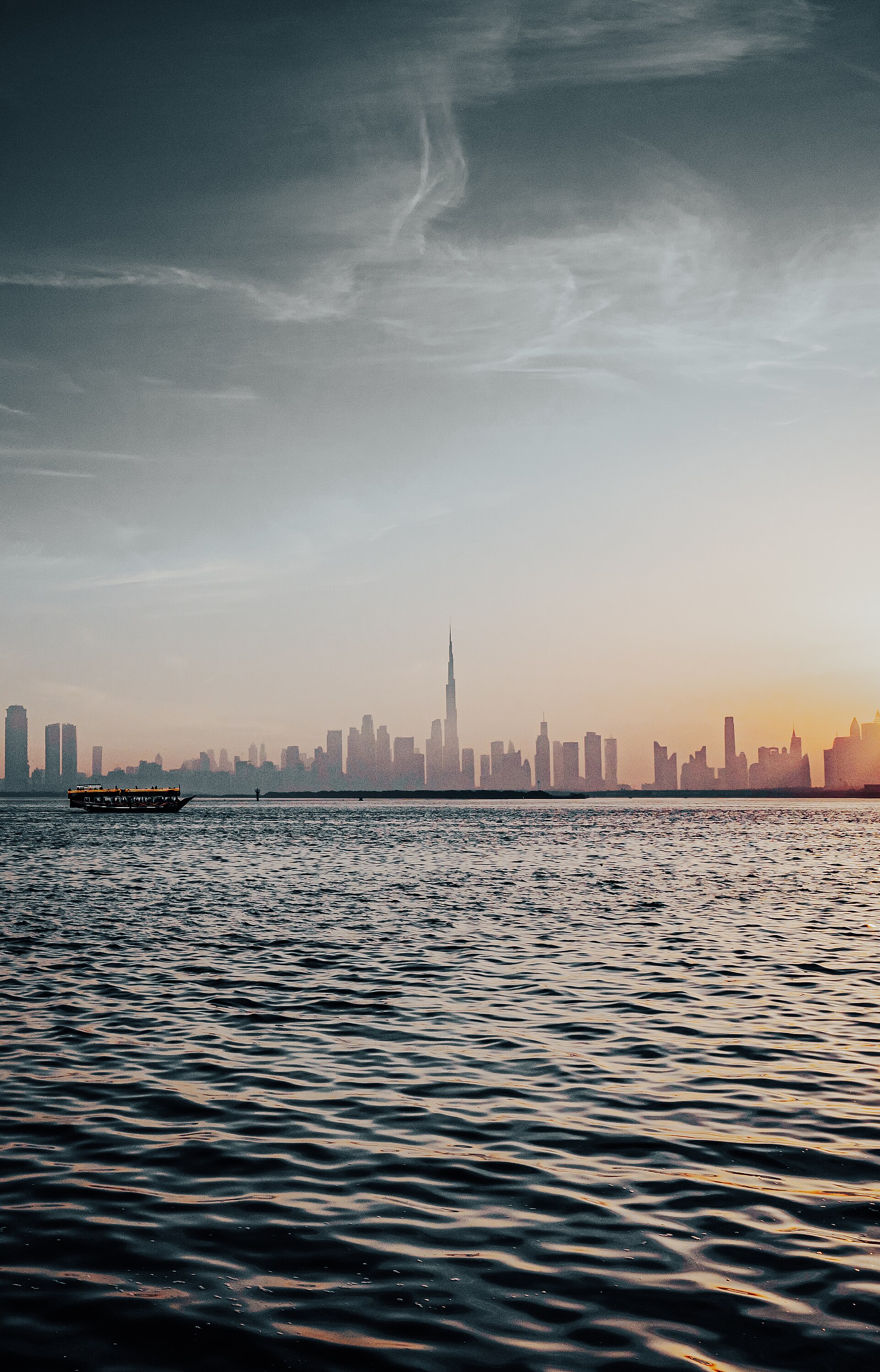
Emirate of Dubai
The commercial center: Art Dubai at Madinat Jumeirah, the Jameel Arts Centre on the Jaddaf Waterfront, Sotheby’s in the financial center.
Photo: MEEDOBEATS, Wikimedia Commons, CC BY-SA 4.0.
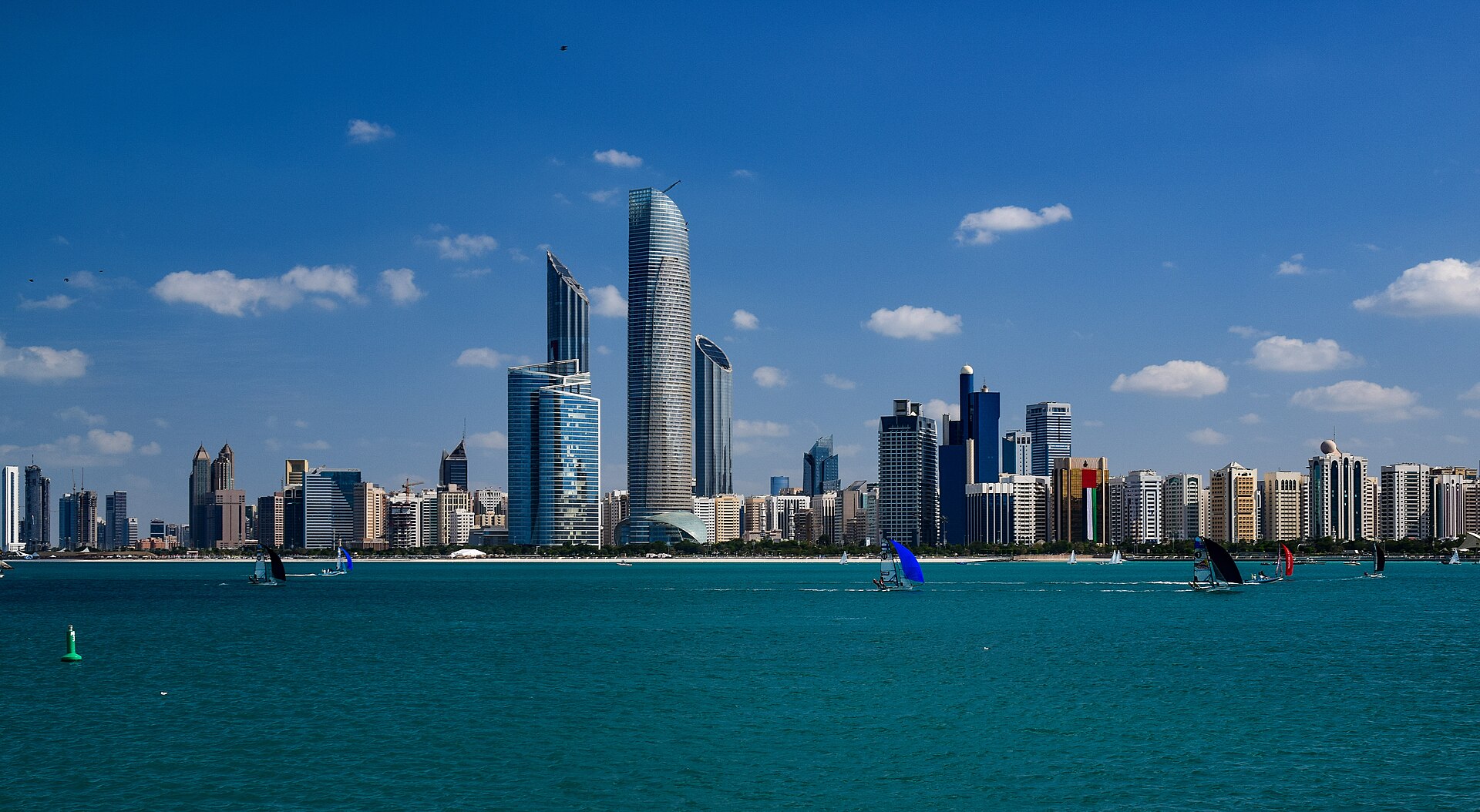
Emirate of Abu Dhabi
Saadiyat Island holds the Louvre Abu Dhabi, the Zayed National Museum, Manarat Al Saadiyat and, from December 11, the Guggenheim.
Photo: Wadiia, Wikimedia Commons, CC BY-SA.
District · Dubai
The district around Alserkal Avenue. Green Art Gallery, Lawrie Shabibi and Taymour Grahne Projects are among the galleries there.
Emirate of Sharjah
The biennial’s outposts, on the east coast and inland. Sharjah Biennial 17 uses all three, so allow a day with a car.
The calendar
| Event | City | When | What it is | Directory |
|---|---|---|---|---|
| Sharjah Biennial | Sharjah | 17th: January 21–June 13, 2027 | What remains, sits restive. Curators Angela Harutyunyan and Paula Nascimento, 109 participants. | 2027 edition |
| Art Dubai | Dubai | Special edition May 14–17, 2026. Next: April 7–11, 2027 | International fair at Madinat Jumeirah, 20 editions to date. | 2026 fair |
| Frieze Abu Dhabi | Abu Dhabi | November 19–22, 2026 | First edition, 84 galleries, Manarat Al Saadiyat. Successor to Abu Dhabi Art. | No page yet |
| Abu Dhabi Art | Abu Dhabi | Final edition November 2025 | The state-run fair, 140 exhibitors in its last year. Replaced by Frieze. | No page |
| Frieze Sculpture Abu Dhabi | Abu Dhabi | November 16–December 16, 2026 | Four artists outdoors at Mamsha Beach. | No page yet |
| Nomad Abu Dhabi | Abu Dhabi | November 18–22, 2026 | Second Abu Dhabi edition, in the former Terminal 1 of the airport. | No page yet |
| National Pavilion UAE, Venice Biennale | Venice | Through November 22, 2026 | Washwasha, curated by Bana Kattan. | No page yet |
| March Meeting | Sharjah | March 19–21, 2027 | Sharjah Art Foundation’s gathering, held during Sharjah Biennial 17. | Sharjah Art Foundation |
| Design Miami Dubai | Dubai | Early 2027. Dates not announced | First edition, at Alserkal Avenue. | No page yet |
| Public Art Abu Dhabi Biennial | Abu Dhabi | First edition ran to April 30, 2025. Second not announced | The capital’s public art biennial, with more than 70 artists in its first edition (The Art Newspaper). The organizer’s site could not be reached for this page. | No page yet |
| Sikka Art and Design Festival | Dubai | Not yet announced | Dubai Culture’s art and design festival. | No page yet |
| Alserkal Art Week | Dubai | Not yet announced | The district’s program week. | Alserkal Avenue |
Sources: Sharjah Art Foundation, Art Dubai, The Art Newspaper, The National (also on Nomad and the March Meeting), National Pavilion UAE. Confirm all dates with organizers, and check your government’s travel advice before booking.
Museums and players
Going there
The art year runs through the cooler months. In the cycle now beginning it reads: Frieze Abu Dhabi on November 19, the Guggenheim on December 11, Sharjah Biennial 17 from January 21, Art Dubai on April 7. A November visit catches the fair, Frieze Sculpture and the Louvre Abu Dhabi. A late January visit gets the biennial’s opening week and the Guggenheim in its second month. Start with the Abu Dhabi, Dubai and Sharjah pages on My Biennale.
Base yourself in one emirate and commute. Sharjah and Dubai adjoin. Abu Dhabi is a drive down the coast, and Saadiyat is a full day. The trip planner builds an itinerary around any of the anchor dates, with flights and tickets alongside. The practical caution this year is plain. The regional conflict closed airspace in March and could do so again. Read your own government’s travel advice, buy flexible fares, and confirm that each venue is open.
For the neighbors, including Art Basel Qatar in Doha, see Biennales of the Middle East. For the craft of traveling for art, see Biennale Traveller. The other country hubs are on the countries page. All of it is free to read.
2027
Sources. The Art Newspaper on the closures, Art Dubai’s postponement, the Gulf market, Frieze’s launch, its exhibitors and Sotheby’s in Abu Dhabi; Artnet News on Art Dubai and the war and the trade; Hyperallergic; ArtAsiaPacific; The National on the Guggenheim, Abu Dhabi’s plans and Frieze’s program; Sharjah Art Foundation; Biennial Foundation; Art in the Middle; Human Rights Watch; Art Basel; further reporting from The Art Newspaper on the ceasefire and the stalled talks, the Guggenheim’s director, the Louvre Abu Dhabi’s director, Sharjah’s ruler, the fairs grant, Dubai’s planned museum, Design Miami, the 2025 museum openings, and the public art biennial; The National on Guggenheim tickets, Frieze’s gallery list, Nomad, and the biennial’s opening program; Human Rights Watch’s World Report 2026; Hyperallergic’s 2016 report on Saadiyat; the UAE government portal; the National Pavilion UAE; and the Biennale directory. The National is owned in Abu Dhabi and is cited for dates and official statements. Fair and auction figures are the organizers’ own. Quotations are as published by the outlets named. Corrections: contact@biennale.nyc.