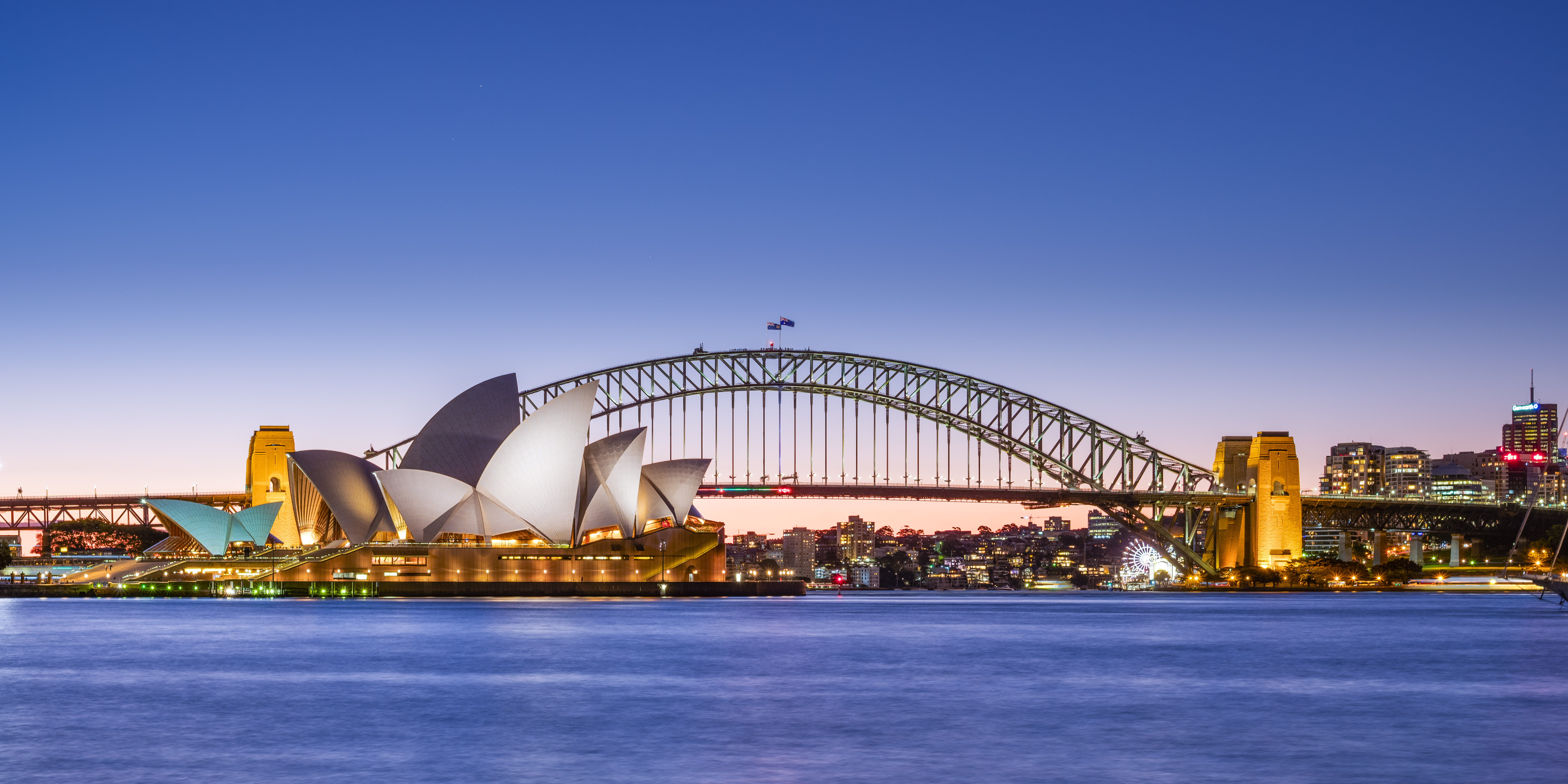
The Asia-Pacific's oldest contemporary art biennial: a fifty-year experiment in what art does when it is staged on the edge of an empire that was never quite its own.
Art Gallery of New South Wales · White Bay Power Station · Chau Chak Wing Museum · Campbelltown Arts Centre · Lewers: Penrith Regional Gallery · Sydney Opera House
Admission
Free
Just want the essentials?
Dates, tickets, the full artist list and a venue-by-venue plan live on the structured guide.
Above
Sutherland Dock, Cockatoo Island, Sydney Harbour, April 2018. The dry dock and surrounding shipyard halls have functioned as the Biennale's signature venue since the 16th edition in 2008.
· Photograph:
Sardaka, Wikimedia Commons
· CC BY-SA 4.0
Next edition announced
The 25th Biennale of Sydney, Rememory, curated by Hoor Al Qasimi, ran from March 14 to June 14, 2026 across six venues including the Sydney Opera House; the 26th edition, led by artistic director Low Kee Hong, opens March 11, 2028.
Rememory, rehearsed: Hoor Al Qasimi returns to Sydney
After stepping aside from the 24th in 2024, the Sharjah Art Foundation president takes the 25th edition and borrows her title from Toni Morrison.
By the Biennale Editorial Team
There is a word in Toni Morrison's Beloved that does not behave like other words. Rememory: not memory, not recall, but a thing that lives in places, in objects, in the air of a room, and that returns to anyone who walks into its weather. "Some things go," Morrison's narrator tells her daughter. "Some things just stay." It is from this word, and the cosmology it carries, that Hoor Al Qasimi has taken the title of the 25th Biennale of Sydney, which opened on March 14, 2026 across multiple principal sites in greater Sydney and ran free of charge until June 14.
The choice is not a flourish. Al Qasimi has been working with versions of the same problem (what art can do with the parts of history that refuse to be archived, repressed, or contained) for two decades, first as the director of the Sharjah Biennial she remade from a regional event into one of the field's most consequential platforms, and lately as the president of the International Biennial Association. Her arrival in Sydney is, in fact, her second arrival. She was first appointed to lead the 24th edition in 2024 before stepping aside in 2023, citing the impossibility of producing the exhibition she had imagined within the time and political weather that then existed. That edition, Ten Thousand Suns, was delivered instead by Cosmin Costinaș and Inti Guerrero, who built a quieter, more sun-soaked exhibition around joy and resistance. Al Qasimi has now had three additional years to think.
The First Nations spine
The defining structural decision of Rememory is the appointment of Bruce Johnson McLean as First Nations Curatorial Fellow: a role that is not, this time, an addendum but a curatorial spine. McLean, a Wierdi man of the Birri Gubba Nation and a senior curator of Indigenous Australian art at the Queensland Art Gallery and Gallery of Modern Art, has worked closely with Al Qasimi on the artist selection, the first wave of which (thirty-seven artists) was announced ahead of the opening, with the full list released across the months leading into March. The 2020 edition NIRIN, curated by Wiradjuri artist Brook Andrew, established the principle that a First Nations curatorial voice could lead the Biennale outright. The 25th is the first edition since to extend the work, not by repeating Andrew's gesture (which was singular and ought to remain so) but by building a second model: a co-authored exhibition in which Indigenous curatorial intelligence is woven into every decision rather than asked to occupy a designated chapter.
The result is most legible in the partnership with the Fondation Cartier pour l'art contemporain, which has come on as the edition's Visionary Partner with a programme of commissions concentrated on First Nations artists from across the global Indigenous field. The principle is one Cartier has staged before (its long-standing relationships with artists working from Indigenous and First Nations contexts have, over decades, produced some of the most carefully made monographic exhibitions in the foundation's history), but the scale and curatorial framing here, with McLean and Al Qasimi as the editorial pair, are particular to Sydney. These are artists whose work has, for years, been doing exactly the kind of historiographic excavation that Morrison's rememory proposes: not the exhibition of culture but the reckoning with what has been lost, what has been buried, and what refuses to remain buried.
Above
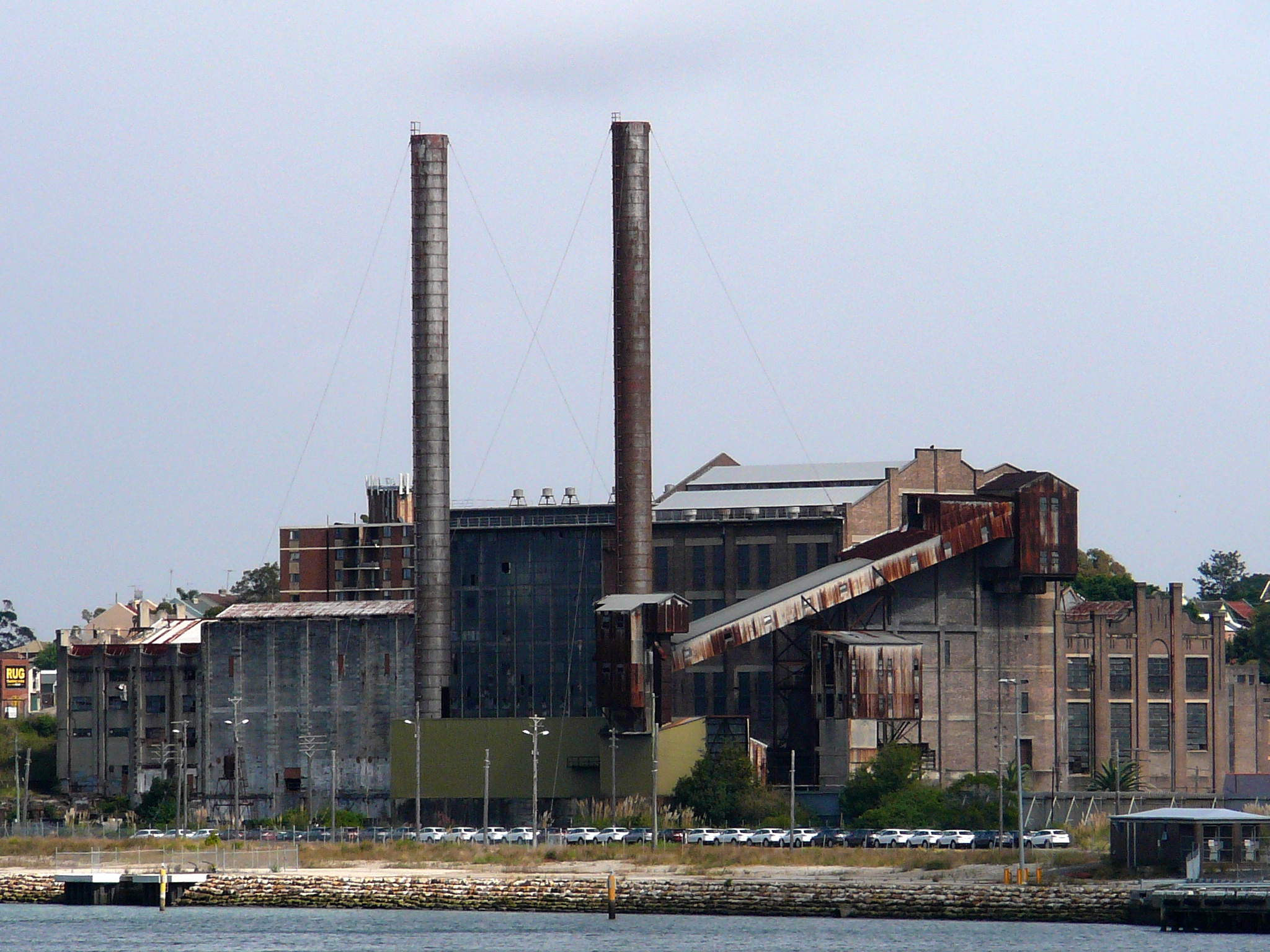
White Bay Power Station, Rozelle, viewed from across the bay. The decommissioned power station opened to the public as a cultural venue in 2024 and is the principal new site of the 25th Biennale.
· Photograph:
James Porteous, CSIRO / Wikimedia Commons
· CC BY 3.0
The shape of the city
The exhibition has been deliberately decentred. The Art Gallery of New South Wales, newly expanded by the Naala Badu building, the SANAA-designed addition that opened in late 2022, anchors the institutional end of the project. The White Bay Power Station, the heritage-listed former coal plant that has spent two decades waiting for a second life, hosts the largest cluster of new commissions. The Chau Chak Wing Museum at the University of Sydney provides the academic and archaeological frame; the Campbelltown Arts Centre, more than fifty kilometres south-west of the CBD, anchors the exhibition in the Dharawal Country of Sydney's outer south-west. There are further commissioned works installed across the Inner West and Western Sydney.
The geometry is consequential. Sydney's biennials have historically rested on the gravitational pull of the harbour: Cockatoo Island as totem, the Museum of Contemporary Art on Circular Quay as anchor, the Art Gallery in the Domain a short ferry ride away. The 25th edition pulls visitors west and south, away from the postcard. This is, on the evidence, the McLean-Al Qasimi reading of rememory at the level of map: a city whose colonial history is densest where its tourist eye is thinnest.
What Al Qasimi has done is the slower, quieter work of building a structure in which First Nations curatorship is not the subject of the exhibition but the grammar of it.
On the 25th edition
What the title is not
It is worth saying what Rememory is not. It is not a memorial exhibition. There is no thematic ribbon: no curatorial wall text promising, in the deadened idiom of the contemporary biennial, an "interrogation" of "histories." Al Qasimi has, in her published statements for the edition, written sparingly and in Morrison's register rather than the curator's, turning frequently to the artists themselves. Where curators of recent Sydney editions have used the catalogue as a venue for an extended thesis, Al Qasimi appears to have chosen restraint, letting the title, and the writers and artists gathered around it, do the work that an introductory essay would otherwise be asked to do.
That refusal is the more interesting move. The Biennale of Sydney has, for fifty years, carried a complicated patrimony: founded in 1973 by the Italian-Australian engineer and patron Franco Belgiorno-Nettis, expanded through the long stewardship of his son Luca, fractured publicly in 2014 when artists withdrew over the family company Transfield's contract to run Australia's offshore immigration detention centres, and gradually reconstituted around a curatorial politics that the founding family could no longer credibly claim. Al Qasimi has not, in interviews, used the language of repair. She has used the language of a different inheritance: Morrison's, and the wider tradition of Black, Indigenous and diasporic thought to which Morrison belongs. The Biennale of Sydney, in 2026, has inherited the museum-going public of one of the world's wealthiest cities and is asking it to read.
The criticism, early
The Australian art press has reliably treated each new Biennale of Sydney as a referendum on the institution itself (on its scale, its sources of money, its relationship to the city, its public) at least as much as on the work in the rooms. The 25th edition arrives with more than the usual freight: it is the first since the curatorial fellowship with First Nations colleagues was made the structuring principle rather than a strand, the first under a non-Australian artistic director appointed from outside the Anglophone biennial circuit, and the first to test, at scale, whether White Bay Power Station can carry the kind of programme an editorial of this kind requires. Early notices, accordingly, are doing the double work that Sydney reviews always do.
There are objections worth naming, even as the full programme is still being announced. The geography of a Sydney biennial, spread across the harbour and out to Campbelltown, is, for visitors with limited time, punitive; the question of how the exhibition coheres for a single visitor across multiple days is the question every Sydney edition has to answer. The Fondation Cartier partnership is generous and substantive, but it does also raise the question of why a Paris-based foundation has been the institution best placed to commission new First Nations work at this scale. And the edition's defenders will eventually need to confront the line that runs from the Transfield boycott of 2014 to the institutional dependence on private partnership now baked into the Biennale's operating model. None of this is unique to Sydney. All of it is more visible here than elsewhere.
What Al Qasimi has done, against this, is the slower and quieter work of building a structure in which First Nations curatorship is not the subject of the exhibition but the grammar of it, and of inviting an institution to live for a season inside a borrowed word. Whether it stays, or whether some things just go, is what the next three years of programming will decide.
From the Biennale — Watch
Al Qasimi introduces Rememory
The Biennale of Sydney's official introduction to the 25th edition. Video: Biennale of Sydney, YouTube · plays here without tracking cookies.
Critical Perspective The Institutional Question
After Transfield: the long argument about who pays for the harbour
A decade on from the 2014 boycott, the question the artists asked has not been answered. It has only been reorganised.
By the Biennale Editorial Team
The story Australian arts institutions tell about the 2014 Biennale of Sydney boycott has become, in the intervening years, almost too neat. Forty-one artists signed an open letter in February that year objecting to the Biennale's founding sponsorship from Transfield Holdings, the Belgiorno-Nettis family company whose subsidiary Transfield Services had been awarded the contract to operate Australia's offshore immigration detention centres on Manus Island and Nauru. Nine of those artists subsequently withdrew. Within two weeks, Luca Belgiorno-Nettis (the founding chairman's son, who had himself spent decades as the Biennale's principal benefactor) resigned, and the Biennale severed its forty-one-year relationship with the family company.
The story tends to be told as a victory: artist conscience triumphed over corporate patronage; an institution corrected itself in public; the field moved on. It is a tidy narrative and it is also, on the evidence of the decade that followed, partial.
The first thing the 2014 episode did not resolve is the structural dependence of the Biennale on private money. The Biennale of Sydney's annual revenue from federal, state and city government, taken together, has historically covered less than half its operating budget. The rest is commercial: corporate partnerships, foundation grants, individual giving, in-kind sponsorship. The Transfield partnership was unusual in its longevity and the scale of its founding role; it was not unusual in its form. When Transfield went, something had to fill the hole, and what filled the hole was a more diversified, more international, and less publicly visible private patronage structure. The Visionary Partner programme, of which Fondation Cartier's involvement with the 25th edition is the current expression, is one product of that reorganisation.
The second thing the boycott did not resolve is the harder question the artists' letter actually asked, which was whether art institutions ought to be participating in the cultural laundering of governments and companies whose other activities are politically indefensible. The 2014 letter was specific: it named the contract, it named the policy, it named the company. The institutional response (sever ties with this particular partner) preserved the principle of corporate sponsorship while removing the partner whose presence had become untenable. It was, in this sense, a manageable concession.
What has changed, more interestingly, is the public expectation. The boycotts and open letters that followed Sydney (at the Whitney Biennial in 2019 over Warren Kanders's Safariland, at documenta 15 in 2022 in a wholly different register, at the Venice Biennale in 2024 over Israeli state pavilion participation) borrowed a great deal from the Sydney precedent, not only the tactic but also the assumption that artist withdrawal is a legitimate, costly and effective form of institutional critique. Sydney made this conversation conventional in a way it had not previously been.
It is fair to ask, looking at the 25th edition, whether the Biennale's current operating culture has absorbed the lesson of 2014. The signals are mixed. The institution has been more transparent about its funding sources; the partnership structure is more international and less dependent on any single domestic patron; the curatorial commitments, particularly to First Nations art and to the Global South, are and have been sustained across multiple editions. At the same time, the institution has not (as some of the 2014 signatories continue to argue) published a formal ethics policy on partner due diligence, and the question of which kinds of corporate or state involvement would now trigger a withdrawal remains, by design, a matter of editorial judgement rather than written rule.
The 2014 boycott was not, in the end, primarily about Transfield. It was about who gets to set the terms on which contemporary art is presented to the public. A decade on, in a city now hosting one of the more international biennials of the year, that argument has not closed. It has, more usefully, become one of the things this institution does: staging the question of its own conditions as part of the exhibition.
From the Rooms
What the critics found
i.
In a dimly lit pump house at White Bay, Edgar Calel's Pa sutz' xkix tzolojpe (from the fog they will return), a 17-metre embroidered blanket glowing yellow, was singled out as the edition's quiet anchor: ancestry staged at industrial scale.
The exhibition, one reviewer noted, refuses spectacle and rewards endurance, tracing an arc through the city's western fringes before returning to the harbour. Nikesha Breeze's commissioned Living Histories is among the works critics kept returning to.
More than 80 artists and collectives are gathered across the expanded network of sites, with coverage abroad reading the edition's insistence on suburban proximity as its real argument about who the city remembers.
Five episodes from a fifty-year history. Not a chronicle, but the moments at which the institution became different from what it had been before.
19731st Edition
The founding — Belgiorno-Nettis and the Asia-Pacific argument
The first Biennale of Sydney opened in November 1973 in the newly completed Sydney Opera House, weeks after the building's royal inauguration. Its founder, the Italian-born engineer and Transfield co-founder Franco Belgiorno-Nettis, had pressed for the project since 1971 as a gift to mark the Opera House's opening. The inaugural exhibition was coordinated by Anthony Wintherbotham, with the Australian artist and curator Elwyn Lynn serving as deputy chair and guiding mentor, and presented work from 37 artists across the Asia-Pacific region to roughly 15,000 visitors.
The founding premise (that an Australian biennial should look first to the Asia-Pacific rather than to Europe) was, in 1973, eccentric. It is the position from which everything else the institution has done follows.
Sources: Biennale of Sydney archive · Sydney Morning Herald, November 1973
200816th Edition
Cockatoo Island, and what a venue can do
The 16th Biennale, Revolutions: Forms That Turn, curated by Carolyn Christov-Bakargiev, opened the former naval dockyard and convict-era prison of Cockatoo Island to the Biennale for the first time. The island had been handed to the Sydney Harbour Federation Trust in 2001 after a long debate about its future; the Biennale's use of it transformed both venue and institution.
The decision proved consequential beyond the edition. Cockatoo Island became the Biennale's signature site for the next decade, and the model of programming art in post-industrial harbour infrastructure has since shaped venues from Liverpool to White Bay.
Sources: Sydney Harbour Federation Trust · Biennale of Sydney 16th edition archive
201419th Edition
The Transfield boycott
On 19 February 2014, forty-one artists participating in the 19th Biennale, You Imagine What You Desire, signed an open letter objecting to the founding sponsorship of Transfield Holdings, whose subsidiary held the contract to operate Australia's offshore detention centres. Nine artists subsequently withdrew. Within two weeks, chairman Luca Belgiorno-Nettis resigned and the Biennale terminated its forty-one-year relationship with the family company.
The episode is the most consequential public dispute in the institution's history and the proximate precedent for similar actions at the Whitney (2019), documenta 15 (2022), and the Venice Biennale (2024).
The edition still drew more than 623,000 visitors, with close to 125,000 from overseas, at the time the highest international visitation in the Biennale's forty-one-year history. (The 665,488-visitor figure sometimes cited belongs to the previous edition, the 18th Biennale of 2012, all our relations, co-curated by Catherine de Zegher and Gerald McMaster.) A decade on, the institution and its critics have been unable to disentangle the boycott's politics from the edition's reach.
Sources: The Sydney Morning Herald, 19 February–7 March 2014 · The Guardian Australia, March 2014 · Queensland Arts case study, Biennale of Sydney: You Imagine What You Desire
202022nd Edition
NIRIN — the first First Nations–led edition
The 22nd Biennale, NIRIN ("edge" in the Wiradjuri language), was curated by Wiradjuri artist Brook Andrew, the first Indigenous artistic director in the institution's history. The edition opened on 14 March 2020 and closed nine days later in the first wave of COVID-19 closures; a digital programme extended its reach through the following months.
Despite the abbreviated public run, NIRIN has functioned in the field's reading as a structural turning point: the edition after which First Nations curatorial leadership at the Biennale became a precedent rather than an aspiration.
Sources: Biennale of Sydney 22nd edition archive · contemporary Australian press, March–April 2020
202424th & 25th
The Al Qasimi pivot
Hoor Al Qasimi was first appointed Artistic Director of the 24th Biennale of Sydney in late 2022 before stepping aside in early 2023. The 24th edition, Ten Thousand Suns, was subsequently delivered by Cosmin Costinaș and Inti Guerrero in March–June 2024.
Al Qasimi was re-appointed to the 25th edition and has now delivered Rememory (2026), built around a First Nations curatorial spine led by Bruce Johnson McLean and a major commissioning partnership with the Fondation Cartier. The two-edition arc has, in effect, re-set the institution's relationship to international curatorial leadership.
Sources: Biennale of Sydney official communications · The Art Newspaper, January 2023
People in the 25th Edition
The figures shaping Rememory
Artistic Director · 25th edition
Hoor Al Qasimi
President and Director of the Sharjah Art Foundation, which she established in 2009 after a decade remaking the Sharjah Biennial from a regional event into one of the field's most consequential platforms. Trained at the Slade School of Fine Art and the Royal College of Art. Elected President of the International Biennial Association in 2017 and concurrently Artistic Director of the 6th Aichi Triennale (2025).
A Wierdi man of the Birri Gubba Nation and senior curator of Indigenous Australian art at the Queensland Art Gallery and Gallery of Modern Art (QAGOMA), Brisbane. His curatorial work has shaped major QAGOMA surveys of contemporary Indigenous Australian art across more than a decade.
Wiradjuri visual artist and curator whose practice spans installation, photography, sculpture and museum studies. Artistic Director of the 22nd Biennale of Sydney (NIRIN, 2020), the first First Nations–led edition in the institution's history and the structural precedent the 25th explicitly extends. Professor of Practice-Based Research, Monash University.
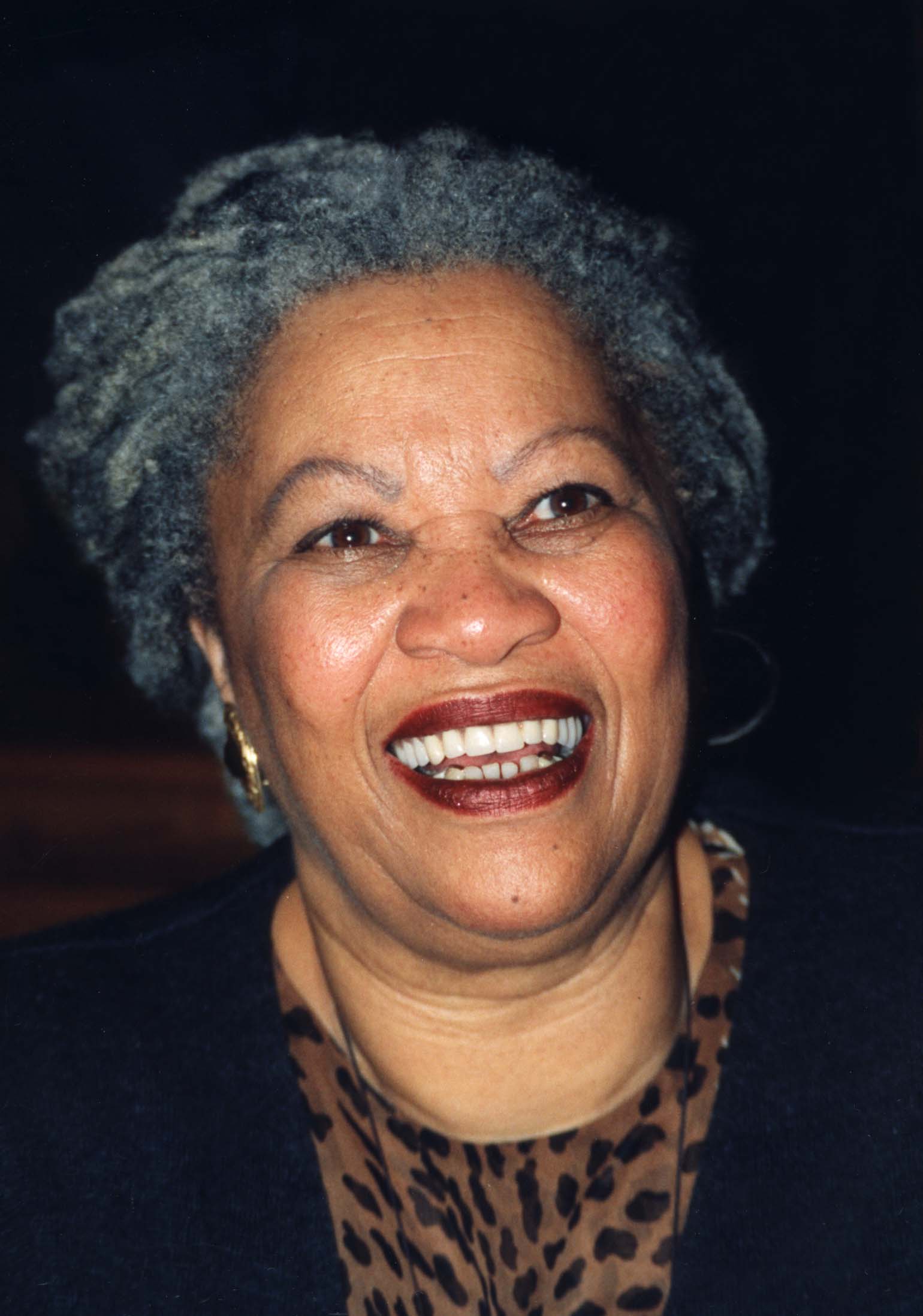
1931–2019. American novelist, editor and professor; Nobel Laureate in Literature (1993), the first African-American woman to receive the award, and Pulitzer Prize winner for Beloved (1987), the novel from which the word rememory is taken. Morrison's account of places and objects that hold the past is the cosmology the 25th edition lives inside.
These notes record the 25th edition, which ran March 14 to June 14, 2026. The 26th edition, led by artistic director Low Kee Hong, opens March 11, 2028; visitor details will follow the official announcement.
Dates, venues, free admission, and how to move across the harbour city.
When the Biennale ran
The 25th Biennale of Sydney, Rememory, ran March 14 to June 14, 2026, a three-month exhibition across the late southern autumn into early winter. Hoor Al Qasimi was Artistic Director; Bruce Johnson McLean was First Nations Curatorial Fellow.
The Biennale operates on a two-year cycle. The 24th edition, Ten Thousand Suns (2024), introduced White Bay Power Station as a flagship venue; the 25th has retained that anchor and added Chau Chak Wing Museum at the University of Sydney for the first time.
Where it happens
The 25th edition was staged across six venues (the Art Gallery of New South Wales at The Domain, White Bay Power Station at Rozelle, the Chau Chak Wing Museum at the University of Sydney, Campbelltown Arts Centre on Dharawal Country in the south-west, Lewers: Penrith Regional Gallery at Emu Plains in the west, and the Sydney Opera House) together with a programme of commissioned works in public space across the Inner West and Western Sydney.
Public programming, performances and discursive events extended the footprint to additional venues across the metropolitan area: Blouza Hall in Granville, Centenary Square, Fairfield City Museum & Gallery, Marrickville Town Hall, the Museum of Contemporary Art Australia at Circular Quay, the National Centre of Indigenous Excellence in Redfern, Parramatta Artist Studios, Redfern Town Hall and Sydney Town Hall. The 25th edition did not use Cockatoo Island; the island had anchored the Biennale's identity from 2008 onward but has not been programmed in recent editions.
Tickets & opening hours
Admission to the Biennale of Sydney is free at every principal venue, a defining institutional commitment maintained continuously since the Biennale's founding in 1973. No pass or ticket is required to enter the exhibitions at AGNSW, White Bay Power Station, Chau Chak Wing Museum, or Campbelltown Arts Centre.
White Bay Power Station is open Tuesday to Sunday, 10 AM to 5 PM, closed Mondays except on public holidays. During the 25th edition, Friday evenings hosted the ticketed Art After Dark live-music programme (6 PM–9.30 PM, tickets from A$35; A$10 for First Nations guests). Opening hours at the other venues follow each host institution's standard schedule; confirm at biennaleofsydney.art.
Getting to Sydney
By air: Sydney Kingsford Smith Airport (IATA: SYD) is the principal arrival point, 8 kilometres south of the CBD. The Airport Link train runs to Central Station in around 13 minutes; an airport station access fee (about A$17) is added to the standard fare.
By rail: Central Station is the city's mainline hub, with NSW TrainLink services from Melbourne, Brisbane, Canberra and regional New South Wales.
Across the city: Sydney's integrated public transport network (trains, buses, light rail and ferries) runs on the Opal contactless system. Most visitors tap on with a contactless credit or debit card or a phone wallet; physical Opal cards can be purchased at the airport, convenience stores, and newsagents. Daily and weekend fare caps apply.
When to visit during the season
The opening weekend in mid-March is the press and preview period, with artist talks, official openings and the densest concentration of programming. April and May are the practical sweet spot for an unhurried visit: the southern autumn settles in, school-holiday traffic recedes, and the Art After Dark series at White Bay Power Station runs every Friday evening. The closing weeks in early June carry the Vivid Sydney cross-over (the city-wide light festival traditionally overlaps with the closing of the Biennale) and the final-night Last Light programme at White Bay on Friday 12 June.
The principal venues are geographically dispersed: AGNSW in the city, White Bay west across the harbour, Chau Chak Wing in Camperdown, Campbelltown an hour by train to the south-west. Allowing three to four days for the full circuit is the working rule; two days suffices for the central venues alone.
Where to stay
The Rocks, Circular Quay and the CBD put visitors within walking distance of AGNSW and the harbour ferries; the Inner West (Newtown, Glebe, Balmain) is closer to White Bay and Chau Chak Wing and tends to be quieter. Surry Hills and Darlinghurst are the practical mid-range base for visitors who want easy reach of both the city venues and the Inner West evening programme.
The Biennale of Sydney does not operate accommodation; Destination NSW maintains a public visitor directory at sydney.com. The next edition opens March 11, 2028; planning details will follow official announcements.
Practical details confirmed against the Biennale of Sydney public programme for the 25th edition, the White Bay Power Station venue schedule, and Transport for NSW Opal documentation. Opening hours and Art After Dark pricing reflect the schedule as of the 2026 edition; confirm current details at the official Biennale of Sydney site before travel.
Quick answers
Biennale of Sydney: what people ask
When is the next Biennale of Sydney?
The 26th Biennale of Sydney, led by artistic director Low Kee Hong, opens on March 11, 2028. The 25th edition, Rememory, curated by Hoor Al Qasimi, ran from March 14 to June 14, 2026.
Is the Biennale of Sydney free?
Yes. Admission to the Biennale of Sydney is free at every principal venue, a commitment maintained since the first edition in 1973. During the 2026 edition, only the Friday-evening Art After Dark music programme was ticketed. Official Biennale of Sydney site.
Where is the Biennale of Sydney held?
The 25th Biennale of Sydney in 2026 used six venues: the Art Gallery of New South Wales, White Bay Power Station, the Chau Chak Wing Museum, Campbelltown Arts Centre, Lewers: Penrith Regional Gallery and the Sydney Opera House, which also hosted the first edition in 1973.
When was the Biennale of Sydney founded?
The Biennale of Sydney was founded in 1973 by the Italian-Australian engineer and patron Franco Belgiorno-Nettis and is the oldest contemporary art biennial in the Asia-Pacific. More than 2,400 artists from over 130 countries have taken part across its 25 editions.
My Biennale
Carry the Biennale with you
Save the Biennale of Sydney to your circuit, follow the artists of Rememory as their pages grow, and sync every opening and closing to your own calendar on the companion app.
Photographs are reproduced from Wikimedia Commons under the Creative Commons licences stated in each caption. Credit and a link to the source file are provided in every case. If you are the photographer of an image used here and wish to discuss its use, please write to rights@biennale.com; Biennale will respond promptly.
Editorial content is original and credited to the Biennale Editorial Team. No image, essay, or other editorial element on this page may be reproduced commercially without written permission. Quotation under fair dealing or fair use for review, scholarship, or news reporting is welcomed and need not be cleared.