Skip to content

Biennale  /  Country hubs  /  Australia

Country hubs · Free to read · Updated October 5, 2026

Country hub · Oceania

Art in Australia

A country that spent 18 months arguing over who decides what represents it, while its audiences kept turning up in record numbers.

Sydney
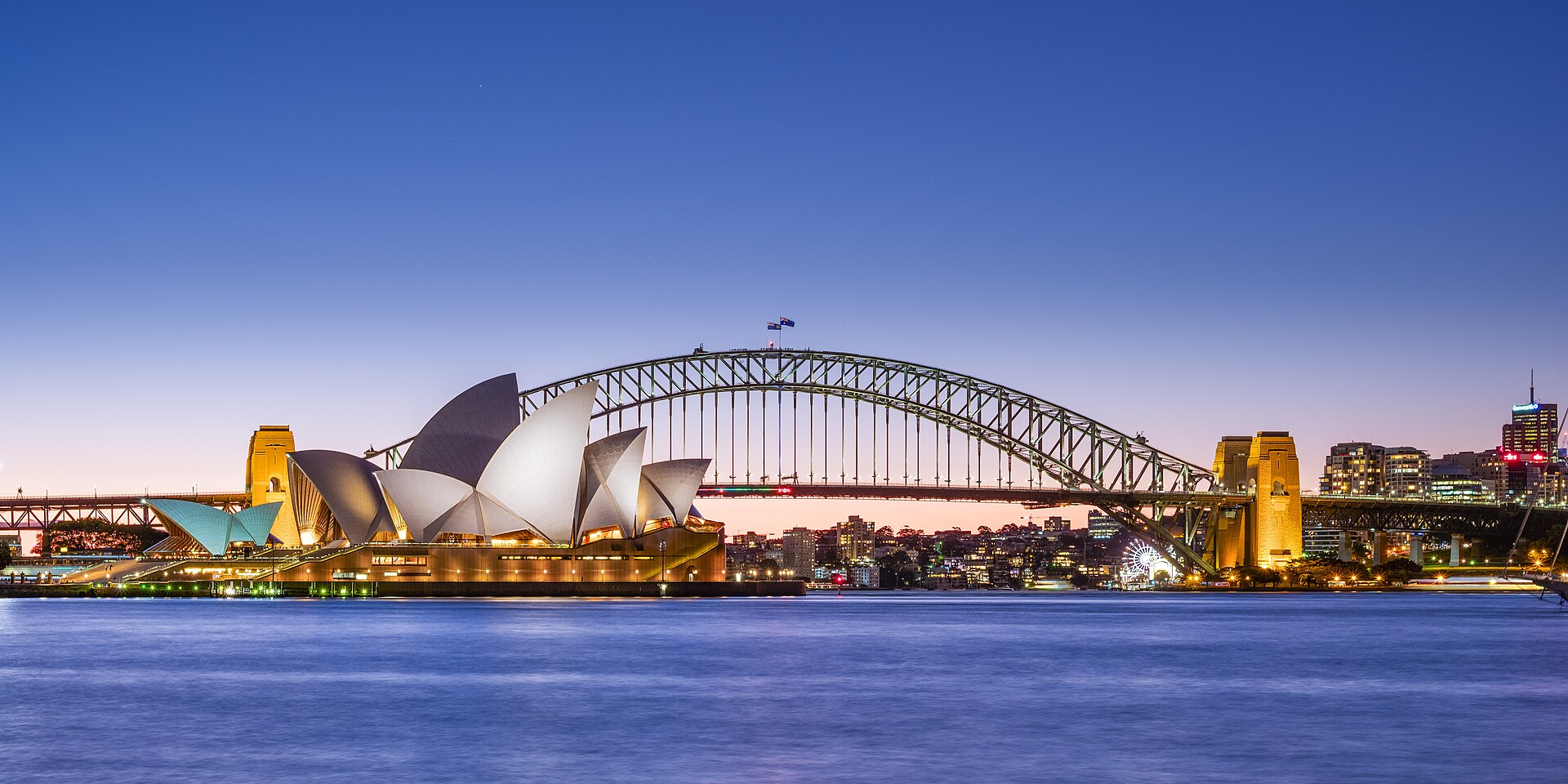
Sydney. Photo: Benh LIEU SONG, Wikimedia Commons, CC BY-SA 4.0.

Autumn 2026

Fragile Institutions, Sturdy Public

Australian art has two stories in 2026, and they point in opposite directions. The first is institutional. The national funding body dropped its Venice artist and then took him back. The country’s oldest biennale lost a sponsor in its opening week. The largest public gallery in Sydney cut 51 jobs. The second story is the audience, which did not seem to notice any of it. Sydney Contemporary drew a record 26,813 visitors in September, Dark Mofo logged more than 550,000 attendances in June, and Creative Australia’s own survey found that 74% of Australians went to a live arts event in the past year.

The argument of this page is that the gap between those stories is the real condition of art in Australia. Demand is broad and loyal. The bodies that are supposed to serve it are thinly funded, close to government, and quick to flinch. When Creative Australia rescinded Khaled Sabsabi’s selection for the 2026 Venice Biennale in February 2025, the review it later commissioned found “a series of missteps, assumptions, and missed opportunities,” as ArtAsiaPacific reported. Sabsabi was reinstated, and since May 9 his work has occupied both the Australia Pavilion and the Arsenale.

The money is modest by the standards of the northern markets and unusually well regulated. A 5% resale royalty has been law since 2010. A voluntary code governs dealing in Indigenous art, and a statute against fakes has been promised. The fairs are regional and well attended. The private museums, David Walsh’s in Hobart and Judith Neilson’s in Sydney, remain the country’s most distinctive cultural exports. What follows is the market, the politics, the society, and then the practical matter of where to go and when.

The market

Small, Regulated, Regional

Australia is a small market with long memories. Auction sales of art across the country stood at A$148.49 million for 2025 as of December 10, according to a year-end tally republished by Deutscher and Hackett, the Melbourne and Sydney house. Two paintings by Howard Arkley, the airbrush laureate of the suburban interior, shared the top price at A$2.5 million each, and Arkley’s work traded A$10.5 million in the year. The same house’s August 2025 sale set a record of A$981,818 for Grace Cossington Smith. A national total for 2026 had not been published when this page was written.

The fairs

The primary market shows itself twice a year. Sydney Contemporary held its 10th edition at Carriageworks from September 3 to 6 with more than 100 exhibitors and a record 26,813 visitors, Australasian Leisure Management reported. No sales total for 2026 has been found. The trend before it was downward: A$21 million in 2023 and A$17.5 million in 2024, by AAP’s count, and A$16 million in 2025 according to the fair’s principal sponsor. Crowds grew as takings shrank. ArtsHub’s Gina Fairley, weighing the fair at ten, recalled the founding promise of a hub to stand beside Frieze and Art Basel. It is a good regional fair instead, which is a different and more honest thing.

Melbourne Art Fair, the older event, reported 20,987 visitors and A$16.4 million in sales from more than 60 galleries in February, according to its own information pack for exhibitors. Both figures are organizers’ numbers and neither is audited.

A third fair works on other terms. The Darwin Aboriginal Art Fair, run by a not-for-profit Indigenous organization, held its 20th edition from August 6 to 9, 2026, with more than 80 art centers and more than 1,500 artists, and states that all sales income goes back to the art centers. It coincides each August with the National Aboriginal and Torres Strait Islander Art Awards at the Museum and Art Gallery of the Northern Territory, where Ryan Presley won the A$100,000 Telstra Art Award in 2026, ABC News reported.

The royalty

Australia is one of the few English-speaking markets where artists are paid when their work is resold. The resale royalty scheme takes 5% of commercial resales of A$1,000 or more. It has generated more than A$16 million since June 2010, and in March 2025 nine countries were added to the reciprocal list, which now runs to 26. When the scheme passed A$15 million, the federal arts office counted 33,000 resales and almost 3,000 artists, about 65% of them First Nations.

The Indigenous art economy

That last figure explains why regulation here is a moral question before it is a commercial one. The Productivity Commission put sales across the Aboriginal and Torres Strait Islander visual arts sector at A$250 million in 2019–20, and found that A$54 million of it went on inauthentic products, more than half of all souvenirs sold as Indigenous, the National Indigenous Times reported. The Indigenous Art Code, set up in 2010, is voluntary. A government review closed its consultation in November 2024, and Canberra has said it is drafting standalone legislation on Indigenous cultural and intellectual property. Not yet enacted No bill had been found on the public record by early October 2026.

At the top end, prices are firm. A dealer’s mid-year report by D’Lan Davidson counted A$11.7 million in First Nations auction sales in the first half of 2025, against A$13.5 million for all of 2024, led by an Emily Kam Kngwarray at A$1,196,591. A dealer’s report is an interested source. The direction is not in dispute.

The auction record belongs to Kngwarray’s Earth Creation I (1994), which sold for A$2.1 million in 2017, the highest price for an Indigenous Australian artist and for any Australian woman artist. When Pace offered her paintings in London in 2025, at up to US$1.5 million, the gallery and Davidson agreed to pay 10% of proceeds to the artist’s community, The Art Newspaper reported, and both Davidson and the curator Kelli Cole describe exploitation around her success during her lifetime.

A$148.5mAustralian art auction sales in 2025, to December 10 (tally republished by Deutscher and Hackett)
26,813Visitors to Sydney Contemporary, September 2026, a record (Australasian Leisure Management)
A$16.4mSales reported by Melbourne Art Fair for February 2026 (the fair)
5%Resale royalty on works resold for A$1,000 or more, since 2010 (Arts Law Centre of Australia)
Biennale

“Art should not be censored as artists reflect the times they live in.”

— Khaled Sabsabi, on his reinstatement as Australia’s artist for Venice, quoted by Artnet News, July 2, 2025

Politics and money

Who Decides, Who Pays

Public money runs through three layers. Creative Australia, the federal funding and advisory body, commissions the Venice pavilion and distributes grants. The states own the big galleries: the Art Gallery of New South Wales, the National Gallery of Victoria, the Queensland Art Gallery and Gallery of Modern Art. Canberra funds the national collecting institutions. The 2026–27 federal budget carried a A$1.1 billion arts and culture package, lifted Creative Australia’s base appropriation from A$311.8 million to A$326.5 million and set aside A$35 million for First Nations artists, by Limelight’s reading. The same account notes that some institutions face staff reductions regardless.

A new National Cultural Policy is being written. The government opened public consultation on March 23, 2026, and on April 2 announced expert panels and a policy advisory group, according to the arts minister’s media releases.

The Sabsabi affair

The defining dispute began in February 2025. Shortly after announcing Khaled Sabsabi and the curator Michael Dagostino for Venice, Creative Australia’s board withdrew the commission. A newspaper article and questions in a Senate hearing had raised a 2007 video of his that features Hassan Nasrallah, then the leader of Hezbollah, and the senators who raised it alleged antisemitism, Artnet News reported. Those who objected to the withdrawal included thousands of signatories to an open letter, 14 former pavilion curators, and Archie Moore and Ellie Buttrose, who won Australia the Golden Lion in 2024 and called the decision a corruption of the agency’s principles. The philanthropist Simon Mordant resigned as ambassador. The head of visual arts, Mikala Tai, left, as did the board member Lindy Lee, ArtAsiaPacific recorded.

Both sides put their case on the record. At Senate estimates on February 25, 2025, Adrian Collette, the agency’s chief executive at the time, said Sabsabi had been appointed in good faith, cited the risk that the works would feed divisive narratives, and acknowledged that the artist had not been given the chance to address the board. The Greens senator Sarah Hanson-Young told the same hearing that the decision had shamed Australia internationally, The Art Newspaper reported. Sabsabi told the paper in April 2025 that the works had been misrepresented, and that their subject is the violence of war and the workings of propaganda.

The chair stepped down in May 2025. An external governance review followed, and on July 2 the pair were reinstated, with an apology from the acting chair, Wesley Enoch, and the chief executive, Adrian Collette. The review identified unresolved tensions between freedom of expression and the agency’s wider accountabilities, which is a fair description of the whole episode. Sabsabi now shows conference of one’s self in the pavilion and khalil in the main exhibition, the first Australian to do both at once, by Creative Australia’s account.

The aftermath is administrative, which is how such things end. The call for Venice 2028 is a two-stage process with up to five shortlisted teams paid A$5,500 each, and it promises defined roles, responsibilities and accountabilities. Tai will curate the 2027 TarraWarra Biennial.

Sydney’s opening night

The 25th Biennale of Sydney, directed by Hoor Al Qasimi under the title Rememory, opened in March into a second row. Remarks from the stage by the performer DJ Haram at the opening concert were condemned as antisemitic by the NSW Jewish Board of Deputies and criticized by the premier, Chris Minns. PwC withdrew its sponsorship. The Biennale said it had been blindsided and pointed to its code of conduct, the Biennial Foundation reported. Police later dropped their investigation for want of evidence, according to The Art Newspaper. Reviews were cool on other grounds. ArtsHub found the show dispersed and its budget visibly tight.

The argument has since moved into a hearing room. A Royal Commission on Antisemitism and Social Cohesion followed the terrorist attack on a Hanukkah celebration at Bondi Beach on December 14, 2025, in which 15 people were killed, as The Art Newspaper recorded. In July 2026 it heard Jewish artists and community representatives describe exclusion and fear in the creative sector, and Tim Blackwell gave evidence as Creative Australia’s acting chief executive, ABC News reported. The opposite complaint is censorship, the word ArtReview’s critic used for the 2025 Venice withdrawal.

The state galleries

The Art Gallery of New South Wales opened a A$344 million extension in 2022 and announced 51 redundancies three years later after a A$5.8 million funding cut. The Public Service Association’s Tony Wright warned that “exhibition quality is in the firing line”. The NSW Treasury replied that the gallery’s revenue had not kept pace with its costs and that it employs more staff than its interstate peers, ArtAsiaPacific reported. The same government opens the A$915 million Powerhouse Parramatta on November 7. New buildings are easier to fund than the people inside them. That is true everywhere, and Sydney has made it unusually legible.

The Museum of Contemporary Art Australia reintroduced a A$20 adult admission charge on January 31, 2025. Government funding of A$4.36 million a year covers 14% of its operating costs and has not changed since 2008, The Art Newspaper reported, and the director, Suzanne Cotter, presented the fee as necessary for the museum’s long-term survival.

Copyright and the machines

The next policy fight is over training data. In October 2025 the Labor government said it would not let artificial intelligence companies train freely on Australian creative works, and the attorney-general, Michelle Rowland, said there were no plans to weaken copyright protections. Scott Farquhar of the Tech Council argues that the current law deters investment, ABC News reported in March 2026. On September 16, 2026, the ABC reported that the government was considering copyright changes and was being urged not to weaken protections as it seeks AI investment.
“After five months at the helm, it’s become apparent that a reduction in staff roles is necessary to secure a sustainable future.”

— Maud Page, director, Art Gallery of New South Wales, quoted by ArtAsiaPacific, August 27, 2025

Society

Who Looks, Who Collects

The National Arts Participation Survey, published in June, is the best portrait of the audience. Some 15.4 million people attended a live arts event or festival in a year. One in three went to Aboriginal and Torres Strait Islander arts, and 71% agreed those arts are important to the country’s culture. The warning is in the same document: 60% named cost as the main barrier, up from 55% in 2022, and 55% had skipped something they wanted to see because of the price.

First Nations art at the center

No other national art world is so thoroughly organized around its first peoples’ work. Archie Moore’s Venice installation kith and kin won the Golden Lion in 2024 and is on view at the Gallery of Modern Art in Brisbane until October 18, 2026, by the directory’s listing. The royalty scheme pays mostly Indigenous artists. The unfinished business is economic. The Productivity Commission found average earnings of A$3,200 a year for artists selling through art centers, the community organizations through which many sell, the National Indigenous Times reported. Esteem has run well ahead of income.

The private museums

Two collectors changed what an Australian museum could be. David Walsh opened the Museum of Old and New Art in Hobart in 2011, and it has since received more than 5 million visitors, Artnet News reported in July, when MONA announced a Bangkok museum for 2029. Its winter festival, Dark Mofo, set a box-office record of A$5.18 million this June, with 60% of online sales to buyers from outside Tasmania, the state government said. In Sydney, Judith Neilson’s White Rabbit Gallery shows Chinese art made after 2000 in a former Rolls-Royce showroom in Chippendale, free, rehung twice a year.

New collectors

The fairs are where new buyers appear, and the evidence is anecdotal. InReview’s report from Sydney Contemporary describes prices from A$50 to a reported A$1 million and sold-out stands of ceramics and glass by Adelaide artists. In that account, ceramics and glass at approachable prices sold fastest. That is consistent with a public that says it loves art and worries about what it costs.

Returns

Restitution runs outward as well as inward. The Australian Museum in Sydney returned 17 skulls and a hair sample to Rapa Nui in July 2026, The Art Newspaper reported, and the federal government returned three objects to Mexico in March 2026, by its own account.

The cities

Six Capitals, Six Tempers

Melbourne
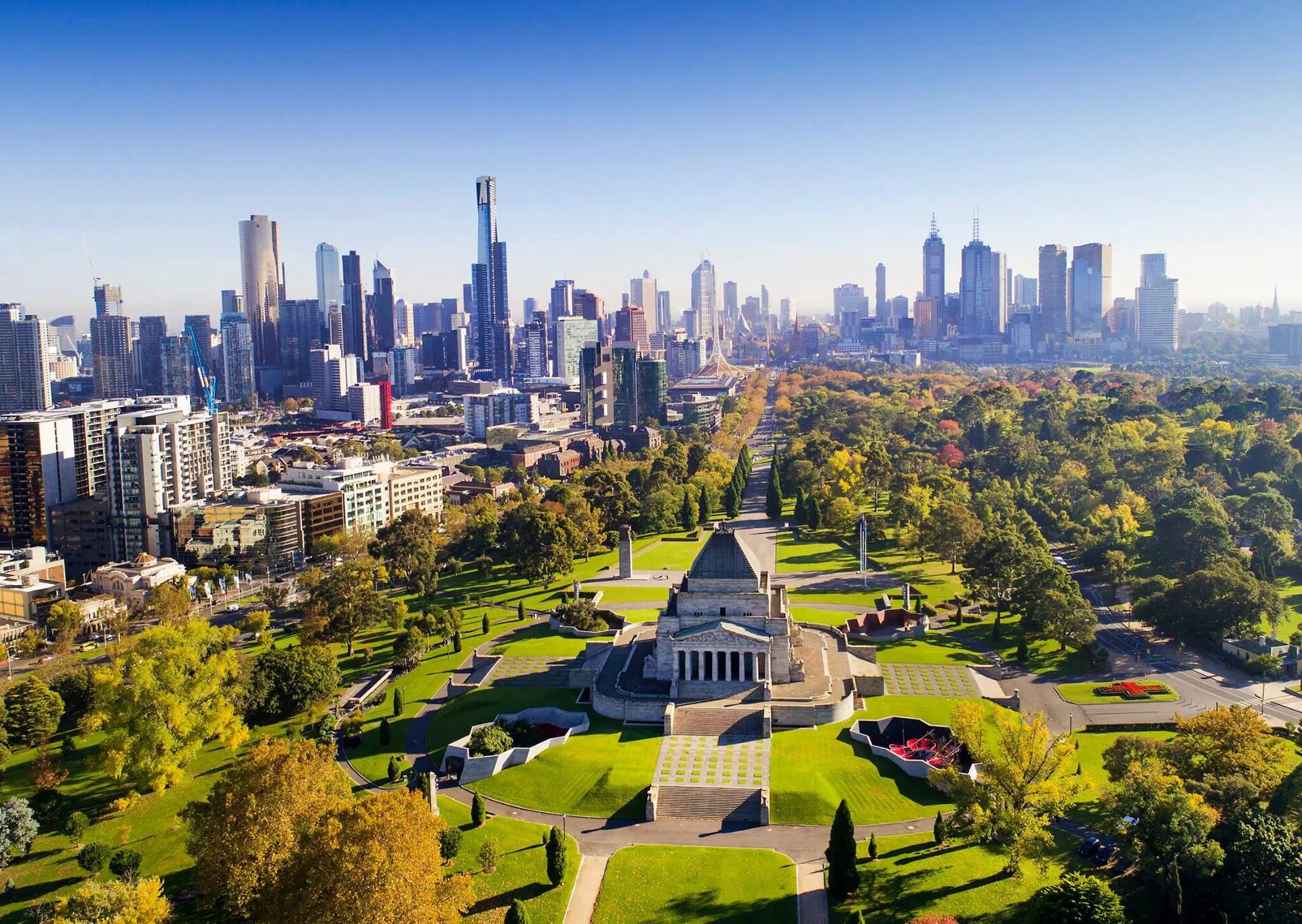
Melbourne. Photo: Melbpal, Wikimedia Commons, CC BY-SA.

Australian art is federal in temperament. Each state capital has its own gallery, its own recurring exhibition and its own grievance about the others. A serious visit takes in at least two.

Sydney

New South Wales

Sydney

The Biennale, the fair and the largest concentration of museums: the Art Gallery of New South Wales, the Museum of Contemporary Art Australia, White Rabbit in Chippendale, Artspace.

City pageArt Gallery of NSW

Photo: Benh LIEU SONG, Wikimedia Commons, CC BY-SA 4.0.

Melbourne

Victoria

Melbourne

The National Gallery of Victoria and its free Triennial, Melbourne Art Fair each February, and the TarraWarra Biennial beyond the city in 2027.

City pageNGV

Photo: Melbpal, Wikimedia Commons, CC BY-SA.

Tasmania

Hobart

MONA, and Dark Mofo in the dark of June. A small city that a single museum put on the international itinerary.

City pageMONA

Northern Territory

Darwin

The Museum and Art Gallery of the Northern Territory is the anchor, and the one Darwin institution in the directory so far.

City pageMAGNT

The calendar

Biennales and Fairs

Recurring exhibitions and fairs in Australia, most recent and next editions. Dates from organizers unless flagged.
EventCityWhenWhat it isDirectory
Biennale of SydneySydney25th: March 14–June 14, 2026. 26th opens March 11, 2028Free, across several venues. Low Kee Hong directs 2028.2026 edition
Adelaide Biennial of Australian ArtAdelaideYield Strength: February 27–June 8, 2026. Next expected 2028 Not yet announcedSurvey of Australian art, 24 artists in 2026, curated by Ellie Buttrose.2026 edition
Asia Pacific TriennialBrisbane11th: November 30, 2024–April 27, 2025. 12th listed for November 2027 UnconfirmedQAGOMA’s survey of Asia and the Pacific.Next edition
NGV TriennialMelbourneDecember 13, 2026–April 11, 2027Free. Nearly 100 artists and collectives, more than 80 projects.NGV
TarraWarra BiennialVictoriaJuly 31–November 14, 2027Survey at TarraWarra Museum of Art. Mikala Tai curates 2027.No page yet
Sydney ContemporarySydneySeptember 3–6, 2026. Next: September 9–12, 2027The largest fair, at Carriageworks. More than 100 exhibitors.2026 fair
Melbourne Art FairMelbourneFebruary 18–21, 202720th edition, Melbourne Convention and Exhibition Centre.No page yet
Dark MofoHobartJune 11–22, 2026. 2027 Not yet announcedMONA’s midwinter festival. A$5.18 million box office in 2026.MONA
Darwin Aboriginal Art FairDarwin20th: August 6–9, 2026. 21st: August 5–8, 2027Not-for-profit fair of Indigenous-owned art centers, more than 80 in 2026.No page yet
National Aboriginal and Torres Strait Islander Art AwardsDarwin2026 exhibition until January 24, 2027Annual awards at MAGNT. Ryan Presley won the A$100,000 Telstra Art Award in 2026.MAGNT
Ballarat International Foto BiennaleBallarat, VictoriaAugust 23–October 19, 2025. Next 2027Photography biennial.2025 edition

Sources: Biennale of Sydney, Art Gallery of South Australia, QAGOMA, NGV, Stage Whispers, Sydney Contemporary, Darwin Aboriginal Art Fair, ABC News. The Asia Pacific Triennial’s 2027 dates come from the Biennale directory and were not on QAGOMA’s site when checked.

Museums and players

Names to Know

People

  • Adrian Collette, chief executive of Creative Australia, the federal funding body.
  • Wesley Enoch, playwright and director, who chaired Creative Australia in an acting capacity through the 2025 reinstatement.
  • Khaled Sabsabi and Michael Dagostino, artist and curator of the 2026 Australia Pavilion in Venice.
  • Barbara Moore, chief executive of the Biennale of Sydney, and Low Kee Hong, its artistic director for 2028.
  • Zoe Paulsen, director of Sydney Contemporary, and Melissa Loughnan, director of Melbourne Art Fair.
  • Ellie Buttrose, QAGOMA curator, who curated the 2024 Golden Lion pavilion and the 2026 Adelaide Biennial.
  • Mikala Tai, former head of visual arts at Creative Australia, curator of the 2027 TarraWarra Biennial.
  • David Walsh and Judith Neilson, founders of MONA and White Rabbit.

Going there

Seasons and Routes

The calendar sets the route. Late summer is Melbourne’s: the art fair in February, with the NGV Triennial running free until April 11, 2027. Autumn belongs to Sydney and Adelaide in even years, when the two biennales overlap from March to June. June is Hobart’s. September brings Sydney Contemporary. A first trip in early 2027 pairs Melbourne with Hobart. A 2028 trip can open with the Biennale of Sydney on March 11. Start with the Sydney and Melbourne pages on My Biennale, and browse the city guides for the rest.

Distances are continental. Sydney to Hobart or Brisbane is a short flight, and Darwin is a different climate and nearly a different country. Build the trip around one anchor event and add a second city. The trip planner will assemble dates, and flights and tickets sit beside it. Most of what matters is free to enter: the Biennale of Sydney, the NGV Triennial, White Rabbit and the permanent collections of the state galleries.

For the wider region, including Aotearoa New Zealand, see Biennales of Oceania. For how to travel for art without exhausting yourself, see Biennale Traveller. Other country hubs are listed on the countries page. Like everything on this site, they are free to read.

2027

What to Watch

  1. The Venice 2028 selection. The first pavilion chosen under Creative Australia’s revised process. The test is whether the board backs its own panel when the first complaint arrives.
  2. The fake-art law. Standalone legislation on Indigenous cultural and intellectual property has been promised under the National Cultural Policy. Watch for a bill, and for whether the Indigenous Art Code stays voluntary.
  3. Fair takings. Sydney Contemporary’s reported sales fell for three years while attendance rose. Melbourne Art Fair in February is the next reading.
  4. State gallery budgets. Powerhouse Parramatta opens in November 2026 on A$915 million. The Art Gallery of New South Wales is working with 51 fewer people.
  5. The Asia Pacific Triennial. The 12th edition is due in Brisbane late in 2027, with TarraWarra from July 31. Confirm dates with the organizers.
  6. Copyright and AI. The government said in October 2025 that it would not open Australian creative work to free AI training, and was reported in September 2026 to be considering changes to copyright law.

Sources. Creative Australia, National Arts Participation Survey release (June 3, 2026) and Venice pavilion release; ArtAsiaPacific on the reinstatement and on the Art Gallery of NSW; Artnet News; ArtsHub; The Art Newspaper; Ocula; Biennial Foundation; Limelight; Arts Law Centre of Australia; Office for the Arts; National Indigenous Times; AAP; Deutscher and Hackett; The Art Newspaper on the Kngwarray market, the Senate estimates hearing, Sabsabi’s account, the MCA’s admission charge, the Bondi attack, and the Rapa Nui return; ABC News on the royal commission, the 2026 NATSIAA, and AI and copyright (March 5 and September 16, 2026); ArtReview; Minister for the Arts media releases; Darwin Aboriginal Art Fair; Sydney Contemporary; organizers’ pages linked above; and the Biennale directory. Figures from fairs, dealers and auction houses are their own and unaudited. Quotations are as published by the outlets named. Corrections: contact@biennale.nyc.