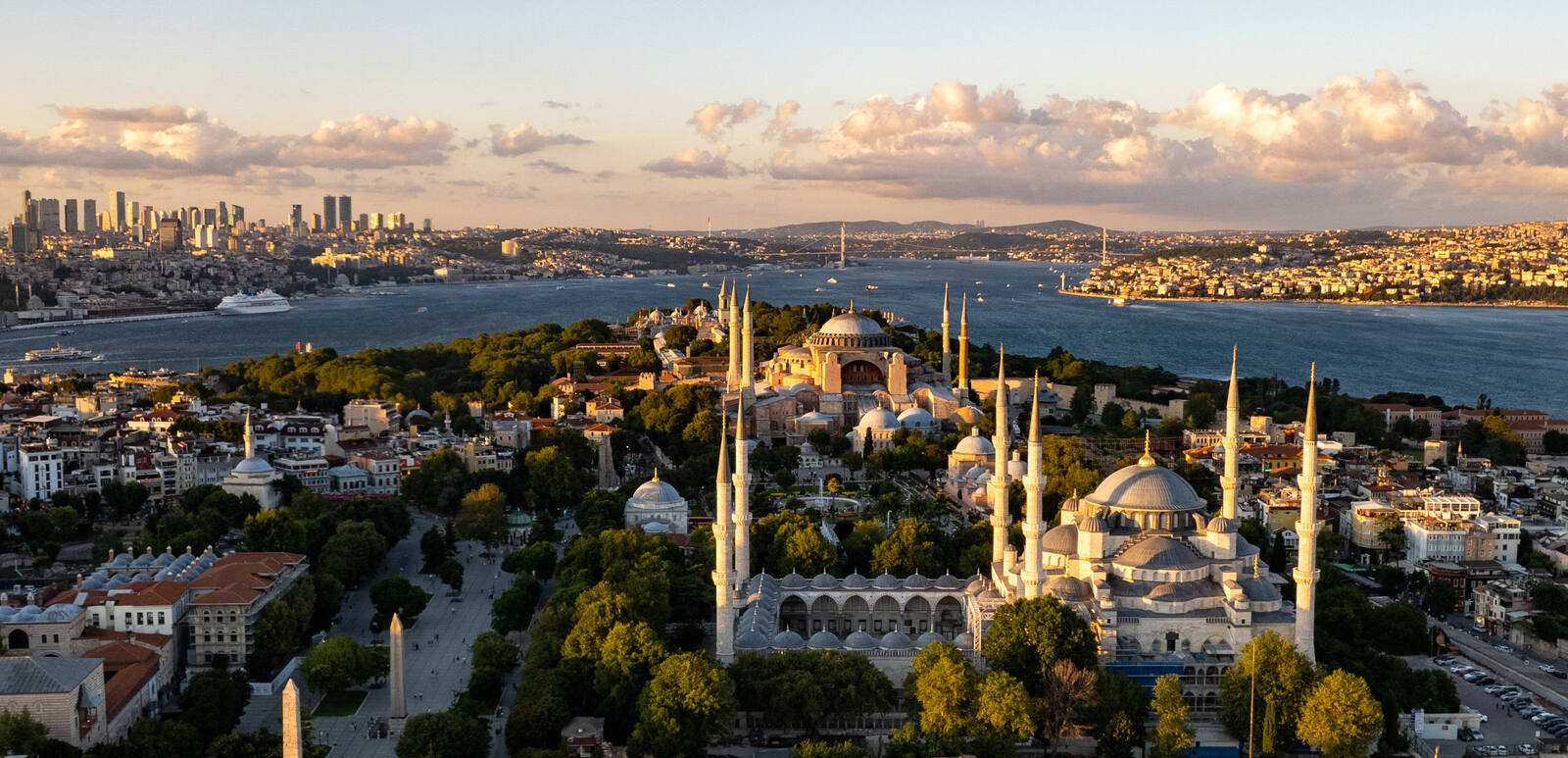
Founded 1987 by IKSV and continuing across thirty-eight years of Turkish political weather, the Istanbul Biennial is the principal continuing biennial at the geographical and curatorial hinge between Europe and Asia. The institutional argument is that the continuing private foundation operator, IKSV, has held the programme open under conditions that have closed comparable institutions elsewhere.
The Istanbul Biennial's most distinctive structural feature is not the curatorial register of any single edition but the continuity of its institutional operator. The Istanbul Foundation for Culture and Arts (IKSV), a private cultural foundation and not a state body, has organised the Biennial without interruption since 1987, across multiple Turkish political regimes that include the post-1980-coup period of the founding years, the long Erdoğan period that begins in 2003, the 2013 Gezi Park protests and their aftermath, the 2016 attempted coup and the subsequent state of emergency, the prolonged economic crisis of the late 2010s and early 2020s, and the February 2023 earthquake in southern Turkey. Few cultural institutions anywhere in the world have continued to programme at biennial frequency across a comparable run of political and economic pressure.
The continuity is the institutional argument. The Istanbul Biennial's continuing operation, under IKSV, is the institutional record by which Turkish contemporary art's relationship to the international biennial circuit can be read; the Biennial's continuing capacity to programme major international curators (René Block in 1995, Charles Esche and Vasif Kortun in 2005, Carolyn Christov-Bakargiev in 2015, Elmgreen & Dragset in 2017, Nicolas Bourriaud in 2019, the Bauer/Kanwar/Teh trio in 2022, Christine Tohmé in 2025) is the curatorial record of that institutional position. No comparable biennial at the Europe–Asia hinge has programmed at this institutional weight across this duration.
The institutional question this raises is whether Istanbul's continuing position can be sustained in a moment when other crossroads biennials have substantially reshaped what a politically engaged biennial can be. Sharjah, under Hoor Al Qasimi and the Sharjah Art Foundation, has built since 1993 a programme that increasingly carries the institutional weight of a Global South curatorial alternative. The Athens leg of documenta 14 in 2017, under Adam Szymczyk's Learning from Athens, proposed a different model of the European biennial as displaced and politically reframed. Manifesta's roving European platform has continued to test what a stateless biennial can be. Istanbul's editorial argument, made implicit across the post-2005 critical turn under Esche and Kortun and reasserted across each subsequent edition, is that the institutional weight of a thirty-eight-year continuing programme at the Bosphorus is itself the argument: that no comparably placed biennial can match the institutional inheritance Istanbul carries.
The post-2013 Gezi-era turn is the central editorial inflection in the Biennial's continuing programme. Fulya Erdemci's 13th edition in 2013, Mom, am I a barbarian?, opened in the months following the Gezi Park protests and was reorganised in their aftermath: the Biennial withdrew from several public-space venues and restaged itself across private institutional sites, in what became a continuing institutional question about what a politically engaged biennial can do under conditions that limit access to public space. Every subsequent Istanbul Biennial has continued to programme inside the shadow of that question: how the Biennial's curatorial intelligence can hold open a critical position when the public sphere itself is under continuing pressure. The 18th edition's three-leg structure under Christine Tohmé, opened in September 2025 and disrupted by Tohmé's departure during the run, is the continuing case in point. What the next decade of Istanbul Biennial programming will continue to address is whether IKSV's continuing institutional capacity, the Bosphorus city's continuing curatorial position, and the international biennial conversation's continuing engagement with Istanbul can together sustain the programme. The institutional record so far suggests they can. Whether they will is the editorial question the institution continues to answer in each cycle.