Dak'Art

The founding Pan-African contemporary art biennial — established by Senegalese cultural-policy decree in 1989 and operating from Dakar since the 1992 inaugural visual-arts edition as the institutional anchor of the Pan-African contemporary art conversation across more than three decades.

Established1989 / 1992 — 202415 editions
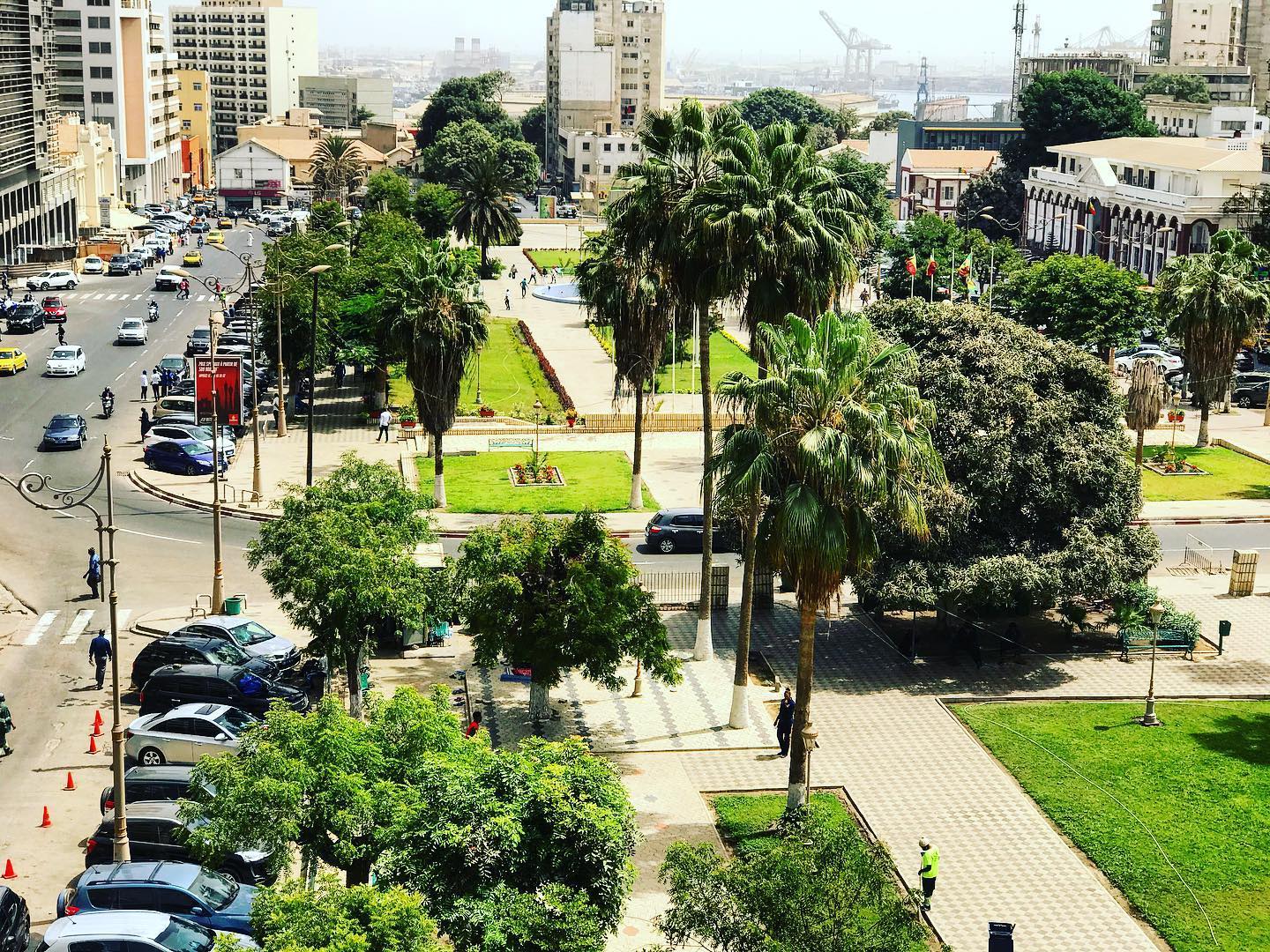
Place de l'Indépendance, Dakar — the central plaza of the Senegalese capital and the institutional heart of the Dak'Art biennial since 1992.
Above Dakar's Place de l'Indépendance — the central plaza of the Senegalese capital. The Dak'Art biennial programmes from the surrounding network of state cultural institutions, including the Musée Théodore Monod, the Galerie Nationale d'Art, the IFAN Cheikh Anta Diop Museum, and the network of independent OFF venues that have grown alongside the biennial.  ·  Photograph: Wikimedia Commons

The Lead Essay Fifteen editions across thirty-five years

The biennial that argued Africa would organise its own conversation

When Dak'Art opened its inaugural visual-arts edition in 1992, it was the first major international biennial in the world organised on the explicit institutional premise that the African contemporary art conversation could and should be organised from within Africa.

Dak'Art was established by Senegalese cultural-policy decree in December 1989 — the culmination of a long Senegalese cultural-policy argument that traces to Léopold Sédar Senghor's continuing institutional project across his presidency (1960–1980) and beyond. Senghor — the Senegalese poet, philosopher, and statesman who co-developed the Négritude movement of the 1930s with Aimé Césaire and Léon Damas, and who was the first president of post-independence Senegal — had organised the Festival Mondial des Arts Nègres (the World Festival of Black Arts) in Dakar in April 1966, the founding event of the post-independence international Pan-African cultural conversation. The 1966 festival is the institutional precursor of the Dak'Art biennial, and the Senghor-era Senegalese cultural-policy argument — that the Pan-African cultural conversation deserved institutional infrastructure organised from Africa, on African terms — organised the institutional case for the biennial across the two decades between 1966 and 1989. President Abdou Diouf, Senghor's continuing political successor, decreed the biennial into existence in December 1989.

The 1st Dak'Art (1990) was a literary biennial. The institutional argument shifted under continuing internal cultural-policy debate, and the 2nd Dak'Art (1992) opened as the inaugural visual-arts edition — the founding biennial of the contemporary Pan-African biennial form as we now recognise it. The 1992 edition established the biennial's continuing institutional architecture: a Pavilion d’Honneur invited international Pan-African artists and an Exposition Internationale presented work selected through a continental open call across the Pan-African contemporary art conversation. The 3rd Dak'Art (1996) and 4th Dak'Art (1998) under successive Senegalese cultural-administrative directors extended the biennial's institutional infrastructure and established Dak'Art's continuing institutional position as the Pan-African contemporary art biennial.

The 5th Dak'Art (2002), curated by the Ivorian art historian and curator Yacouba Konaté, consolidated the biennial's curatorial-institutional ambition and established Dak'Art's reading by the international art press as a major institutional event in the post-2000 international biennial conversation. The Konaté period across the 2002 and 2006 editions — both Konaté-curated, the 2006 with international collaborators including Salah Hassan and N'Goné Fall — extended the biennial's engagement with the post-2000 Pan-African contemporary art conversation that was developing across the network of African contemporary art institutions (the Centre for Contemporary Art Lagos, the Goodman Gallery in Johannesburg, the Cape Town and Marrakech contemporary art conversations, the Pan-African contemporary art generation including El Anatsui, Pascale Marthine Tayou, Yinka Shonibare, Ghada Amer, Wangechi Mutu, William Kentridge, and the post-1994 South African contemporary art generation that emerged through the Johannesburg Biennale of the 1990s).

The 11th Dak'Art (2014), curated by Ugochukwu-Smooth C. Nzewi, Elise Atangana, and Abdelkader Damani under the title Producing the Common (9 May – 8 June 2014), drawing the notion of "Tout-monde" from the Martinican writer Édouard Glissant, was the curatorially-most-acclaimed of the post-2010 editions and extended the biennial's institutional position into the post-2010 international Pan-African contemporary art conversation. The 12th Dak'Art (2016), Reenchantments, and the 13th Dak'Art (2018), The Red Hour: A Call for New Imaginaries — both curated by Simon Njami, the Cameroonian-French curator and writer who is among the most internationally visible curators of African contemporary art of his generation — established the biennial's continuing institutional reading by the international art press, and extended the biennial's institutional case for the Pan-African contemporary art conversation as a international curatorial proposition.

The 14th Dak'Art was originally scheduled for 2020 and was postponed to 2022 by the Covid-19 pandemic. When the 14th Dak'Art (Ĩ NDAFFA # / Forger / Out of the Fire, curated by Dr El Hadji Malick Ndiaye with co-curators Anna Karima Wana and Delphine Buysse) opened from 19 May to 21 June 2022, the institutional conditions had shifted — the post-2020 economic conditions across the African continent, the Senegalese cultural-policy environment, the continuing post-pandemic conditions of the international biennial form. The 14th edition was nonetheless one of the most extensively-programmed of the biennial's continuing institutional history, with an Exposition Internationale across the Ancien Palais de Justice and an extensive OFF programme — the network of independent satellite exhibitions across Dakar that had developed alongside the biennial across the post-2000 period and that now constitutes a parallel biennial of institutional consequence.

The 15th Dak'Art was postponed multiple times across 2023–2024 — by continuing Senegalese cultural-policy conditions, by the 2024 Senegalese presidential election that brought President Bassirou Diomaye Faye to power on a cultural-policy-reform platform, and by the continuing institutional restructuring of the biennial's organisational architecture across the post-election period. The 15th Dak'Art ultimately opened on 7 November 2024 under artistic director Salimata Diop — the first woman to hold the artistic-director position at the biennial — titled The Wake / L'Éveil / Xàll wi (a title drawn from Christina Sharpe's In the Wake: On Blackness and Being, 2016), with an Exposition Internationale of 58 artists from Africa and the diaspora across the Ancien Palais de Justice and the network of OFF satellite venues, running through 7 December 2024. The biennial's continuing institutional argument across the post-2024 period — that the Pan-African contemporary art conversation requires state-supported institutional infrastructure, and that the Senegalese cultural-policy tradition from Senghor through Diouf, Wade, Sall, and Faye has continued to support that argument across political transitions — has held for thirty-five years.

The institutional architecture

Dak'Art is organised by the Secrétariat Général de la Biennale de l'Art Africain Contemporain, a state cultural body operating under the Senegalese Ministry of Culture. Continuing institutional support comes from the Senegalese state, the City of Dakar, the network of African and international cultural-cooperation organisations (Institut français, the Goethe-Institut, the OIF Organisation internationale de la Francophonie), and the private-philanthropic and corporate-philanthropic base. The OFF programme — the network of independent satellite exhibitions that has developed alongside the biennial since the early 2000s — extends the biennial's institutional reach into Dakar's continuing contemporary art conversation and constitutes a parallel institutional architecture of its own.
A Second Reading The Négritude inheritance

When the institutional lineage is also a weight

The Dak'Art biennial's institutional lineage from Senghor's 1966 Festival Mondial des Arts Nègres is the institutional argument from which the biennial draws its continuing legitimacy. The lineage is also, for parts of the post-2000 Pan-African contemporary art conversation, the institutional weight the biennial has had to carry.

The critical question turns on Négritude itself. The Négritude movement Senghor co-developed with Césaire and Damas in the 1930s — the pan-Black intellectual project that organised the post-1930s French-language Black intellectual conversation around the argument for a distinctive Black cultural-historical specificity — was, by the time of Senghor's 1966 Dakar festival, the institutional reading of post-independence Pan-African cultural argument. By the post-1970 period, Négritude was also under critical interrogation from the younger generations of Pan-African intellectuals who read the movement as essentialist, patriarchal, complicit with continuing French cultural-political influence in francophone Africa (the Françafrique critique), and insufficient to the conditions of the post-1970 African political-economic crisis. The critique originated in the work of Frantz Fanon (whose Black Skin, White Masks, 1952, critiqued the Négritude argument from the perspective of Antillean and African anticolonial revolutionary politics) and continued through the work of Wole Soyinka, Cheikh Anta Diop (the Senegalese historian whose institutional namesake is the IFAN Cheikh Anta Diop Museum, a recurring Dak’Art venue), V. Y. Mudimbe, Achille Mbembe, and the post-2000 generation of African intellectuals.

What the critique implies for any reading of Dak'Art is structural. The biennial's institutional lineage from the Senghor-era Pan-African cultural project makes its institutional argument legible, provides its continuing political-economic justification within Senegalese state cultural policy, and anchors the historical narrative the biennial has consistently made for itself. The same lineage makes the biennial vulnerable to the critical reading that the Senghor-era Pan-African cultural project was insufficient to the conditions of the contemporary African political-economic conversation, and that the biennial's continuing institutional reliance on the Senghor-era argument constrains what curatorial work the biennial can do. The Njami-era editions across 2016–2018 engaged this question directly — Reenchantments and The Red Hour: A Call for New Imaginaries are curatorial propositions about what comes after the Senghor-era Pan-African cultural argument — and the post-Njami editions have continued the work.

The biennial's continuing institutional position is, on the reading, structurally caught between two inheritances: the state-cultural-policy lineage that makes the biennial possible institutionally, and the critical inheritance that questions the institutional foundations of that lineage. The curatorial work of Dak'Art across its continuing institutional history has been the work of holding both inheritances simultaneously — and the biennial's international institutional reading turns on how well it continues to do that work.

The Institutional Spine

Defining moments

Five episodes across thirty-five years.

1966Precursor

Senghor's Festival Mondial des Arts Nègres

The 1st Festival Mondial des Arts Nègres (World Festival of Black Arts / FESMAN), organised by President Senghor in Dakar from 1 to 24 April 1966, is the institutional precursor of the Dak'Art biennial. The festival is the founding event of the post-independence international Pan-African cultural conversation. The institutional case for a continuing Pan-African biennial was built across the two decades between 1966 and 1989 from the 1966 festival's institutional model.

Sources: Senegalese state cultural-policy archive; post-1966 Pan-African cultural-policy literature

19922nd Dak'Art

The inaugural visual-arts edition

The 2nd Dak'Art (1992) opened as the inaugural visual-arts edition of the biennial — the founding biennial of the contemporary Pan-African biennial form as we now recognise it. The 1992 edition established the biennial's continuing institutional architecture: a Pavilion d’Honneur of invited international Pan-African artists and an Exposition Internationale of work selected through a continental open call across the Pan-African contemporary art conversation.

Sources: Dak'Art 1992 archive; Senegalese state cultural-policy records

20025th Dak'Art

Konaté's curatorial consolidation

The 5th Dak'Art (2002), curated by the Ivorian art historian Yacouba Konaté, consolidated the biennial's curatorial-institutional ambition and established Dak'Art's reading by the international art press as a major institutional event in the post-2000 international biennial conversation. The Konaté period across the 2002 and 2006 editions extended the biennial's engagement with the post-2000 Pan-African contemporary art conversation.

Sources: Dak'Art 2002 archive; Konaté curatorial materials

2016–1812th & 13th

The Njami editions

The 12th Dak'Art (2016, Reenchantments) and 13th Dak'Art (2018, The Red Hour: A Call for New Imaginaries, with the international exhibition titled A New Humanity), both curated by Simon Njami — the Cameroonian-French curator and writer among the most internationally visible curators of African contemporary art of his generation — established the biennial's continuing institutional reading by the international art press across the post-2015 period and engaged the post-Négritude critical question directly.

Sources: Dak'Art 2016 and 2018 catalogues; international art-press coverage

202415th Dak'Art

Diop's The Wake / L'Éveil

The 15th Dak'Art was postponed multiple times across 2023–2024 — by continuing Senegalese cultural-policy conditions, by the 2024 Senegalese presidential election that brought President Bassirou Diomaye Faye to power, and by the continuing institutional restructuring of the biennial's organisational architecture. The 15th Dak'Art ultimately opened on 7 November 2024 under curator Salimata Diop, titled The Wake / L'Éveil, running through 7 December 2024.

Sources: Dak'Art 2024 programme; Senegalese arts-press coverage

People in the Biennial

The figures behind Dak'Art

Institutional precursor

Léopold Sédar Senghor

Senegalese poet, philosopher, and statesman (1906–2001). Co-founder with Aimé Césaire and Léon Damas of the Négritude movement of the 1930s. First president of independent Senegal (1960–1980). Organiser of the 1966 Festival Mondial des Arts Nègres in Dakar — the institutional precursor of the Dak'Art biennial. The Senghor-era Senegalese cultural-policy programme is the institutional foundation on which Dak'Art's continuing operation has depended.

Source: Wikipedia

Curator · 5th and 7th Dak'Art (2002 & 2006)

Yacouba Konaté

Ivorian art historian, philosopher, and curator (b. 1953). Curator of the 5th (2002) and 7th (2006) editions of Dak'Art. Significant scholarship on contemporary African art and the Pan-African biennial form. Continuing curatorial-and-academic practice across the Pan-African contemporary art conversation. The Konaté period consolidated the biennial's reading by the international art press as a major institutional event.

Source: Wikipedia

Curator · 12th & 13th Dak'Art (2016 & 2018)

Simon Njami

Cameroonian-French curator, writer, and critic (b. 1962). Co-founding editor of the pan-African art magazine Revue Noire (1991–2001). Curator of the 12th Dak'Art (Reenchantments, 2016) and 13th Dak'Art (The Red Hour, 2018). Continuing curatorial practice across the Pan-African contemporary art conversation. among the most internationally visible curators of African contemporary art of his generation.

Source: Wikipedia

Senegalese artist · featured at the 14th Dak'Art (2022)

El Hadji Sy

Senegalese artist and curator (b. 1954). Continuing institutional position within the Senegalese contemporary art conversation. The 14th Dak'Art (2022) presented a significant survey of his work. El Hadji Sy founded the Village des Arts artists' commune near Dakar in 1977 — the Dakar artists' residency and studio complex that has continued operation across the post-1977 period.

Source: Wikipedia

Curator · 15th Dak'Art (2024)

Salimata Diop

Senegalese curator. Curator of the 15th Dak'Art (The Wake / L'Éveil, 2024). Continuing curatorial practice across the post-2020 Senegalese and Pan-African contemporary art conversation. The 2024 edition established Diop's continuing institutional position within the Dak'Art curatorial conversation.

Source: Dak'Art

Organising body

Secrétariat Général · Biennale de l'Art Africain Contemporain

Senegalese state cultural body operating under the Senegalese Ministry of Culture, continuing institutional responsibility for the Dak'Art biennial across all fifteen editions to date. Continuing institutional support from the Senegalese state, the City of Dakar, the network of African and international cultural-cooperation organisations (Institut français, the Goethe-Institut, the OIF Organisation internationale de la Francophonie), and the private and corporate philanthropic base.

Source: Dak'Art

Established
1989 / 1992
Frequency
Biennial · irregular
Format
Pan-African contemporary biennial
Host city
Dakar, Senegal
Anchor
Ancien Palais de Justice

Geography

The biennial across Dakar

Principal venues across the editions

Ancien Palais de Justice

Continuing principal venue · Exposition Internationale since 2018

Cap Manuel
Dakar · Senegal

Musée Théodore Monod d'Art Africain (IFAN)

Continuing institutional partner

Place Tascher
Dakar · Senegal

Galerie Nationale d'Art

State exhibition venue · continuing partner

19 Avenue Hassan II
Dakar · Senegal

Village des Arts

Dakar artists’ residency and studio complex · OFF venue

Route de l'Aéroport
Dakar · Senegal

OFF programme venues

Network of independent satellite exhibitions across Dakar

Various Dakar locations

From the Directory

Related biennials in Africa and the African diaspora

Browse the region →

Long-form features

Three essays on Dak’Art’s continuing institutional argument

Three feature-length pieces on the biennial’s curatorial reframing of contemporary African art, on the OFF programme as a parallel architecture, and on Dak’Art’s extension into Dakar’s public space. Each is a self-contained reading; together they extend the lead essay and the defining-moments grid.

Curatorial analysis

Reclaiming the narrative: how Dak’Art rewrites the rules of the African contemporary conversation

The Dak’Art biennial’s principal venue across the post-2018 editions is the Ancien Palais de Justice on the Cap Manuel peninsula — the former French-colonial-era courthouse whose institutional purpose has been reorganised by the biennial across the past three editions into the principal exhibition space of the contemporary Pan-African art conversation. The architectural reframing is not incidental. Since the inaugural visual-arts edition in 1992, the biennial has done more than present contemporary African art: it has worked systematically to dismantle the curatorial-institutional frameworks through which that art has been categorised and commodified by the institutional North, and to rebuild the frameworks from inside the Pan-African contemporary art conversation itself.

The 15th Dak’Art (7 November – 7 December 2024), curated by Salimata Diop under the title The Wake / L’Éveil / Xàll wi (the Wolof, French, and English titles holding the same conceptual register), exemplified the biennial’s evolving curatorial sophistication. The Exposition Internationale assembled 58 artists from across Africa and the diaspora — representing, according to the Agence de presse sénégalaise, 27 countries — in an argument that moved well beyond inherited categories of “African identity” into questions of ecological consciousness, technological futures, and the diasporic conditions of Black being-in-the-world. The Grand Prix Léopold Sédar Senghor was awarded by President Bassirou Diomaye Faye to the Martinican artist Agnès Brézephin for Fil(s) de soi(e), a tapestry-and-installation work the jury (chaired by Michèle Magena) cited for “emotional depth and nuanced storytelling.” The prize carried a 20-million-CFA-franc award.

The numbers are part of the story. So is the institutional structure. The biennial operates through three interconnected components: the Exposition Internationale (the curated central exhibition of 50–60 invited artists), the national participations (African country pavilions of focused continental presentation), and the OFF programme (the network of independent satellite exhibitions across Dakar that has developed alongside the biennial since the early 2000s). The OFF programme has launched as many careers as any formal institutional incubator on the continent. Senegalese photographers Omar Victor Diop and the Belgian-Beninese Fabrice Monteiro — both now internationally collected — built their early visibility through the Dakar gallery and OFF circuit before their work entered the major international museum collections. A new generation of Pan-African artists continues to emerge along the same trajectory.

The economic argument runs alongside the curatorial. During Dak’Art season, Dakar’s contemporary-art economy expands across the network of galleries (Galerie Cécile Fakhoury, Galerie Le Manège, the OFF venues), the institutional partners (the Musée Théodore Monod, the Galerie Nationale d’Art, RAW Material Company), and the wider Pan-African collector base from Lagos, Johannesburg, Luanda, and the diaspora. Dak’Art has also worked institutionally as a model: the post-2010 expansion of the Pan-African contemporary art platform — from Lagos’s Art X fair to the Zeitz MOCAA in Cape Town to the Bamako Encounters photography biennial — sits in continuing dialogue with the institutional argument Dak’Art has been making since 1992.

The biennial’s continuing relationship with the Senegalese state is the source both of its institutional possibility and of its persistent institutional friction. The 15th edition’s repeated postponement — from its originally scheduled May 2024 opening across multiple administrative delays into the post-presidential-election November 2024 opening — was a reminder of the continuing institutional architecture inside which the biennial operates. The institutional argument the biennial makes in spite of that friction is the more striking for being made at all: in a contemporary art system still organised around New York, London, Hong Kong, and the western European institutional axis, Dak’Art’s continuing existence as a major Pan-African institutional platform organised from inside Senegal remains the institutional intervention that the biennial was founded to make.

Sources: Agence de presse sénégalaise (APS), “La Martiniquaise Agnès Brézephin remporte le Grand Prix Léopold Sédar Senghor du Dak’art 2024” · Secrétariat Général de la Biennale, Dak’Art 2024 prize announcement, 7 November 2024 · Art Network Africa, Dak’Art 2024 coverage · Biennial Foundation, Dak’Art profile · ARTnews, coverage of Dak’Art’s post-2020 institutional history.

Parallel architecture

The OFF is ON: how Dakar’s parallel programme rewrites the biennial form

While Dak’Art operates as the continent’s longest-running institutional contemporary art biennial, the OFF programme — the network of independent satellite exhibitions that has accumulated around the biennial across the post-2000 period — has become the event’s most consequential parallel architecture. The OFF began in the early 2000s as a modest counter-programme, a space for artists and institutions operating outside the official curated selection to stake a claim in Dakar’s biennial conversation. Two decades on, it has become a decentralised constellation of independent exhibitions of institutional consequence in its own right: from the gallery spaces of the Plateau and Almadies districts to the converted residential courtyards of Médina, the OFF turns Dakar into a city-scale exhibition for the duration of the biennial.

The 15th edition’s OFF programme made the argument especially visible. With the official biennial’s repeated postponement, the OFF moved forward independently across the 2024 calendar — an institutional self-reliance the network had been building toward since the post-2010 period. The exhibitions that opened across the year demonstrate the curatorial range the OFF has come to support. At Galerie Cécile Fakhoury’s Dakar space, the Ghanaian artist Na Chainkua Reindorf (b. 1991) presented Strange Flesh (15 May – 12 October 2024), the continuing development of her long-running Mawu Nyonu series — an imagined feminist masquerade society whose name translates as “God is a woman” in Ewe. Reindorf’s tapestries, sculptures, and paintings construct a visual lexicon of West African masquerade in feminist reinterpretation, against the predominantly masculine inheritance of the form across the regional tradition.

At RAW Material Company — the Dakar art centre founded by curator Koyo Kouoh in 2008 and now one of the most institutionally consequential contemporary art spaces in West Africa — Zohra Opoku presented With every fibre of (my) being (19 May – 16 June 2024) as part of the OFF @ RAW programme for the 15th Dak’Art. The German-Ghanaian artist’s photography-on-fabric practice interrogates the politics of personal identity formation across the conditions of contemporary Ghanaian and Afro-diasporic experience. The tactile quality of Opoku’s screen-printed natural-fibre surfaces stands in productive contrast with the photographic and digital practices that have come to dominate parts of the international biennial circuit.

The OFF’s engagement with the urban fabric of Dakar produces the most distinctive juxtapositions of the biennial season. At the Istituto Italiano di Cultura di Dakar — in collaboration with Senegalese cultural institutions — the exhibition Dem Dikk / Viavai (21 May – 14 July 2024) brought together artists Djibril Dramé, Stefania Gesualdo, and the collective Jukai (Marta Fumagalli and Riccardo Pirovano) under the direction of Mohamed A. Cissé, in an installation that documented the historic Sandaga market in the heart of central Dakar. The market — built in the neo-Sudanese style between 1933 and 1935, classified as Senegalese cultural heritage in 2006, and demolished in August 2021 despite the heritage classification — survived in the exhibition through sound and visual documentation as intangible cultural heritage. The exhibition’s title (combining Wolof and Italian words for “coming and going”) captures the transnational dialogue the OFF programme has come to make institutionally available.

The economic model of the OFF deserves separate attention. Operating largely outside the speculative dynamics of the international contemporary art market, OFF exhibitions generate cultural and institutional value through community engagement, peer-network reciprocity, and the long-term accumulation of curatorial relationships across the Pan-African contemporary art conversation. Artists share spaces and pool institutional resources in ways that question the inherited individualist mythology of contemporary art production. The collaborative economy of the OFF doesn’t merely sustain the network; it models institutional possibilities for cultural production in the Global South that don’t depend on the speculative-investment dynamics of the international art market system.

Across two decades of accumulating institutional weight, the OFF has reorganised the question Dak’Art was originally founded to ask. The question is no longer whether African contemporary art can sustain a state-organised biennial — that question was answered in 1992. The question is whether, and how, the parallel institutional architecture that has grown alongside the state biennial constitutes a continuing alternative model for the biennial form itself.

Sources: Galerie Cécile Fakhoury, Strange Flesh exhibition documentation, May–October 2024 · RAW Material Company, With every fibre of (my) being programme notes, 19 May–16 June 2024 · Istituto Italiano di Cultura di Dakar, Dem Dikk / Viavai exhibition record, 21 May–14 July 2024 · Contemporary And, OFF Biennale Dakar 2024 coverage · Senegalese cultural-policy archive on the Sandaga market classification and 2021 demolition.

Public-art programme

Doxantu: the biennial extends into the urban fabric of Dakar

The most institutionally distinctive of the curatorial extensions Dak’Art has developed across the post-2010 period is Doxantu — the public-art programme inaugurated during the 14th Dak’Art (Ĩ NDAFFA # / Forger / Out of the Fire, 19 May – 21 June 2022), whose title is the Wolof word for “stroll.” The programme commissioned 17 monumental works of public art, installed in situ along the Corniche Ouest coastal highway between the Direction des Douanes and the Porte Mermoz, and extending into the campus of the Université Cheikh Anta Diop. The programme’s explicit curatorial argument was the relocation of the contemporary art conversation out of the gallery and museum and into the urban-public condition of Dakar itself.

The Corniche Ouest is the principal coastal artery of the Senegalese capital — the western seafront road that runs from the city centre out past the Mamelles headland and the Mosquée de la Divinité, anchoring much of central Dakar’s public space. The Doxantu commissions sited the biennial’s curatorial argument inside that public-coastal condition, addressing themselves to a viewing public considerably broader than the gallery-going audience the biennial typically reaches inside the Ancien Palais de Justice. Senegalese Minister of Culture Abdoulaye Diop, in his official remarks for the programme, framed Doxantu as “a manifestation of the creative genius that materialises a will to bring art closer to the public” — the institutional argument the biennial has continued to make under successive Senegalese cultural-policy administrations.

What Doxantu makes structurally visible is a recurring question of the biennial form: who is the institutional audience for a contemporary art biennial, and how does the biennial work institutionally to reach that audience. The Corniche Ouest commissions answer the question by changing the location of the encounter. The work is not in a programmed exhibition the audience enters; it is in the urban environment the audience moves through. The encounter is incidental, ambient, accumulating across the everyday rhythms of the coastal city. The biennial — long built around the curated-exhibition form of the Exposition Internationale — extends through Doxantu into a continuing public-art programme that operates on the time-scale of urban experience rather than the time-scale of the seasonal exhibition.

The Doxantu programme has continued in modified form across the post-2022 editions, including selected commissions during the 15th edition’s programming. It sits alongside the OFF programme as the second of the biennial’s parallel architectures: the OFF distributing the curatorial conversation across the network of independent gallery and project spaces, Doxantu distributing it across the surface of the city itself. Together the two parallel structures extend the biennial’s institutional reach well beyond the boundaries of the official curated programme — and constitute the continuing institutional argument that the biennial form, as Dak’Art has continued to develop it across more than three decades, is not reducible to the single-venue exhibition model around which most international biennials have continued to organise themselves.

Sources: Secrétariat Général de la Biennale de l’Art Africain Contemporain, Doxantu programme documentation, 14th Dak’Art (2022) · Teranga News, “DAK’ART veut rendre l’Art plus présent dans l’espace public à travers ‘Doxantu’,” May 2022 · Senegalese Ministry of Culture statements on Doxantu, 2022 · International Biennial Association, Dak’Art 2022 record.

Essential Reading

For further work

Images, attribution & rights

Photographs are reproduced from Wikimedia Commons under the Creative Commons licences stated in each caption. If you are the photographer of an image used here and wish to discuss its use, please write to rights@biennale.com.

Editorial content is original and credited to the Biennale Editorial Team. The post-1970 critical literature on Négritude, the Senghor cultural policy, and the École de Dakar is cited in each section above.