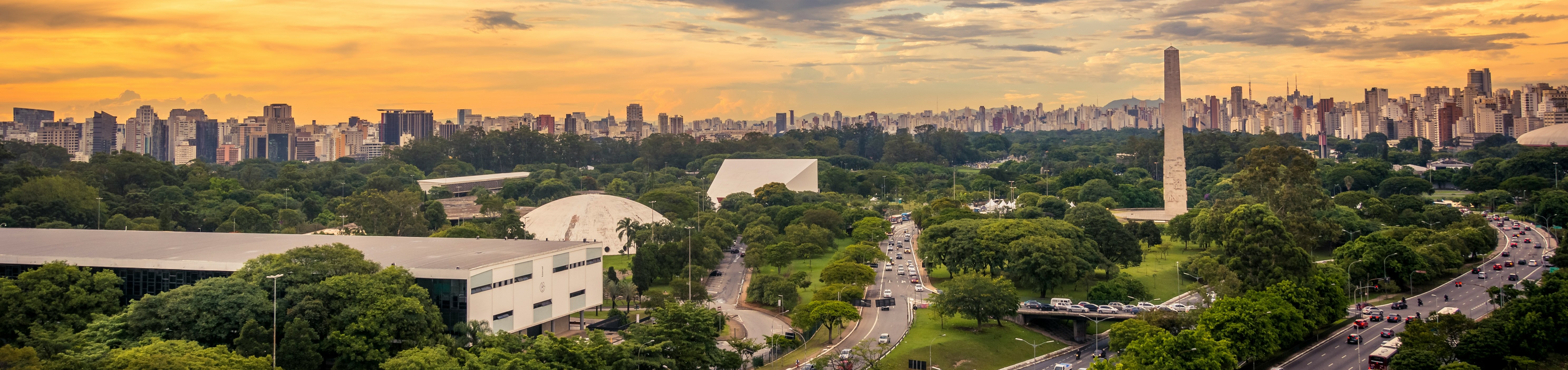
The São Paulo Biennial stands as Latin America's oldest and most significant contemporary art exhibition, a cultural platform that has shaped artistic discourse across the Global South for over seven decades. Founded in 1951 by the Italian-Brazilian industrialist Francisco "Ciccillo" Matarazzo, it emerged from Brazil's post-war ambition to position itself at the centre of international cultural dialogue, creating a venue that would rival Venice while amplifying voices from the Americas and beyond. Housed since 1957 in Oscar Niemeyer's pavilion in Ibirapuera Park, the Bienal has evolved from its initial mission of bringing international modern art to Brazil into a critical space for examining power, representation and resistance through contemporary practice. More than sixteen thousand artists from some 170 countries have participated across its thirty-five completed editions, and it remains one of the few major international biennials to hold to free admission, treating art as a public right rather than an elite privilege.
The 36th edition opened at the Ciccillo Matarazzo Pavilion on 6 September 2025 under chief curator Bonaventure Soh Bejeng Ndikung, with co-curators Alya Sebti, Anna Roberta Goetz and Thiago de Paula Souza, co-curator at large Keyna Eleison, and the strategy and communication advisor Henriette Gallus. Its title, drawn from the Afro-Brazilian writer Conceição Evaristo, sets out the territory Ndikung intends to explore: not the well-trodden paths of international art-world circulation, where the same names appear in Venice, Kassel and New York, but the unmarked routes, the desire paths worn by those who move outside official channels. The edition unfolds across an unusually extended span, a deliberate slowing of biennial time that the board, under president Andrea Pinheiro, extended by four weeks to reach a wider public across the school-holiday period.
The estuary as method
Ndikung's guiding metaphor is the estuary, a place where different waters converge without losing their distinct properties. It speaks directly to Brazil's complex history of cultural mixture and violence. Unlike the often-celebrated notion of mestiçagem, which can obscure ongoing structures of racism and exclusion, the estuary acknowledges difference while creating space for encounter. The distinction reflects Ndikung's years running SAVVY Contemporary, the Berlin art space he founded in 2009 that became a beacon for non-Western perspectives, and his understanding of the Bienal as what he calls a "seismograph," not merely recording the tremors of the present moment but actively participating in shaping a more just future for animate and inanimate beings alike. The programme engages sound seriously as a carrier of knowledge and resistance, an emphasis that feels apt in a city whose daily life is scored by samba, funk and a dozen other traditions.