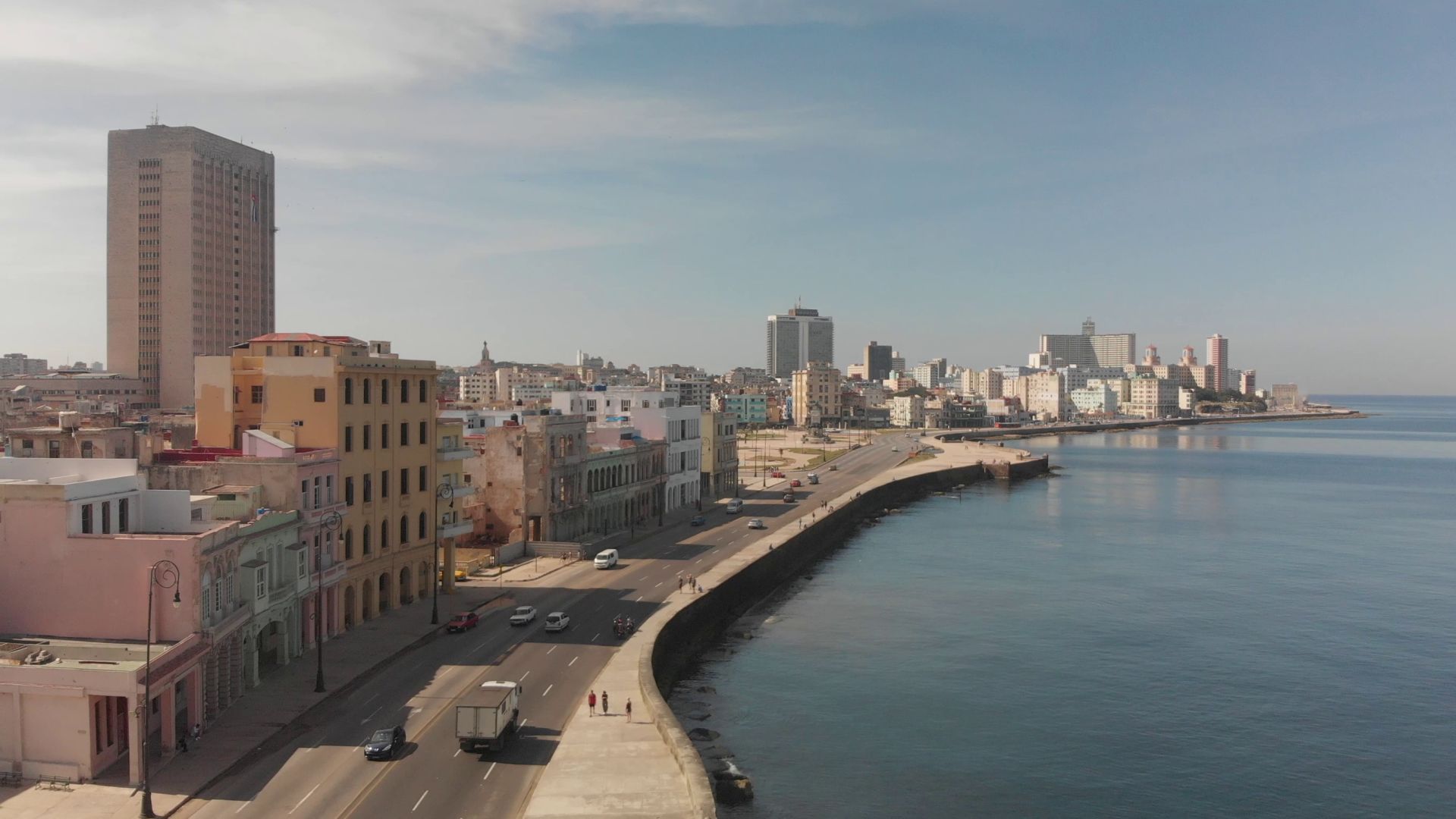
When the 1st Bienal de La Habana opened in May 1984, it was the first international biennial in the world organised on the explicit institutional premise that the contemporary art conversation could be structured from outside the New York–London–Paris–Cologne axis. The argument has held for forty years.
The Bienal de La Habana opened its first edition on 22 May 1984 at the Castillo de la Real Fuerza in Old Havana. The 1st biennial was restricted in scope to Latin America and the Caribbean (835 artists from 22 countries), but its founding institutional argument was set from the start: the Centro de Arte Contemporáneo Wifredo Lam, the new state institution established to organise the biennial under the Cuban Ministry of Culture, would build an international biennial whose curatorial frame was explicitly anti-Eurocentric. The premise (established by the Centro's founding director Llilian Llanes Godoy, a Cuban architect and arts administrator, with a curatorial team that included the writer and curator Gerardo Mosquera) was that the contemporary art conversation as it then existed was structurally organised around a small number of European and North American institutions, and that the Global South had the artists, the institutions, the audiences, and the curatorial intelligence to organise the conversation differently from itself.
The 2nd Bienal de La Habana (November 1986) extended the curatorial frame to Africa and Asia. It was, in that institutional moment, the first international biennial in the world whose explicit founding premise was the contemporary art of Latin America, the Caribbean, Africa, and Asia in conversation with each other, structurally excluding (or, more precisely, structurally decentering) the European and North American art world the international biennial form had to that point taken as its centre. The 3rd Bienal de La Habana (November 1989), Tradición y Contemporaneidad, is the founding edition of the contemporary international biennial form as we now recognise it: a multi-continental survey that was curated rather than nationally-pavilioned, that argued an institutional position rather than presenting a national-pavilion competition, and that took the institutional question of how to organise the contemporary art conversation of the Global South as its subject. The 3rd biennial included work by artists who would reshape the international contemporary art conversation across the following two decades, among them David Hammons, Cildo Meireles, Doris Salcedo, Gabriel Orozco, José Bedia, and a significant Cuban generation that included Tania Bruguera, Carlos Garaicoa, and Los Carpinteros.
The institutional consequence of the 1984–1989 founding period is difficult to overstate. The contemporary biennial form that operates internationally today (the multi-continental curatorial survey organised around a thematic premise, structurally arguing the institutional position of its host city, presenting work from across the Global South as a contemporary art conversation rather than as an exoticised periphery) is the form the Havana Biennial established in its first three editions. Manifesta, Dak'Art, the Sharjah Biennial, the Gwangju Biennale, the Johannesburg Biennale, Documenta's post-Catherine David curatorial turn (Documenta 10, 1997), the Bienal de São Paulo's post-2000s decolonial turn, Okwui Enwezor's Documenta 11 (2002), the entire post-2010s biennial-of-the-Global-South conversation: all are indebted to the institutional position the Havana Biennial established in the 1980s. Mosquera's international curatorial career, including his decade as adjunct curator at the New Museum in New York (1995–2009), was the principal vector through which the Havana method entered the institutional Anglophone art conversation.
The 4th Bienal de La Habana (November 1991), El Desafío de la Colonización y sus Alternativas Culturales (The Challenge of Colonisation and its Cultural Alternatives), opened five months after the Soviet Union's collapse, in the early weeks of what Cuba would come to call the Special Period: the economic contraction following the loss of Soviet subsidies, with reductions in GDP, electricity, fuel, food, and the institutional infrastructure on which the biennial depended. The 4th edition was significant in scale despite the conditions. What followed in the 1990s, the 5th (1994, Arte, Sociedad, Reflexión) and the 6th (1997, El Individuo y su Memoria), was a more difficult institutional period, in which the biennial continued under Llanes's continuing directorship but at reduced material conditions. Llanes stepped down in 1999 after sixteen years and six editions; Nelson Herrera Ysla, a Centro Wifredo Lam co-founder, took over and organised the 7th edition (November 2000), Uno más cerca del otro. The biennial's continuing institutional argument across the Special Period (that the curatorial position the Centro Wifredo Lam had established in the 1980s was structurally distinct from the material conditions of its production, and that the position remained worth defending) was persuasive within the international art conversation, and the Havana Biennial's international visibility increased rather than decreased across the 1990s.
The 2000s and 2010s produced a continuing Havana Biennial under successive Centro Wifredo Lam directors (Nelson Herrera Ysla, Jorge Fernández Torres, Margarita Sánchez Prieto, Nelson Ramírez de Arellano Conde), with continuing curatorial leadership from a generation of Cuban curators including Eugenio Valdés Figueroa and Cristina Vives. The 12th (2015, Entre la Idea y la Experiencia), 13th (April–May 2019, La Construcción de lo Posible), and 14th (12 November 2021 – 30 April 2022, Futuro y Contemporaneidad, structured across three phases) editions extended the biennial's international visibility while operating under the more constrained material conditions of the post-2017 period: the continuing economic crisis, the Trump-era tightening of the US embargo, the impact of Covid-19 on the 14th edition, and the continuing emigration of parts of the Cuban contemporary art scene to Mexico City, Madrid, Miami, and elsewhere. The 15th Bienal de La Habana, Horizontes compartidos (Shared Horizons), opened on 15 November 2024 and ran through 28 February 2025 (the 40th-anniversary edition), with a programme of work by Cuban and international artists across the Centro Wifredo Lam, the Museo Nacional de Bellas Artes, the Casa de las Américas, the Fortaleza de San Carlos de la Cabaña, and an extensive network of independent and state venues across the city.
The institutional argument the Havana Biennial continues to make (that the contemporary art conversation of the Global South can be organised from within itself, that the European and North American institutions are not the natural centres of the contemporary art form, and that a international biennial can operate from the Caribbean on different curatorial premises from those of the European biennial form) has now held for four decades. The argument has won. Whether the Cuban state institutional infrastructure that has continued to organise the biennial across the Special Period and after will continue to support it in the 2030s, and on what curatorial premises, is the principal continuing question.
The institutional position
The Bienal de La Habana is organised by the Centro de Arte Contemporáneo Wifredo Lam, a state contemporary art centre established in 1983 specifically to organise the biennial, named for the Cuban modernist Wifredo Lam (1902–1982), and operating under the Cuban Ministry of Culture. The institutional architecture is structurally distinct from the privately-funded or municipally-funded models of most international biennials: Havana is a state biennial in a single-party state, and its continuing institutional position cannot be read independently of that political fact. The complications this produces (for Cuban dissident artists, for the Cuban diaspora art scene, for the international art-world's continuing engagement with Cuban contemporary art) are and form a continuing institutional question that the biennial's curatorial leadership has engaged across its history.