Liverpool Biennial

The UK's largest contemporary art festival — founded 1998 by James Moores and Lewis Biggs as the institutional outcome of post-industrial Liverpool's cultural-led regeneration, and the principal English vehicle for the international biennial conversation in the post-2000 period.

Established1998 — 202513 editions

7 June – 14 September 2025

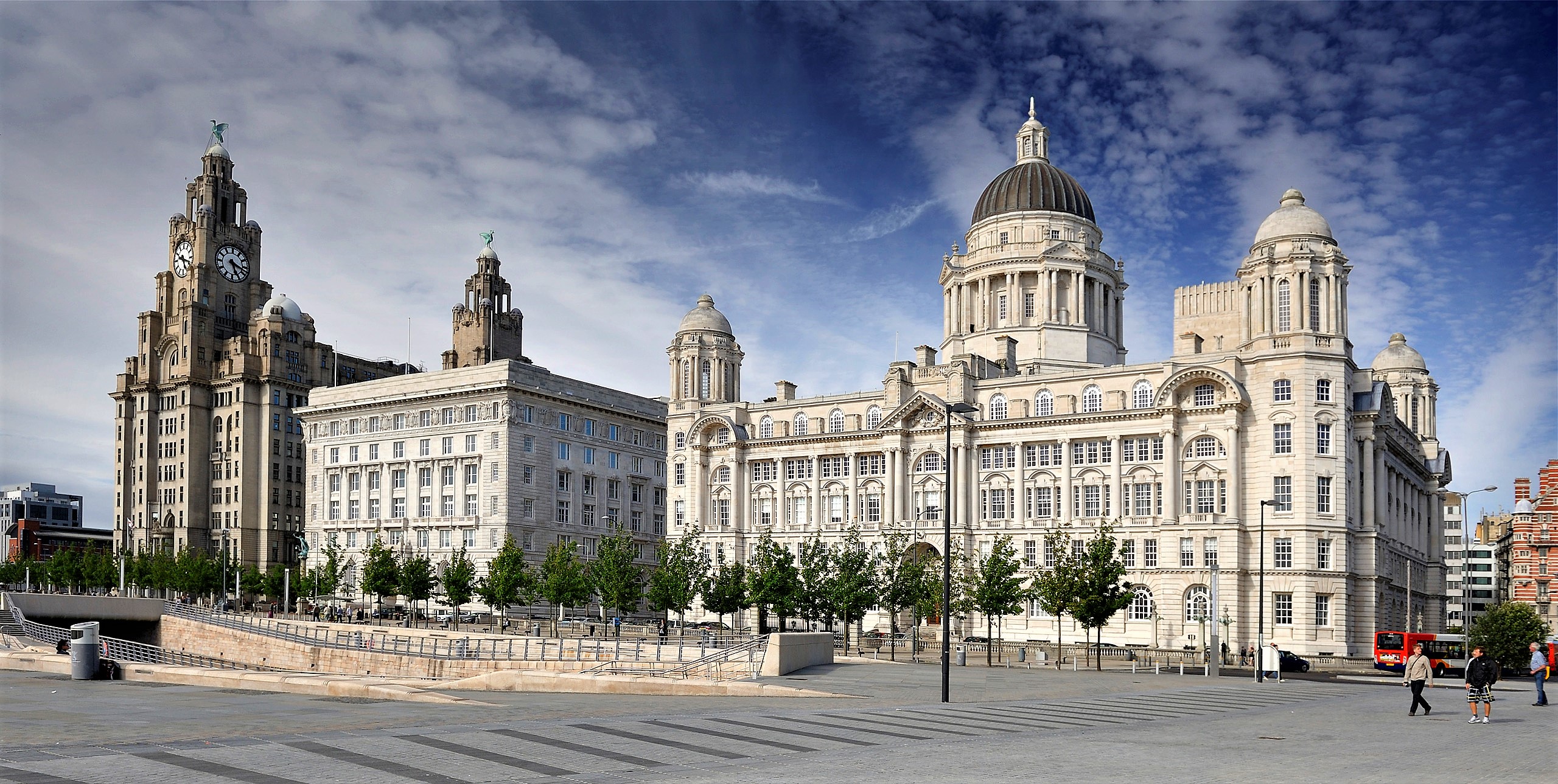
Liverpool's Albert Dock and the waterfront skyline — the post-industrial dockland that has been the geographic and institutional anchor of the Liverpool Biennial since 1998.
Above Liverpool's Albert Dock — the 1846 Jesse Hartley dockland, redeveloped from the late 1980s, and the geographic and institutional anchor of the Liverpool Biennial since 1998 through the Tate Liverpool (1988) and the wider network of dock-warehouse cultural venues that the biennial activates every two years.  ·  Photograph: Wikimedia Commons

The Lead Essay Twenty-seven years and thirteen editions

The biennial as cultural-led regeneration, twenty-five years on

The Liverpool Biennial was founded in 1998 as the institutional outcome of a much longer post-industrial cultural-regeneration project — the Albert Dock redevelopment, Tate Liverpool, the 2008 European Capital of Culture year — whose continuing legacy is the principal subject of any reading of the biennial.

The Liverpool Biennial was founded in 1998 by James Moores — the Liverpool-born philanthropist whose Moores family Littlewoods fortune had funded the Walker Art Gallery's annual John Moores Painting Prize since 1957 — and by Lewis Biggs, the founding director of Tate Liverpool (1990–2000) who had spent the 1990s building the curatorial and institutional case for a substantial Liverpool biennial. The institutional argument was straightforward and, by 1998, overdue: Liverpool had, since the 1981 Toxteth riots and the Michael Heseltine-era central government attention that followed, become the principal English laboratory for post-industrial cultural-led regeneration. The Albert Dock — the 1846 Jesse Hartley warehouse complex — had been redeveloped from the late 1980s as a cultural-leisure destination anchored by the new Tate Liverpool (1988) and a wider network of restored Victorian dockland buildings; the Liverpool Tate had, across the late 1980s and 1990s, established itself as a major British contemporary art institution; and Liverpool had a concentration of contemporary art institutions (the Walker Art Gallery, the Bluecoat, FACT) exceeded only by London among English cities. What Liverpool did not have was the international-biennial-form infrastructure that European cities of comparable cultural ambition — Manifesta's various host cities, the Münster Skulptur Projekte's Münster — had used to extend their international visibility through the 1990s.

The 1st Liverpool Biennial opened on 24 September 1999, titled Trace, curated by Anthony Bond (then chief curator at the Art Gallery of New South Wales, Sydney, where Bond would shortly curate the 13th Biennale of Sydney) with a commissioning programme and an exhibition programme across Tate Liverpool, the Bluecoat, FACT, and a network of partner venues. The 2nd Liverpool Biennial (2002), International 02, established the structural premise that has held across the subsequent twenty-three years: a curator-led international exhibition (the "International") at the centre, alongside a continuing John Moores Painting Prize at the Walker, the Bloomberg New Contemporaries graduate showcase, and a network of independent and partner programming across the city. The structural premise has produced one of the more curatorially-distinctive biennials in the international form — its Director's Programme has been smaller in scale than the curatorial editions at, say, the Sydney Biennale or the São Paulo Bienal, but the institutional question Liverpool has continuously asked has been sharper: what is the curatorial work of a biennial in a city whose contemporary art infrastructure predates the biennial, and what can a biennial usefully add to that infrastructure rather than substituting for it?

The Lewis Biggs founding directorship (1998–2011) produced six editions — Trace (1999), International 02 (2002), The Stuff of Life (2004), International 06 (2006), MADE UP (2008), and Touched (2010) — across the period that culminated in Liverpool's 2008 designation as European Capital of Culture, the most institutionally consequential English cultural-policy event of the post-2000 period. The Capital of Culture year reshaped the Liverpool contemporary art conversation, extended the international visibility of the biennial, and established the Liverpool Biennial as the principal English-vehicle for the international biennial conversation outside London. The 6th Liverpool Biennial (MADE UP, 2008), curated by Lorenzo Fusi and others, opened during the Capital of Culture year and was shaped by it. The Biggs period established the institutional bar Liverpool has continued to operate to.

The Sally Tallant directorship (2012–2018) produced four editions — the 7th (2012), 8th (2014), 9th (2016), and 10th (2018) — that extended the biennial's curatorial-institutional ambition. The 8th Liverpool Biennial (2014), A Needle Walks Into a Haystack, curated by Mai Abu ElDahab and Anthony Huberman, was the most curatorially-acclaimed of the Tallant editions and established the biennial's reading by the international art press as a major curator-led international biennial. The 10th edition (2018), Beautiful World, Where Are You?, curated by Sally Tallant with Kitty Scott, marked the end of the Tallant period before her departure for the Queens Museum, New York, and closed the founding twenty-year arc of the institution.

The post-Tallant period — under interim directors and subsequently under current Director Samantha Lackey — has produced three editions across more difficult institutional conditions: the 11th (The Stomach and the Port, 2021, curated by Manuela Moscoso, postponed from 2020 by Covid-19), the 12th (uMoya: The Sacred Return of Lost Things, 2023, curated by Khanyisile Mbongwa), and the 13th (BEDROCK, 2025, curated by Marie-Anne McQuay). The 11th and 12th editions extended the biennial's curatorial register beyond the European/North American axis the founding period had operated within — Moscoso's curatorial work foregrounded a Latin American conversation, Mbongwa's foregrounded a African and African-diasporic conversation — and shaped the biennial's continuing post-2020 institutional position. The 13th Liverpool Biennial, BEDROCK, opened on 7 June 2025 and continues through 14 September 2025.

The institutional question Liverpool continues to ask — what is the curatorial work of a biennial in a city whose contemporary art infrastructure predates the biennial, and what can a biennial usefully add to that infrastructure — has produced one of the more interesting answers in the international biennial conversation. The Liverpool Biennial has consistently operated at a smaller curatorial scale than its European and Asian peers, and consistently produced editions that the international art press has read more carefully than the institution's English-regional position would predict. Whether the biennial's continuing institutional position is sustainable in the post-Brexit and post-Capital-of-Culture-year period of reduced English regional cultural funding is the principal continuing question.

The institutional architecture

Liverpool Biennial of Contemporary Art operates as an independent registered charity, funded by Arts Council England (a continuing National Portfolio Organisation since the founding period), the Liverpool City Council, the Liverpool City Region Combined Authority, the John Moores Foundation, and a private philanthropic base. The biennial does not maintain a permanent flagship venue but operates through a continuing network of institutional and independent partner venues, with recurring use of Tate Liverpool, the Bluecoat, FACT, the Walker Art Gallery, the Open Eye Gallery, Liverpool John Moores University's Exhibition Research Lab, and a network of dock-warehouse and city-centre commission sites. The 14th Liverpool Biennial is scheduled for 2027.
A Second Reading The 2008 Capital of Culture and the regeneration question

What regeneration produced and what it didn't

The Liverpool Biennial's founding institutional argument — that the biennial is the cultural-institutional outcome of Liverpool's post-industrial cultural-led regeneration project across the 1980s and 1990s — has been persuasive within the international biennial conversation. It has also been questioned within the English critical literature on cultural-led regeneration, and the critique is worth recording.

The principal critical reading turns on a structural question: namely, that the cultural-led regeneration model — Liverpool's Albert Dock, Tate Liverpool, the 2008 Capital of Culture year, the subsequent cultural-tourism infrastructure — has produced one kind of post-industrial Liverpool (a cultural-tourism economy organised around the waterfront, the Beatles heritage, the cultural institutions, and the visiting-cultural-tourist economy) while failing to produce another kind of post-industrial Liverpool that the regeneration project's 1980s political-economic argument had said it would (a materially-redistributive recovery for the Toxteth, Anfield, Walton, and Bootle communities whose economic deprivation the regeneration project was justified as addressing). The argument — developed in the English urban-and-cultural-policy literature of the post-2000 period — is that the cultural-led regeneration model produced cultural-tourism revenue, cultural-institutional prestige, and a extended international visibility for Liverpool, without producing the materially-redistributive outcomes the 1980s argument had said it would.

The Liverpool Biennial's own institutional position within this critique is structurally complicated. The biennial is, on the one hand, a cultural-institutional outcome of the cultural-led regeneration project — it would not exist without the Albert Dock, without Tate Liverpool, without the post-Toxteth English central-government cultural attention to Liverpool that produced the institutional architecture the biennial activates every two years. The biennial is, on the other hand, distinct from the tourism-economy reading of that regeneration project: its curatorial work has engaged the political-economic questions of post-industrial Liverpool, its commissioning programme has worked with Liverpool's network of artist-run and community-engaged practices, and its institutional position has refused the easy cultural-tourism reading the regeneration argument made available. The Tallant period in particular worked through these questions in the curatorial register, and the Moscoso and Mbongwa editions extended that work into a more decolonial and globally-Southern reading of the cultural-led-regeneration question.

What the Liverpool Biennial demonstrates — and what the English critical literature on the institution has registered — is that the biennial form can be the institutional outcome of a cultural-led-regeneration project without being reducible to it. The biennial's continuing institutional argument is that the curatorial work it does is distinct from the political-economic project that produced the institutional infrastructure within which the curatorial work operates. Whether that argument can hold under continuing post-Brexit funding pressure is, as elsewhere in this reading, the principal continuing question.

The Institutional Spine

Defining moments

Five episodes from twenty-seven years.

19991st Liverpool

Bond's Trace

The 1st Liverpool Biennial opened 24 September 1999 under founding director Lewis Biggs with curator Anthony Bond (then chief curator at the Art Gallery of New South Wales, Sydney). Trace established the biennial's founding structural premise — a curator-led international exhibition at the centre, alongside the continuing John Moores Painting Prize and the Bloomberg New Contemporaries graduate showcase — and established Liverpool as the principal English vehicle for the international biennial conversation.

Sources: Liverpool Biennial archive; Trace catalogue, 1999

2008Capital of Culture

MADE UP and the Capital of Culture year

The 5th Liverpool Biennial (MADE UP, 2008), curated by Lorenzo Fusi and the Biennial curatorial team, opened during Liverpool's year as European Capital of Culture — the most institutionally consequential English cultural-policy event of the post-2000 period. The Capital of Culture year reshaped the Liverpool contemporary art conversation and extended the international visibility of the biennial.

Sources: Liverpool Biennial archive; 2008 Capital of Culture programme

20148th Liverpool

Abu ElDahab and Huberman's A Needle Walks Into a Haystack

The 8th Liverpool Biennial (2014), curated by Mai Abu ElDahab and Anthony Huberman under Director Sally Tallant, was the most curatorially-acclaimed of the Tallant period and established the biennial's reading by the international art press as a major curator-led international biennial. The curatorial premise — structured around the figure of the curatorial encounter as an unexpected one — was novel within the English biennial conversation of the period.

Sources: Liverpool Biennial archive; Frieze, Art Monthly, The Burlington Magazine coverage

202111th Liverpool

Moscoso's The Stomach and the Port

The 11th Liverpool Biennial (March–June 2021), The Stomach and the Port, was curated by Manuela Moscoso. Postponed from 2020 by Covid-19, the edition extended the biennial's curatorial register beyond the European/North American axis the founding period had operated within — engaging Latin American contemporary art conversations and a body of work on bodies, ports, and the post-colonial geographies of the Atlantic.

Sources: Liverpool Biennial archive; 2021 catalogue

202513th Liverpool

McQuay's BEDROCK

The 13th Liverpool Biennial, BEDROCK, opened on 7 June 2025 under curator Marie-Anne McQuay and continues through 14 September 2025. The edition extends the post-Tallant curatorial expansion into African and African-diasporic conversations begun by Moscoso (2021) and Mbongwa (2023), with a curatorial premise that engages substrates, geological time, and the long historical conditions of the post-industrial city.

Sources: Liverpool Biennial archive; 2025 programme

People in the Biennial

The figures behind Liverpool

Founder · 1998

James Moores

English philanthropist and former art dealer (b. 1956). Liverpool-born grandson of John Moores (founder of the Littlewoods retail and football-pools company and of the John Moores Painting Prize in 1957). Founding patron of the Liverpool Biennial in 1998. The institutional architect — alongside Lewis Biggs — of the philanthropic case for a Liverpool biennial, and of the founding link between the Liverpool Biennial and the continuing John Moores Painting Prize at the Walker Art Gallery.

Source: Liverpool Biennial

Founding Director (1998–2011)

Lewis Biggs

English curator and arts administrator. Founding Director of Tate Liverpool (1990–2000) — the institutional architect of the English contemporary art institutional infrastructure on the Albert Dock that the Liverpool Biennial would activate from 1999 onwards. Founding Director of the Liverpool Biennial (1998–2011), leading six editions across the founding period. Subsequent independent curatorial practice including curating the 3rd (2014) and 4th (2017) Folkestone Triennials.

Source: Wikipedia

Director (2011–2019)

Sally Tallant

English curator and arts administrator. Director of the Liverpool Biennial (2011–2019), leading the 7th, 8th, 9th, and 10th editions. The Tallant period extended the biennial's curatorial-institutional ambition and established its reading by the international art press as a major curator-led international biennial. Subsequent President and Executive Director of the Queens Museum, New York, since 2019.

Source: Queens Museum

Curator · 11th Liverpool Biennial (2021)

Manuela Moscoso

Ecuadorian curator. Curator of the 11th Liverpool Biennial (The Stomach and the Port, 2021). Subsequent Executive Director of MUAC (Museo Universitario Arte Contemporáneo), Mexico City, from 2023. Continuing curatorial practice engaging Latin American contemporary art and the post-colonial geographies of the Atlantic.

Source: Liverpool Biennial 2021

Curator · 12th Liverpool Biennial (2023)

Khanyisile Mbongwa

South African curator, performance artist, and writer. Curator of the 12th Liverpool Biennial (uMoya: The Sacred Return of Lost Things, 2023). Continuing curatorial practice across Africa and the African diaspora, with work on healing, ancestry, and the political-spiritual questions of post-colonial contemporary art. Substantial exhibition history at the Norval Foundation, the Cape Town Art Fair, and across substantial South African contemporary art institutions.

Source: Liverpool Biennial 2023

Organising institution

Liverpool Biennial of Contemporary Art Ltd

Independent registered charity established 1998 to organise the Liverpool Biennial. Current Director Samantha Lackey. Funded by Arts Council England (a continuing National Portfolio Organisation), the Liverpool City Council, the Liverpool City Region Combined Authority, the John Moores Foundation, and a private philanthropic base. The biennial does not maintain a permanent flagship venue but operates through a continuing network of institutional and independent partner venues across central Liverpool and the dockland.

Source: Liverpool Biennial

Founded
1998
Frequency
Biennial · summer
Format
Multi-venue · city-wide
Host city
Liverpool, England
Director
Samantha Lackey

Geography

The biennial across Liverpool

Principal venues across the editions

Tate Liverpool

Continuing principal venue since 1999 · Albert Dock

Albert Dock
Liverpool L3 4BB

Bluecoat

UK's oldest arts centre · continuing partner

School Lane
Liverpool L1 3BX

FACT (Foundation for Art and Creative Technology)

Continuing partner

88 Wood Street
Liverpool L1 4DQ

Walker Art Gallery

John Moores Painting Prize · continuing partner since 1999

William Brown Street
Liverpool L3 8EL

Open Eye Gallery

Photography · continuing partner

19 Mann Island
Liverpool L3 1BP

The Black-E

Community-arts centre · 2025 edition project venue

1 Great George Street
Liverpool L1 5EW

Pine Court (Chinatown)

2025 edition project venue

Chinatown
Liverpool L1

20 Jordan Street

2025 edition project venue · Baltic Triangle

Jordan Street
Liverpool L1 0BP

Contact

Liverpool Biennial of Contemporary Art Ltd  ·  The Tea Factory, 82 Wood Street, Liverpool L1 4DQ, United Kingdom
+44 (0)151 702 3444  ·  biennial.com

My Biennale

Carry the Biennale with you

Save this biennale to your circuit, follow its artists as their pages grow, and sync every opening and closing to your own calendar on the companion app.

From the Directory

Related triennials and biennials in the UK and Ireland

Browse the region →

Essential Reading

For further work

Images, attribution & rights

Photographs are reproduced from Wikimedia Commons under the Creative Commons licences stated in each caption. If you are the photographer of an image used here and wish to discuss its use, please write to rights@biennale.com.

Editorial content is original and credited to the Biennale Editorial Team. The English critical literature on cultural-led regeneration referenced in the second-voice reading is documented in the Impacts 08 research programme at Liverpool John Moores University and the post-2000 English urban-and-cultural-policy scholarship.

The Bookshelf

Reading the Biennale

Purchases through these links help fund Biennale's independent coverage. Volume I is also an audiobook on Audible.